Acoustic Panel Layering Techniques Minimizing Echo Interference During Live Esports Commentary from Compact Home Studios
Mia Keller · Jul 26, 2026
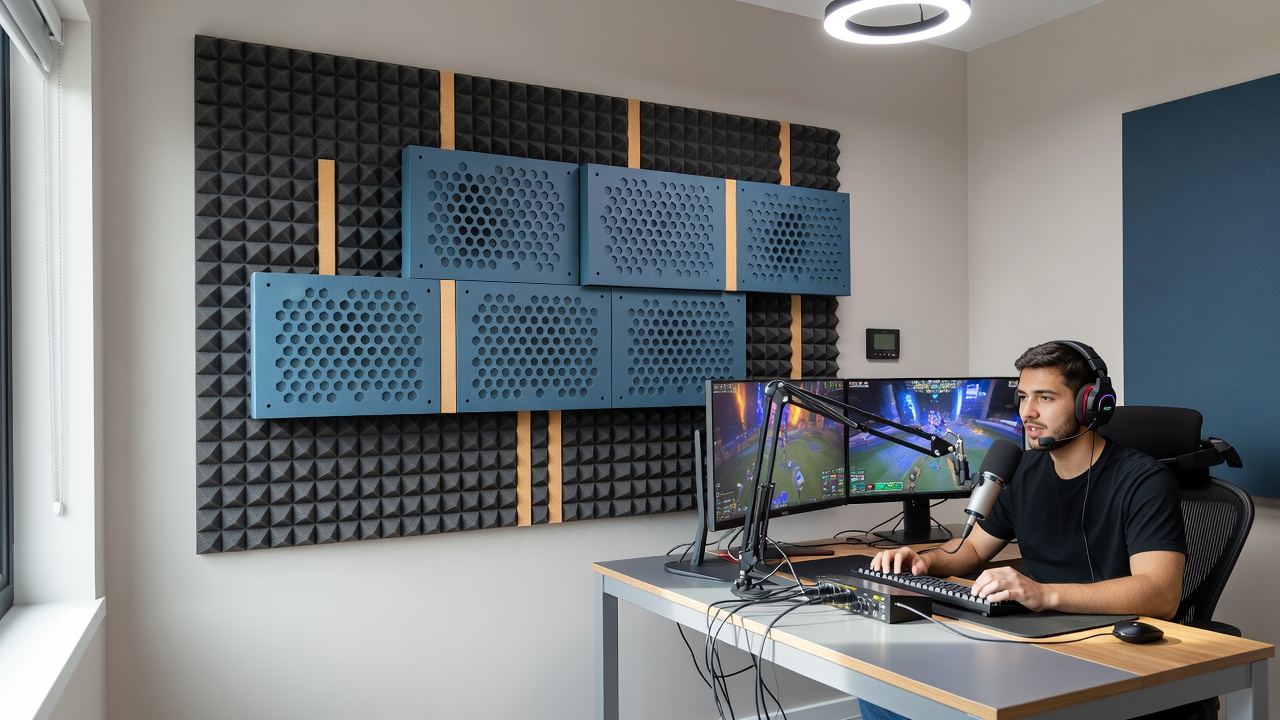
Acoustic Panel Layering Techniques Minimizing Echo Interference During Live Esports Commentary from Compact Home Studios
Compact home studios create distinct acoustic hurdles for esports commentators who deliver live analysis, since hard surfaces like drywall and monitors reflect sound waves that produce echo and reverb during broadcasts. Layering acoustic panels addresses these reflections by combining materials with different absorption and diffusion properties, and researchers note that this approach targets specific frequency ranges critical for clear speech transmission.
Core Acoustic Challenges in Small Esports Setups
Esports commentary often occurs in rooms under 150 square feet where parallel walls amplify standing waves between 100 and 5000 Hz, the range that carries vocal clarity during fast-paced game calls. Observers note that untreated spaces generate flutter echoes that overlap with microphone input, and data from room acoustics measurements show decay times exceeding 0.6 seconds in untreated bedrooms converted for streaming.
Multiple reflection paths form when commentators sit near desks with monitors and keyboards, since those surfaces bounce midrange frequencies back into the microphone capsule. Studies indicate that layering begins with identification of first reflection points on side walls and the ceiling, locations that data loggers capture during test recordings with pink noise sources.
Layering Methods for Absorption and Diffusion
Technicians apply a base layer of porous absorbers such as 4-inch fiberglass or rockwool panels directly against walls to capture low-mid frequencies, then overlay thinner fabric-wrapped panels that handle higher speech frequencies without over-dampening the room. This stacked configuration creates a graduated absorption curve, and figures from controlled tests reveal that combined layers reduce reverberation time by 40 to 60 percent compared with single-panel applications.
Diffusion elements follow the absorption stack in corners and rear walls, where quadratic residue diffusers scatter remaining energy instead of allowing it to return to the microphone. Engineers position these diffusers at least 6 inches from the absorption layer to avoid trapping sound in narrow gaps, while mounting hardware allows airflow that prevents moisture buildup in humid environments.
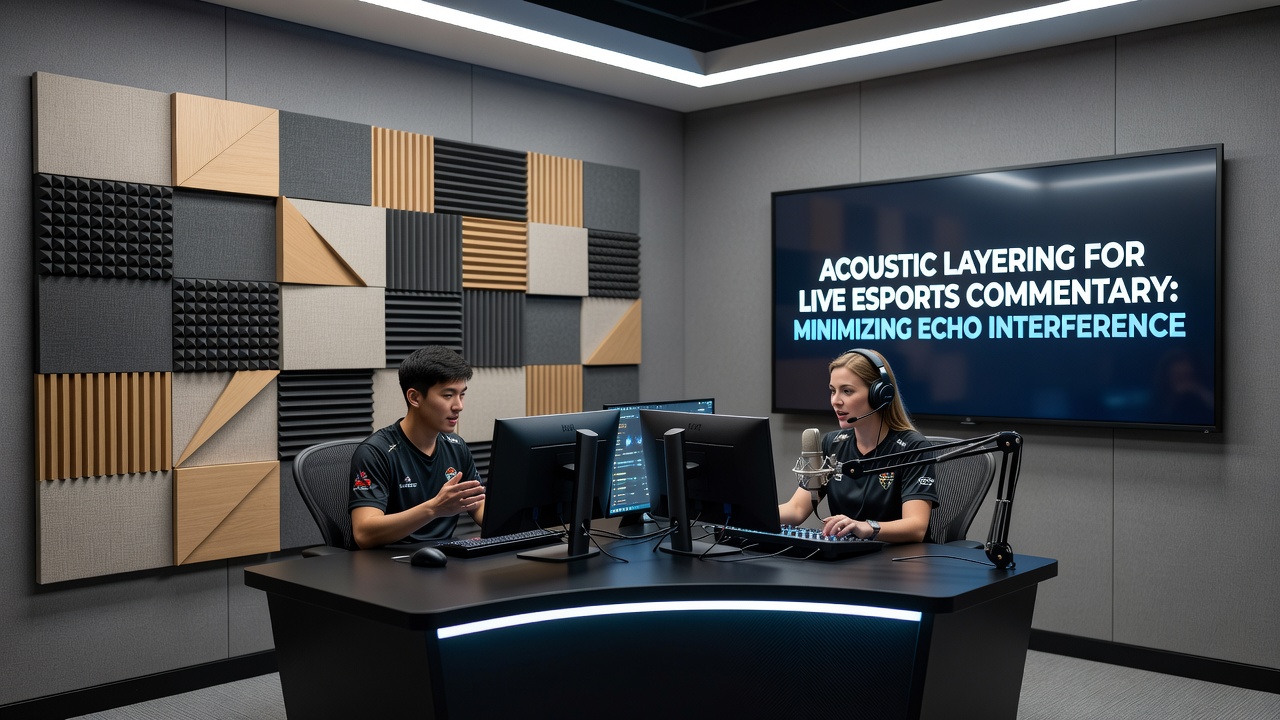
Placement Strategies for Compact Spaces
Corner bass traps form the foundation of any layering sequence because low-frequency buildup concentrates at room boundaries, and measurements confirm that 12-inch triangular traps stacked with flat panels reduce modal peaks below 200 Hz. Commentators mount additional vertical panels at seated ear height on side walls to intercept direct reflections, an arrangement that aligns with ISO 3382 standards for speech intelligibility.
Ceiling clouds suspended 8 to 12 inches below the surface add a third layer that captures overhead reflections common when microphones point upward during animated commentary. Those who have measured before-and-after impulse responses report that this ceiling treatment shortens early reflection times without requiring floor space in already crowded setups.
Material Selection and Performance Data
Mineral wool at 3 pounds per cubic foot density serves as the base layer because its flow resistivity matches the target frequencies of human speech, whereas polyester alternatives provide similar absorption at lower cost for budget builds. Fabric covers on outer layers maintain NRC ratings above 0.85 while allowing commentators to match studio aesthetics with team branding colors.
According to Audio Engineering Society reports on small-room acoustics, properly layered configurations achieve speech transmission index values above 0.85, a threshold that supports broadcast quality in live streams. Additional guidance from the Canadian Acoustical Association highlights that modular layering permits incremental upgrades as equipment changes occur in July 2026 tournament cycles.
Integration with Streaming Hardware
Layered panels interact with microphone polar patterns, so cardioid condensers benefit from side-wall absorption that reduces off-axis pickup of reflected sound. Observers note that dynamic mics used in louder commentary sessions require less aggressive layering since their rejection characteristics already limit room contribution, yet ceiling treatment remains useful for reducing HVAC noise bleed.
Digital signal processing complements physical layering when commentators apply real-time de-reverb plugins, yet hardware treatments address the source of reflections before they reach the converter stage. Test recordings conducted with layered versus untreated rooms demonstrate lower noise floors that allow compressors to operate without amplifying residual echoes.
Conclusion
Layering acoustic panels in compact home studios follows a sequence of base absorption, mid-frequency control, and diffusion that systematically reduces echo paths affecting esports commentary audio. Measurements confirm measurable improvements in reverberation time and speech clarity when panels align with first-reflection geometry and material densities match vocal frequency bands. Continued refinement of these techniques supports consistent broadcast standards as home production setups evolve alongside professional league requirements.