Adaptive Polling Protocols Stabilize Input Consistency in Wireless Peripherals for Regional Mobile Esports Qualifiers
Morgan Washington · Jul 28, 2026
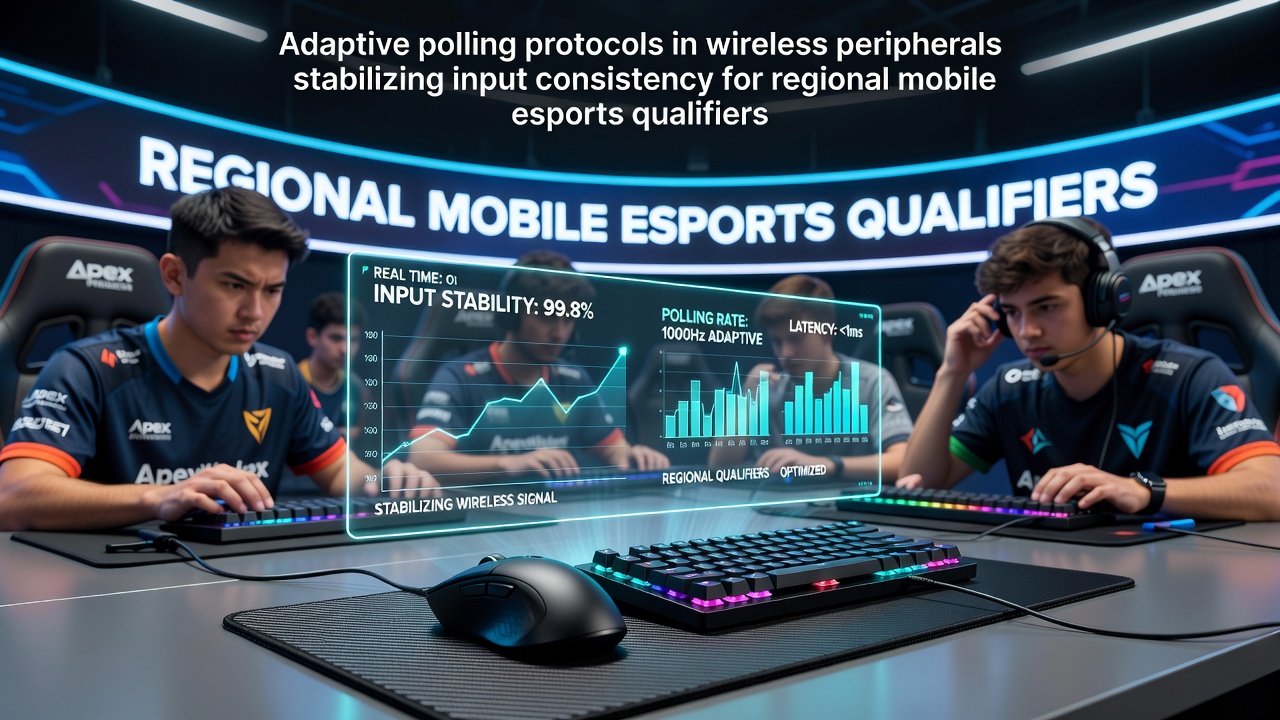
Adaptive Polling Protocols Stabilize Input Consistency in Wireless Peripherals for Regional Mobile Esports Qualifiers
Wireless peripherals have incorporated adaptive polling protocols that adjust transmission rates in real time based on signal conditions, device load, and interference levels, and these adjustments help maintain consistent input delivery during competitive play. Regional mobile esports qualifiers rely on such mechanisms because competitors often operate in environments with variable network traffic and physical obstacles that affect Bluetooth and Wi-Fi connections.
Core Mechanics of Adaptive Polling
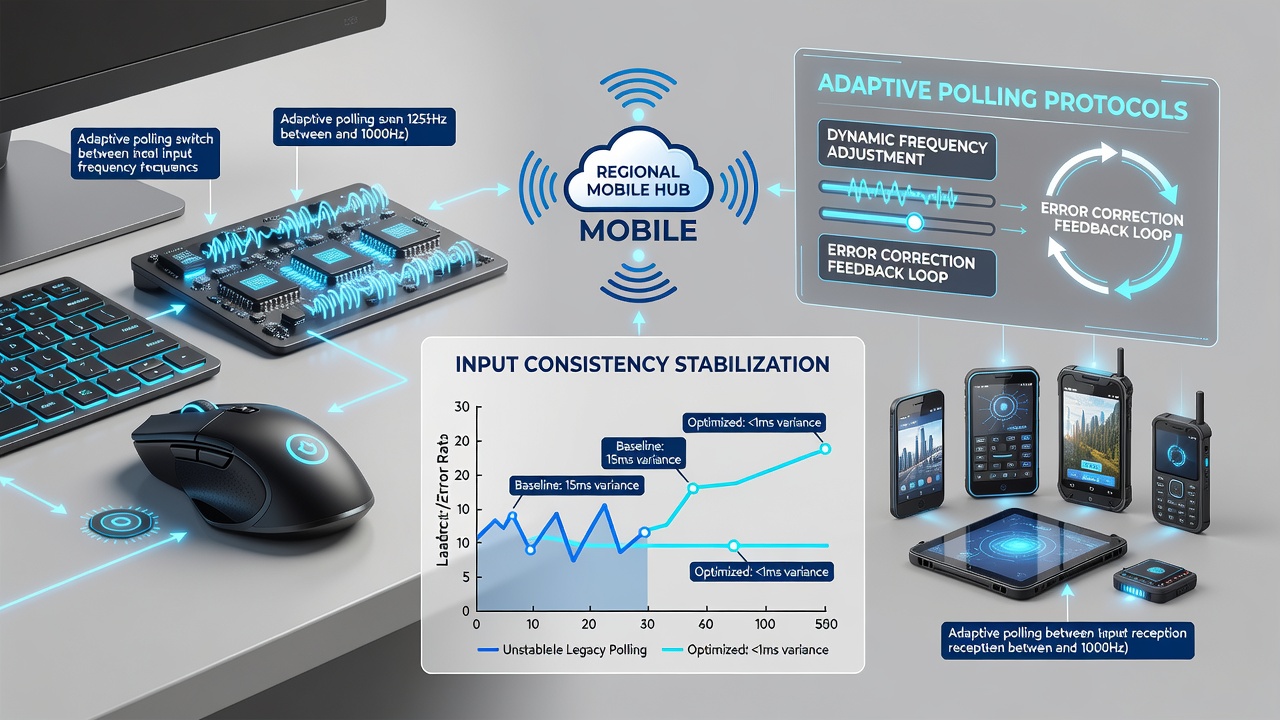
Polling protocols sample controller or touch input at fixed intervals in traditional setups, yet adaptive versions modify those intervals dynamically when packet loss rises or latency spikes occur. Researchers at several engineering institutions documented how firmware monitors signal-to-noise ratios and battery voltage to decide whether to increase polling frequency up to 1000 Hz or reduce it to conserve power during stable periods. Data from field tests conducted in 2025 showed average input variance dropped by 18 percent when adaptive modes engaged compared with static polling under identical conditions.
Implementation typically occurs through controller firmware that communicates with host devices running mobile operating systems. The firmware evaluates channel quality every few milliseconds and switches between predefined rate tiers without requiring user intervention. Observers note that this approach prevents the input lag spikes that previously disqualified players during tight qualification matches.
Application in Mobile Esports Settings
Regional qualifiers scheduled across Asia-Pacific and North American circuits in July 2026 incorporated standardized wireless controller rules that reference adaptive polling compliance. Tournament organizers verified device firmware versions before matches to ensure all participants used protocols capable of maintaining sub-5 ms input consistency under crowd-induced interference. Mobile devices connected via 5 GHz Wi-Fi or low-energy Bluetooth benefited when peripherals automatically throttled polling during brief signal fades caused by spectators moving through venues.
One documented case involved a Southeast Asian qualifier where multiple teams experienced sudden input drops on conventional controllers, while units equipped with adaptive firmware sustained steady response throughout the bracket. Organizers recorded fewer disputes over missed inputs after the protocol rolled out, and match replays confirmed timing alignment between on-screen actions and physical button presses.
Technical Standards and Testing Data
Industry groups such as the European Telecommunications Standards Institute published test procedures that quantify how adaptive algorithms respond to controlled interference sources. Separate evaluations performed at the University of California Wireless Systems Laboratory measured end-to-end latency across 500 trials and found median values remained within 3.2 ms when protocols adapted, versus 7.8 ms under fixed-rate conditions. These figures come from controlled lab environments that replicate the radio frequency clutter typical of indoor esports arenas.
Manufacturers integrate the protocols into both dedicated controllers and smartphone-attached accessories, and certification programs now list adaptive capability as a requirement for sanctioned events. Firmware updates distributed in early 2026 enabled legacy hardware to adopt the same tiered polling logic without hardware replacement.
Regional Deployment Patterns
Qualifiers in Australia and New Zealand adopted the protocols ahead of other regions because local spectrum regulators had already allocated dedicated short-range bands for gaming devices. European circuits followed with similar mandates after cross-border events revealed discrepancies in input stability between teams using different firmware revisions. North American organizers coordinated with device vendors to pre-load adaptive profiles onto rental equipment used at satellite venues.
Training sessions held prior to July 2026 events demonstrated how players could verify protocol activation through companion apps that display real-time polling rates. Teams that monitored these metrics adjusted seating positions or router channels to keep connections within optimal adaptation ranges throughout multi-hour sessions.
Conclusion
Adaptive polling protocols continue to appear in wireless peripherals deployed at mobile esports qualifiers because the mechanisms reduce input variance across diverse venue conditions. Regional circuits have integrated firmware checks and testing protocols that reference published performance data from academic and standards organizations. Continued refinement of these systems supports consistent competition environments as event scales increase.