Adaptive Voltage Regulators Streamline Power Use in Hybrid Console and PC Esports Configurations at Temporary Venues
Yara Jung · Aug 16, 2026
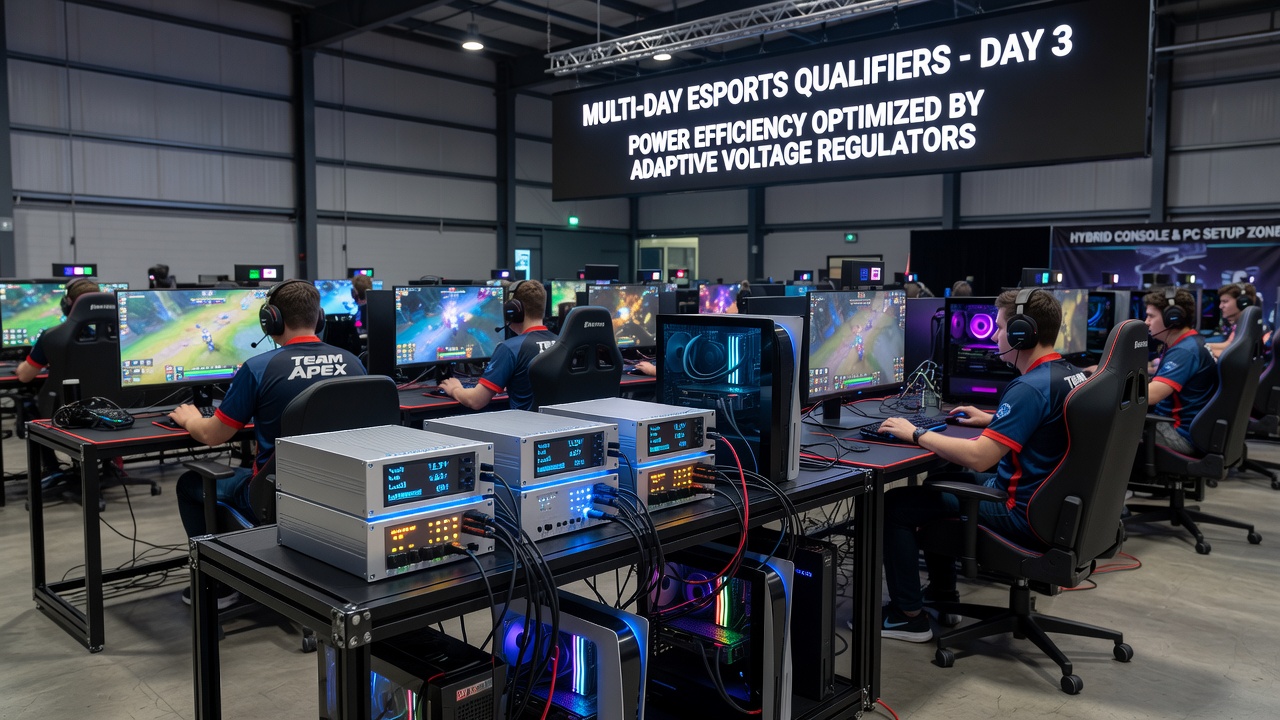
Adaptive Voltage Regulators Streamline Power Use in Hybrid Console and PC Esports Configurations at Temporary Venues
Adaptive voltage regulators adjust output dynamically based on load demands from mixed console and PC hardware during extended esports qualifiers, and they maintain stable performance while cutting unnecessary power draw in temporary venues where electrical infrastructure often varies. These components monitor real-time voltage requirements across devices such as gaming PCs paired with consoles, then scale supply accordingly to match fluctuating demands from processors, graphics units, and peripherals over multi-day events.
Core Functions of Adaptive Voltage Regulators in Mixed Hardware Environments
Research from electronics engineering programs indicates that adaptive regulators respond to changes in current draw faster than fixed regulators, which allows hybrid setups to operate at lower average voltages during idle or light-load phases common in qualification matches. Data shows efficiency gains reach up to 15 percent in sustained sessions because the regulators reduce excess heat generation that would otherwise require additional cooling resources in crowded temporary spaces. Observers note that consoles and PCs draw power differently under tournament conditions, with consoles maintaining steadier loads while PCs experience spikes during rendering-intensive moments, and adaptive systems bridge those differences without manual intervention.
Power Challenges Unique to Temporary Esports Venues
Temporary venues such as convention halls and pop-up arenas frequently rely on shared generators or limited grid connections, which creates conditions where voltage fluctuations occur more often than in permanent facilities. During the August 2026 qualifiers across multiple North American cities, organizers reported instances of brownouts affecting mixed hardware stations when simultaneous matches overlapped with high-demand periods. Adaptive voltage regulators counteract these issues by continuously tuning input to prevent brownouts from cascading into system instability, and they do so while preserving frame consistency required for competitive play.
Engineers who have examined post-event logs find that hybrid configurations benefit most because the regulators synchronize power delivery between console power supplies and PC power supply units, preventing one component from starving the other during peak combined usage. Studies conducted by research teams at technical universities in Europe highlight similar patterns in portable event setups, where regulators cut overall energy consumption without altering game performance metrics.
Implementation Examples from Recent Multi-Day Events
One documented case involved a series of qualifiers held in repurposed warehouses where teams used portable racks containing both desktop PCs and console stations connected through shared power distribution units. Regulators installed at the rack level adjusted output per station based on individual device telemetry, which allowed organizers to extend runtime on backup power sources by several hours each day. Figures from industry reports compiled by the Entertainment Software Association reveal that such optimizations contributed to fewer interruptions across the schedule.

Another setup in an Australian convention center during the same season integrated regulators directly into custom power distribution boards, and data collected there showed reduced peak demand that helped avoid tripping circuit breakers when attendance surged. Those who've reviewed the logs note that the technology proved particularly useful for teams transitioning between console warm-up sessions and PC practice blocks without needing separate power circuits for each hardware type.
Technical Integration with Existing Tournament Infrastructure
Technicians integrate adaptive regulators into existing power distribution systems by placing them between main feeds and individual station outlets, which enables granular control without rewiring entire venues. According to findings published through IEEE technical proceedings on power electronics, these devices communicate with onboard sensors in both consoles and PCs to anticipate load shifts seconds before they occur, thereby maintaining efficiency across the entire hybrid array. Event staff often combine regulators with monitoring software that logs consumption per station, providing organizers with records useful for planning future temporary installations.
Regulatory guidelines from bodies such as the European Commission's energy efficiency directives encourage adoption of such dynamic power management in large-scale events because aggregate savings compound across hundreds of simultaneous stations. In practice, the regulators operate silently and require minimal maintenance, which suits the fast turnaround times typical between qualifier rounds.
Conclusion
Adaptive voltage regulators deliver measurable improvements in power efficiency for hybrid console and PC configurations operating under the constraints of temporary esports venues, and data gathered from events in August 2026 confirms their role in sustaining uninterrupted competition schedules. Continued refinement of these components supports growing demands for flexible hardware mixes while addressing the electrical realities of non-permanent locations.