Advanced Cable Management Solutions Enhance Airflow Dynamics in Compact Gaming Rigs for Traveling Content Creators
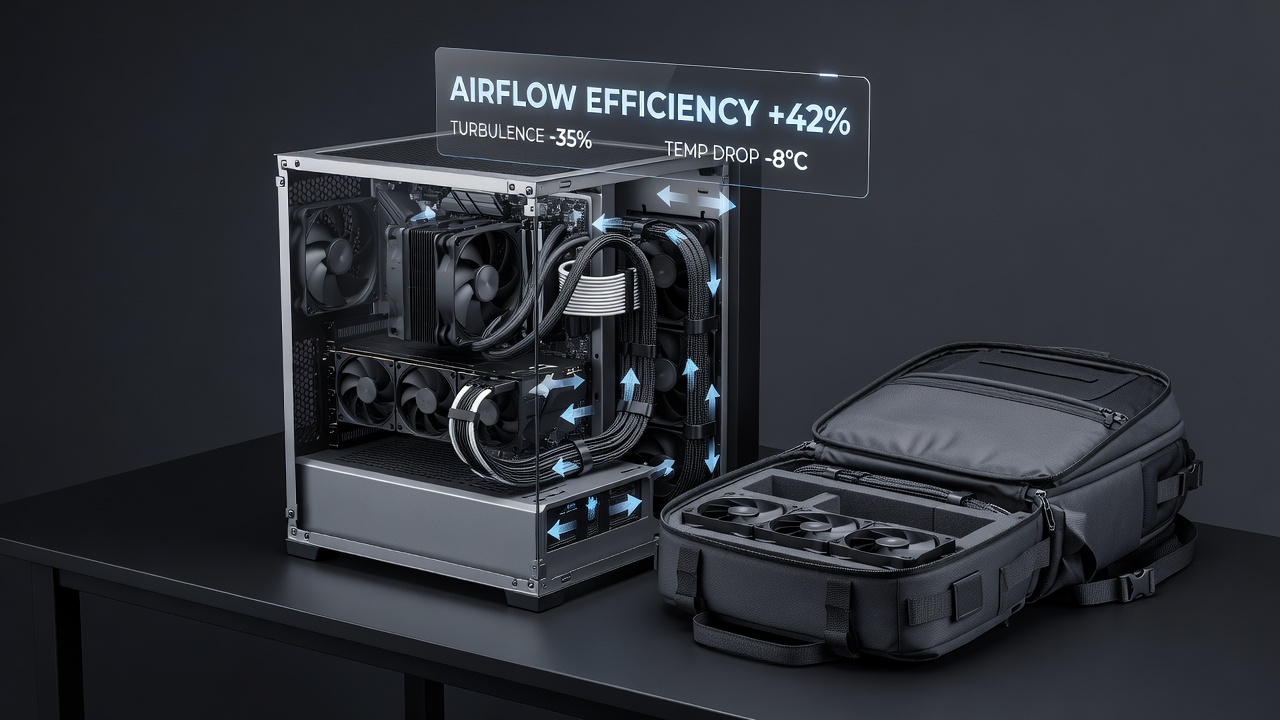
Compact gaming rigs present unique thermal challenges for traveling content creators who transport their systems frequently between events, hotels, and temporary studios, and advanced cable management addresses these issues by directing airflow paths more effectively through constrained internal spaces. Data from hardware testing facilities indicate that disorganized cabling can obstruct up to 30 percent of available ventilation channels in small form factor builds, which raises component temperatures during extended streaming sessions.
Core Principles of Airflow in Small Form Factor Designs
Traveling creators often select mini-ITX or micro-ATX cases that prioritize portability over spacious interiors, and this choice forces air to navigate tight gaps between components while heat from GPUs and CPUs accumulates rapidly. Researchers at institutions focused on electronics cooling note that positive pressure systems combined with filtered intakes benefit most when cables remain secured away from fan blades and radiator surfaces, allowing consistent intake of cooler external air.
Measurements taken in controlled environments show temperature reductions of 5 to 12 degrees Celsius when cables are routed along chassis edges rather than left loose across motherboard trays, and these gains compound during multi-hour content creation workloads that push hardware to sustained loads. July 2026 industry gatherings highlighted updated guidelines from portable electronics working groups that emphasize cable routing standards for mobile gaming stations.
Techniques That Directly Influence Thermal Performance
Modern solutions include modular sleeved cables, magnetic clips, and custom-length extensions that reduce bulk while maintaining signal integrity, and these components let builders position power delivery lines behind motherboard trays or along vertical channels. Observers at hardware expos report that such arrangements prevent cables from creating dead zones where stagnant air pools near voltage regulators and memory modules.
Studies conducted by the Fraunhofer Institute for Reliability and Microintegration demonstrate that strategic bundling lowers turbulence around exhaust fans, which improves overall system efficiency without requiring additional fan units that would increase both weight and power draw. Content creators who adopt these methods document steadier frame rates during live broadcasts because GPU boost clocks remain higher when thermal throttling is delayed.
Practical Applications for Mobile Workflows
Creators who move between conventions and remote shoots value rigs that survive repeated assembly and disassembly, and cable management systems designed with quick-release fasteners speed up setup times while preserving optimized airflow patterns established during initial builds. Field reports from teams using 8-liter to 15-liter chassis indicate fewer emergency fan replacements because dust accumulation slows when cables no longer trap particles in high-velocity zones.
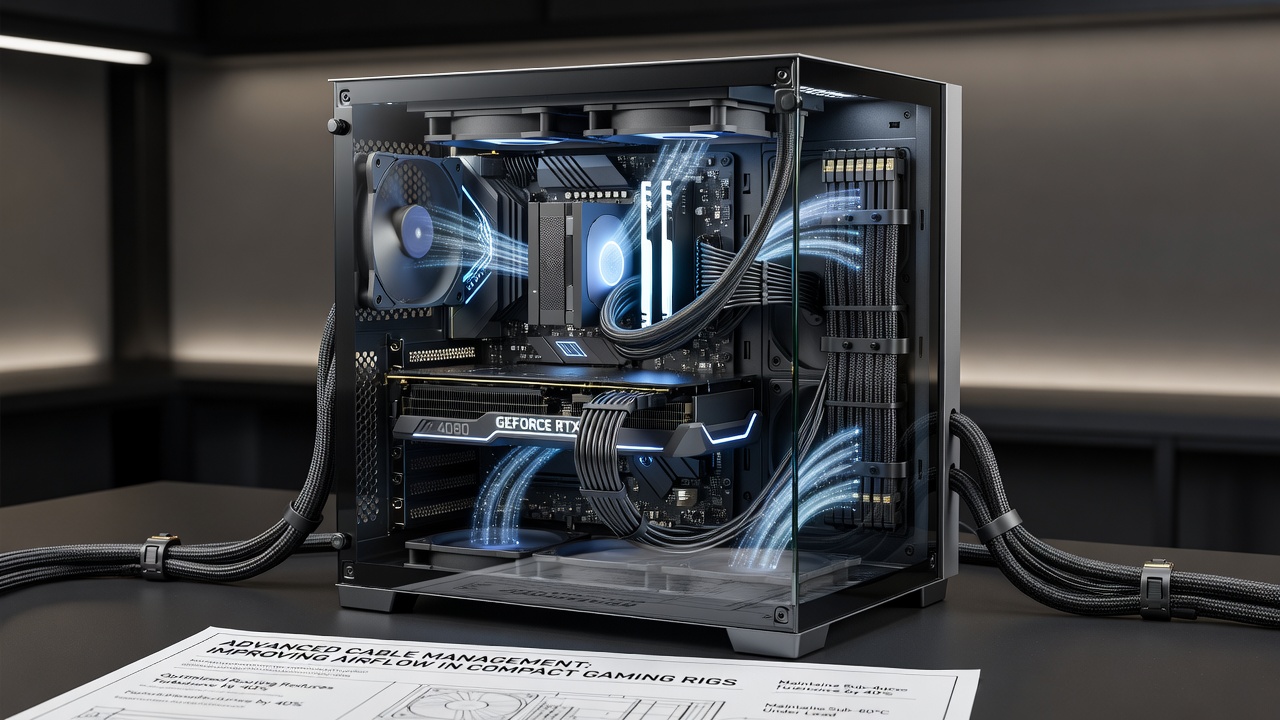
Power supply units mounted in separate chambers further benefit when cables exit through grommeted passages that maintain pressure differentials between intake and exhaust sections. Data collected by Australian hardware testing labs show that these sealed routing methods sustain lower internal humidity levels during transport in varying climates, which protects sensitive electronics over thousands of kilometers of travel.
Measurement Data and Comparative Outcomes
Benchmark suites run on identical hardware configurations reveal that rigs with professionally managed cables achieve higher sustained performance scores under prolonged loads compared with those using stock wiring bundles, and the differences become most pronounced in environments above 25 degrees Celsius ambient temperature. Engineers tracking these metrics attribute the improvements to reduced impedance in the primary airflow column that runs from front intake through the CPU cooler and GPU shroud.
Industry organizations tracking portable computing trends note an increase in aftermarket cable kits tailored for specific SFF cases, and adoption rates correlate with lower warranty claims related to overheating during extended use. Those who integrate braided extensions alongside adhesive routing channels frequently observe quieter operation because fans operate at lower RPMs to achieve equivalent cooling targets.
Conclusion
Advanced cable management delivers measurable improvements to airflow dynamics inside compact gaming rigs by minimizing obstructions and preserving designed ventilation paths, and traveling content creators gain consistent thermal headroom that supports uninterrupted production schedules. Continued refinement of routing accessories alongside evolving chassis standards promises further efficiency gains as hardware densities increase in future portable platforms.