AI Synchronization of Peripheral Lighting Enhances Narrative Immersion in Adventure Games
Yara Jung · Aug 20, 2026
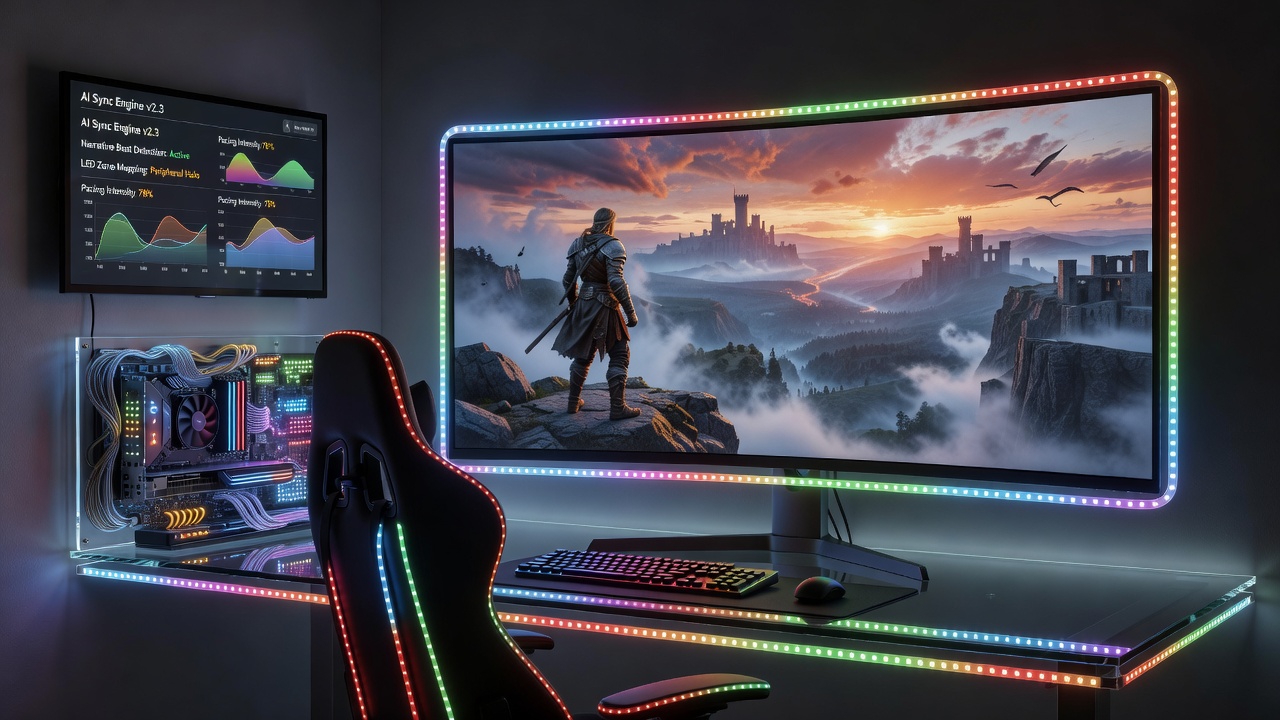
AI Synchronization of Peripheral Lighting Enhances Narrative Immersion in Adventure Games
Developers integrate AI algorithms with LED peripheral systems to match lighting shifts directly to story progression in single-player adventure titles, and this approach has expanded rapidly since early prototypes appeared in 2023. Systems analyze real-time game data including dialogue intensity, environmental changes, and emotional cues to adjust RGB strips, monitors, and room lights without manual input from players. Researchers at institutions across North America and Europe have documented how these setups reduce the gap between on-screen events and physical surroundings, creating seamless extensions of virtual worlds into living spaces.
Core Mechanisms Behind AI LED Alignment
AI models process narrative scripts and in-game telemetry through machine learning frameworks that identify pacing markers such as rising tension during chase sequences or quiet reflection moments in exploration scenes. Data streams from game engines feed into synchronization software that translates emotional arcs into color temperature, brightness gradients, and pulse patterns across connected LED devices. According to reports from the Entertainment Software Association, adoption rates for such integrations climbed steadily through 2025 as middleware tools became more accessible to mid-sized studios. Engineers design these systems to operate with low latency, often under 50 milliseconds, so lighting changes align precisely with key story beats rather than lagging behind player actions.
Multiple sensor inputs including audio amplitude, camera angles, and character proximity help refine predictions, while adaptive learning loops update models based on repeated play sessions across different titles. This allows the same hardware setup to handle everything from linear story campaigns to branching choice-based adventures without requiring per-game recalibration each time.
Applications in Current Adventure Releases
Studios working on narrative-heavy projects now embed API hooks that expose story metadata to external lighting platforms, and this practice became standard in several major releases during 2025. Players connect compatible LED arrays through software layers that interpret these hooks and generate corresponding light profiles on the fly. One notable implementation appeared in an open-world exploration title where forest canopy shifts triggered gradual green-to-gold transitions across wall-mounted strips, matching the protagonist's journey through seasonal changes. Observers note that such features extend play sessions by maintaining atmospheric consistency even when players pause or switch focus to secondary tasks.
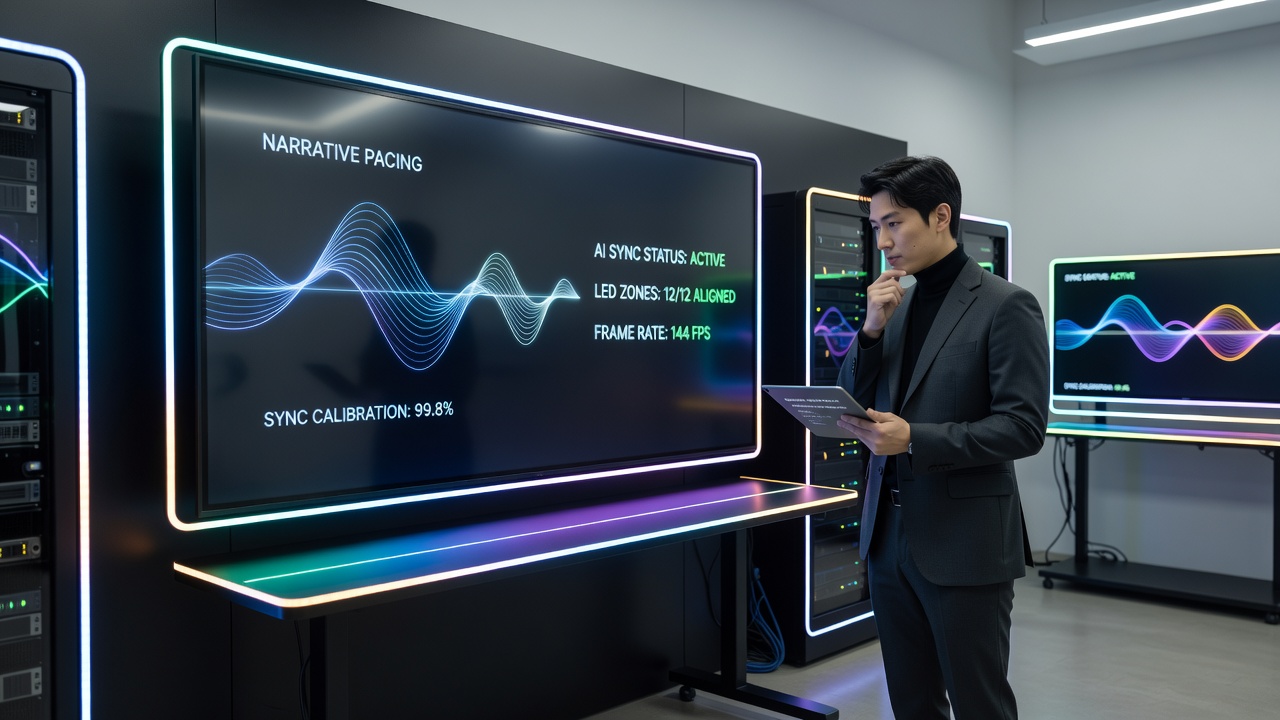
Case studies from development teams show integration times dropping from weeks to days once initial AI training datasets reach sufficient scale. Titles released around August 2026 incorporated refined versions of these tools, allowing dynamic adjustments during live patches that addressed community feedback on pacing mismatches in specific chapters. Figures from industry tracking services indicate that peripheral lighting bundles bundled with new adventure games accounted for measurable sales growth in accessory categories across European and Australian markets.
Technical Standards and Compatibility Trends
Industry groups continue refining open protocols that let AI lighting engines communicate with hardware from multiple manufacturers without proprietary lock-ins. Standards bodies emphasize backward compatibility so older LED setups can receive updates through firmware that incorporates newer narrative analysis features. Research from academic centers in Asia highlights how convolutional neural networks trained on thousands of hours of gameplay footage improve accuracy in detecting subtle mood shifts that traditional rule-based systems often miss. These advancements support cross-platform deployment, letting console users and PC players access identical synchronization experiences through unified companion apps.
Power management remains a focus area because continuous LED operation during long sessions requires efficient algorithms that dim or cycle lights during low-intensity narrative segments. Data from hardware tests reveals average energy consumption stays within acceptable ranges for residential use when systems prioritize predictive rather than reactive adjustments.
Future Directions Observed in Mid-2026
Upcoming patches and expansions scheduled for late 2026 aim to incorporate player biometric data from optional wearables, allowing lighting to respond to heart rate variations that correlate with story tension. Developers collaborate with lighting specialists to test multi-room setups where hallway fixtures extend the game's spatial audio and visual language beyond the primary display area. Trade reports from organizations like the European Games Developer Federation document increased collaboration between software houses and consumer electronics firms to standardize these extended reality elements.
Training datasets grow larger each quarter as more studios contribute anonymized narrative metadata, which in turn sharpens AI predictions for genres beyond pure adventure titles. Compatibility layers now handle simultaneous operation with other peripherals such as haptic devices, ensuring lighting changes complement rather than conflict with tactile feedback during intense sequences.
Conclusion
AI-driven LED synchronization continues to mature as an embedded feature in single-player adventure experiences, supported by expanding technical infrastructure and broader hardware availability. Players gain access to environments where physical lighting reinforces narrative intent, and ongoing refinements keep these systems responsive across diverse game structures. As integration methods simplify further, the approach stands positioned to influence additional genres while maintaining focus on story-driven pacing alignment.