Ceramic Substrate Designs Enhancing Signal Integrity in High-Density Circuit Boards for Wireless Esports Headsets
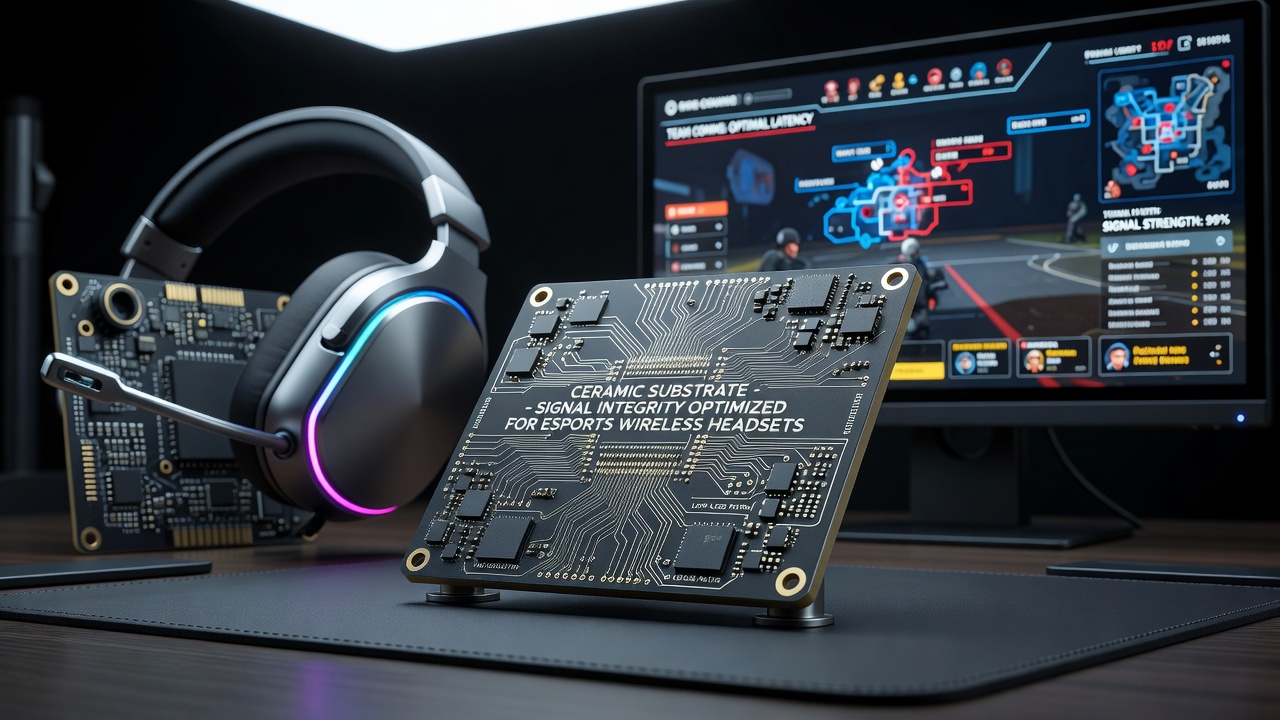
Ceramic substrates have emerged as a key material choice in high-density circuit boards for wireless gaming headsets, particularly those deployed in team-based strategy esports environments where consistent data transmission supports coordinated gameplay across multiple players. These materials, including alumina and aluminum nitride variants, provide thermal stability and electrical insulation properties that differ from traditional FR-4 epoxy boards, allowing tighter component spacing without compromising performance under prolonged use.
Material Properties Driving Adoption
Engineers select ceramic substrates because their dielectric constants remain stable across temperature fluctuations that occur during extended tournament sessions, while their lower loss tangents reduce signal attenuation at the high frequencies required for low-latency wireless protocols. Data from the National Institute of Standards and Technology indicates that ceramic materials maintain consistent impedance matching in boards operating above 5 GHz, a range common in modern headset radios. This stability becomes relevant when headsets must handle simultaneous voice communication and positional audio cues without introducing jitter that could disrupt team synchronization.
Signal Integrity in Dense Layouts
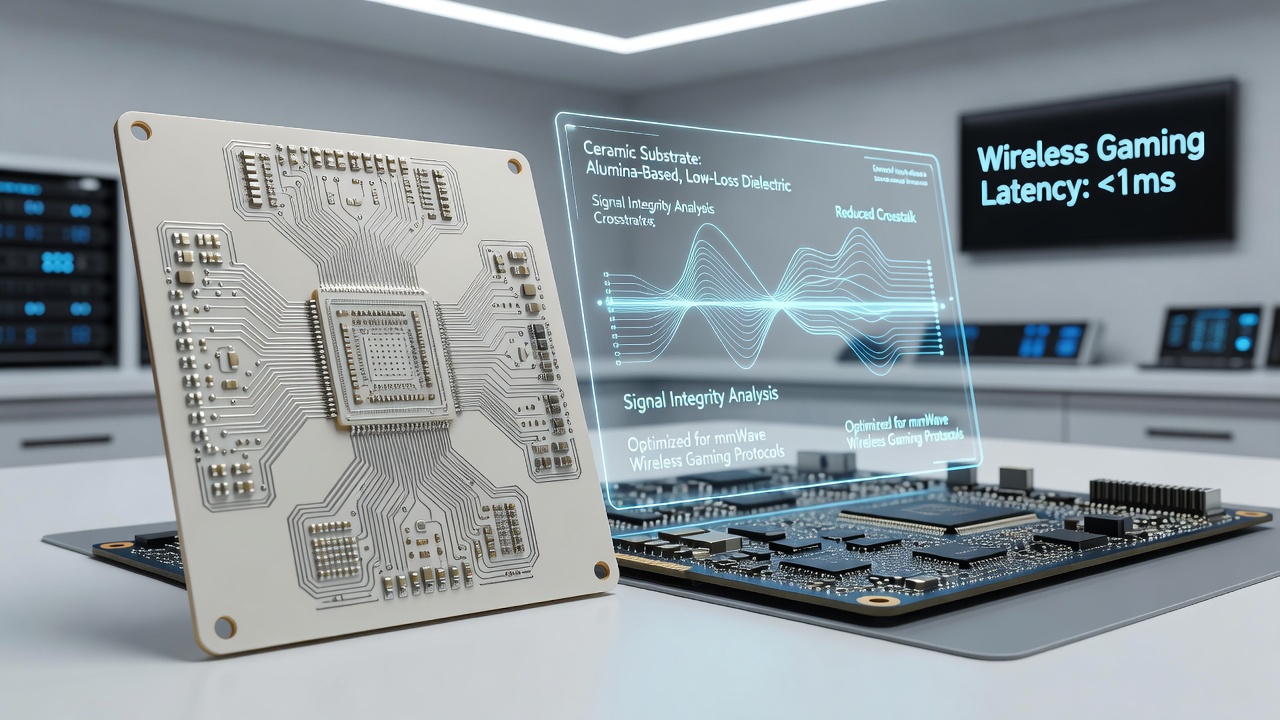
High-density circuit boards pack multiple layers of traces, vias, and integrated circuits into compact volumes typical of over-ear wireless headsets, yet this density increases risks of crosstalk and electromagnetic interference between adjacent signal paths. Ceramic substrates address these issues through their higher thermal conductivity, which dissipates heat generated by power amplifiers and processors more evenly, thereby preventing localized expansion that might alter trace geometries and degrade signal quality. Observers note that boards using these substrates exhibit reduced insertion loss measurements compared with organic alternatives when tested under continuous transmission loads.
Implementation in Wireless Headset Architectures
Manufacturers integrate ceramic-based boards into headset designs by embedding them within the ear cup assemblies where space constraints limit traditional cooling options. The substrates support finer line widths and spacing, enabling placement of multiple antenna elements and sensor arrays without violating minimum clearance rules that preserve signal isolation. Research published through IEEE Xplore demonstrates that such configurations maintain bit error rates below thresholds required for uninterrupted 24-bit audio streams even when players move rapidly during competitive matches. Wireless modules built on these boards also show improved coexistence with other 2.4 GHz and 5 GHz devices common in tournament venues.
Relevance to Team Strategy Esports
In team-based strategy esports titles that rely on rapid callouts and shared spatial awareness, headset reliability directly influences how information flows among squad members. Ceramic substrate designs contribute by supporting stable wireless links that maintain consistent latency profiles even when multiple headsets operate in close proximity within arena settings. Tournament organizers have recorded fewer connectivity interruptions in setups utilizing these boards, according to aggregated equipment reports from events held through mid-2026. The material's resistance to mechanical stress from repeated donning and transport further supports durability requirements in professional circuits where equipment sees daily handling.
Developments Observed Through June 2026
By June 2026, several headset suppliers had incorporated next-generation ceramic formulations with embedded passive components that further reduce board real estate while preserving signal paths. These advances align with ongoing refinements in wireless standards that prioritize lower power spectral density without sacrificing range, allowing headsets to operate longer on single charges during marathon practice sessions. Industry analyses show adoption rates climbing in products targeted at organized play, where signal integrity metrics factor into purchasing decisions alongside comfort and audio fidelity.
Testing and Validation Approaches
Validation protocols for these boards include vector network analyzer sweeps across operating bands, thermal imaging under load, and long-duration packet transmission tests that simulate real match conditions. Results consistently highlight lower phase noise and improved return loss figures when ceramic layers replace conventional dielectrics in critical sections of the radio frequency chain. Such measurements provide objective benchmarks that teams and organizers use when evaluating equipment compliance with venue interference guidelines.
Conclusion
Ceramic substrate integration continues to influence how high-density boards handle signal demands in wireless headsets designed for team strategy competition. The combination of thermal management, electrical stability, and layout flexibility supports the performance thresholds required in environments where multiple devices operate simultaneously. Ongoing material refinements and testing methodologies keep these designs aligned with evolving wireless headset requirements through the current competitive season.