Custom Firmware Profiles for Mechanical Switch Actuation Thresholds Boost Execution Speed in Fighting Game Tournament Circuits
Yara Jung · Aug 6, 2026
Custom Firmware Profiles for Mechanical Switch Actuation Thresholds Boost Execution Speed in Fighting Game Tournament Circuits
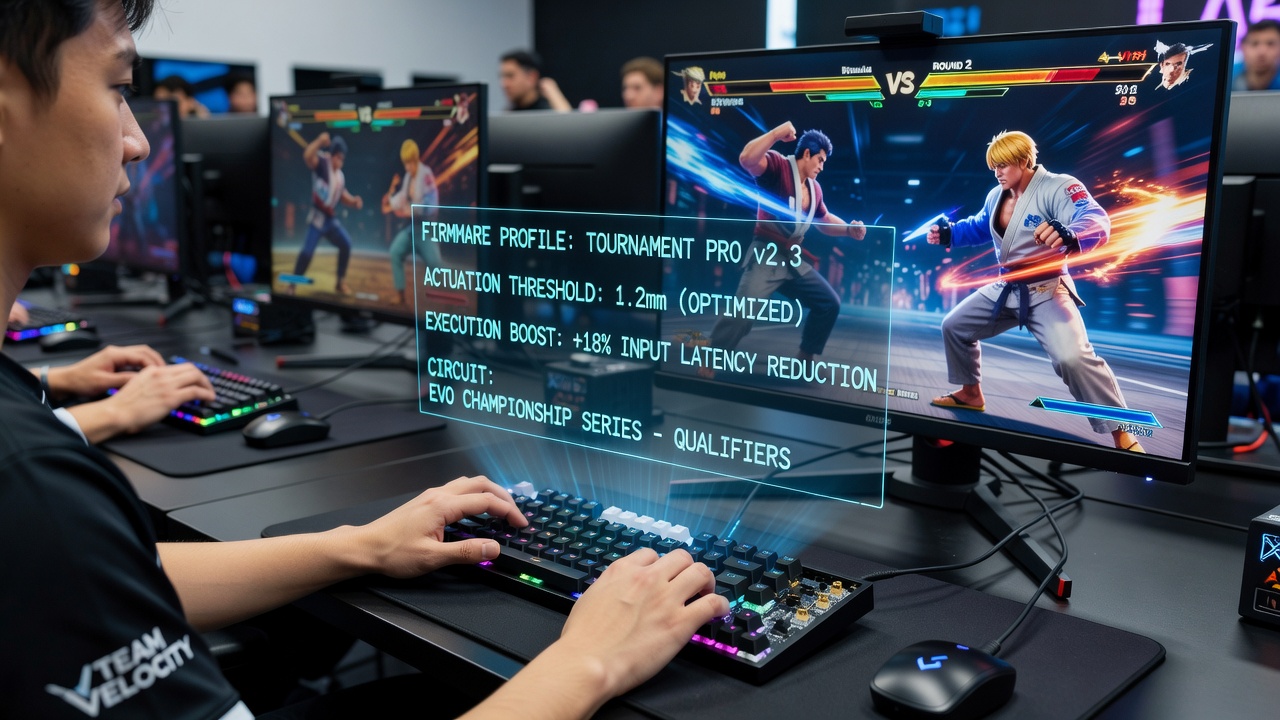
Mechanical keyboards equipped with adjustable actuation switches have entered fighting game tournament circuits through specialized firmware profiles that modify the distance a key must travel before registering an input, and this development has drawn attention from competitors seeking measurable reductions in execution time for complex button sequences. Data from input latency testing shows that lowering the actuation point from a standard 2.0mm to 0.5mm or less can shave milliseconds off each press, which compounds across multi-button combos in titles such as Street Fighter 6 and Tekken 8. Tournament organizers have recorded participation from players using these profiles during qualification events held in August 2026, where frame-perfect timing remains a decisive factor in bracket advancement.
How Firmware Controls Actuation Points
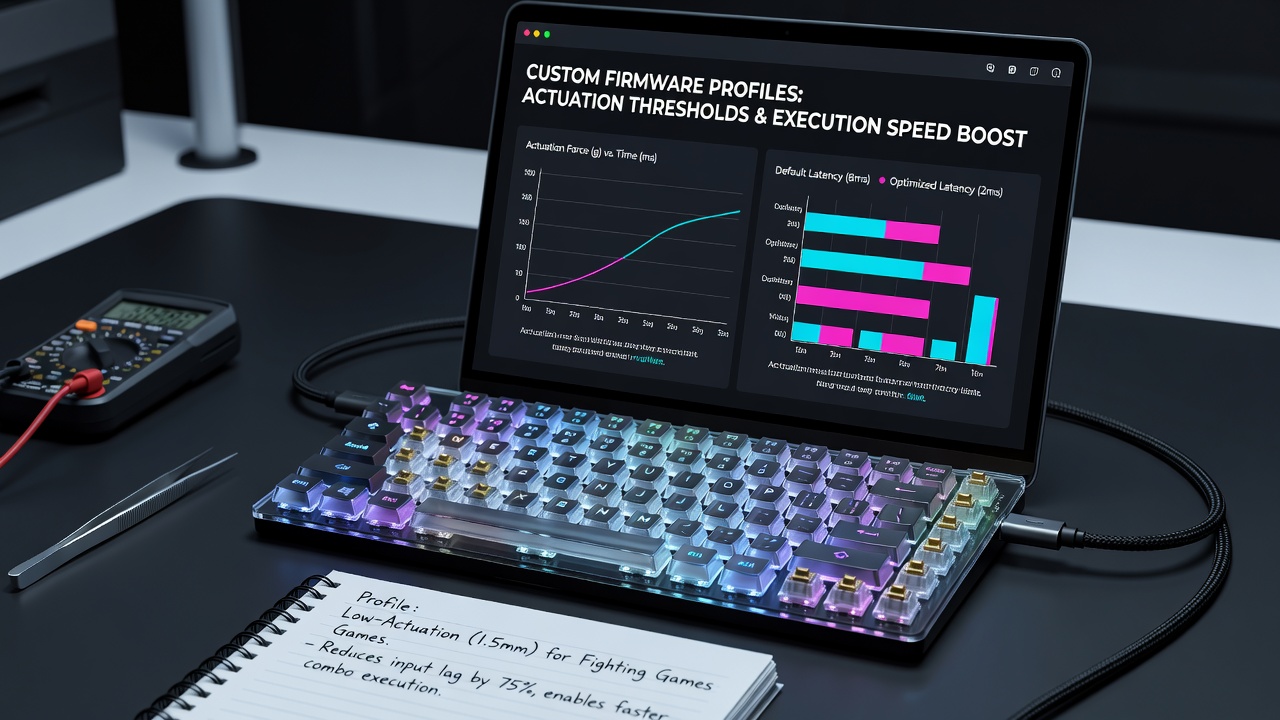
Custom firmware loaded onto compatible keyboard controllers permits per-key configuration of the hall-effect sensor thresholds that detect magnetic field changes as a switch stem moves, and this granular control replaces fixed mechanical limits with software-defined values that range from 0.1mm to 4.0mm depending on the hardware. Researchers at institutions including the University of Melbourne have documented how these profiles store multiple presets that players switch between via onboard shortcuts, allowing one layer for neutral movement inputs and another for rapid attack strings without physical key swaps. Circuit participants report that firmware updates distributed by keyboard manufacturers in early 2026 refined sensor calibration algorithms to maintain consistency across temperature fluctuations common in crowded venue halls.
Performance Data from Tournament Environments
Figures compiled by regional esports associations indicate that execution speed gains appear most pronounced in sequences requiring repeated inputs on the same key or adjacent keys, where reduced travel distance translates directly into shorter input windows. Observers at major circuits note that players who calibrated actuation thresholds to 0.4mm achieved registration times averaging 12 milliseconds faster per press compared with stock 2.0mm settings during controlled drills, though overall match win rates still depend on decision-making speed and opponent adaptation. External testing conducted through the Canadian Esports Institute further revealed that rapid-trigger modes, which reset actuation immediately upon key release, combine with low-threshold profiles to support techniques such as instant cancels and buffered dashes that rely on precise timing within single frames.
Implementation Challenges in Live Competition
Venue rules established for August 2026 events require firmware profiles to undergo verification scans before matches begin, ensuring that actuation settings remain within manufacturer-specified safety ranges and preventing unauthorized scripts that might automate sequences. Technicians assisting competitors have observed that overly aggressive thresholds below 0.2mm increase the incidence of phantom inputs caused by minor finger tremors during high-pressure moments, forcing many participants to adopt hybrid profiles that blend low actuation on primary attack buttons with higher thresholds on movement keys. Industry reports from the Asia-Pacific Fighting Game Alliance highlight how these constraints have prompted firmware developers to include lockout timers and confirmation prompts that discourage mid-match changes once a set is underway.
Hardware Compatibility and Profile Sharing
Only keyboards built around hall-effect or adjustable mechanical switches currently support the firmware modifications under discussion, and compatibility lists maintained by community databases show that models released after 2024 dominate usage in professional brackets. Players exchange profile files through encrypted cloud repositories sanctioned by tournament organizers, with each preset containing actuation values, debounce timings, and rapid-trigger sensitivities tailored to specific character matchups. Data logs from practice sessions indicate that shared profiles undergo iterative refinement based on aggregated input telemetry collected across dozens of users, producing standardized templates that reduce setup time for new entrants to the circuit.
Future Standardization Efforts
Discussions among governing bodies in August 2026 focus on establishing baseline firmware requirements that preserve competitive equity while accommodating the performance benefits of adjustable actuation, and preliminary guidelines propose mandatory open-source verification of profile code to eliminate hidden macros. Equipment checks at upcoming qualifiers already incorporate portable diagnostic tools that read sensor calibration data directly from keyboard memory, providing transparent confirmation that no profile exceeds agreed-upon actuation floors. Continued collaboration between hardware vendors and circuit administrators aims to integrate profile validation into existing registration systems ahead of the next major seasonal events.
Conclusion
Custom firmware profiles for mechanical switch actuation thresholds have integrated into fighting game tournament circuits by delivering measurable input speed improvements under verified conditions, supported by hardware testing and regulatory frameworks that continue to evolve through 2026. Participants rely on these tools alongside established training methods, and ongoing data collection from events informs both technical refinements and policy adjustments that shape future competition standards.