Eye Tracking Sensors Reshaping Aim Precision in Competitive VR Training Modules
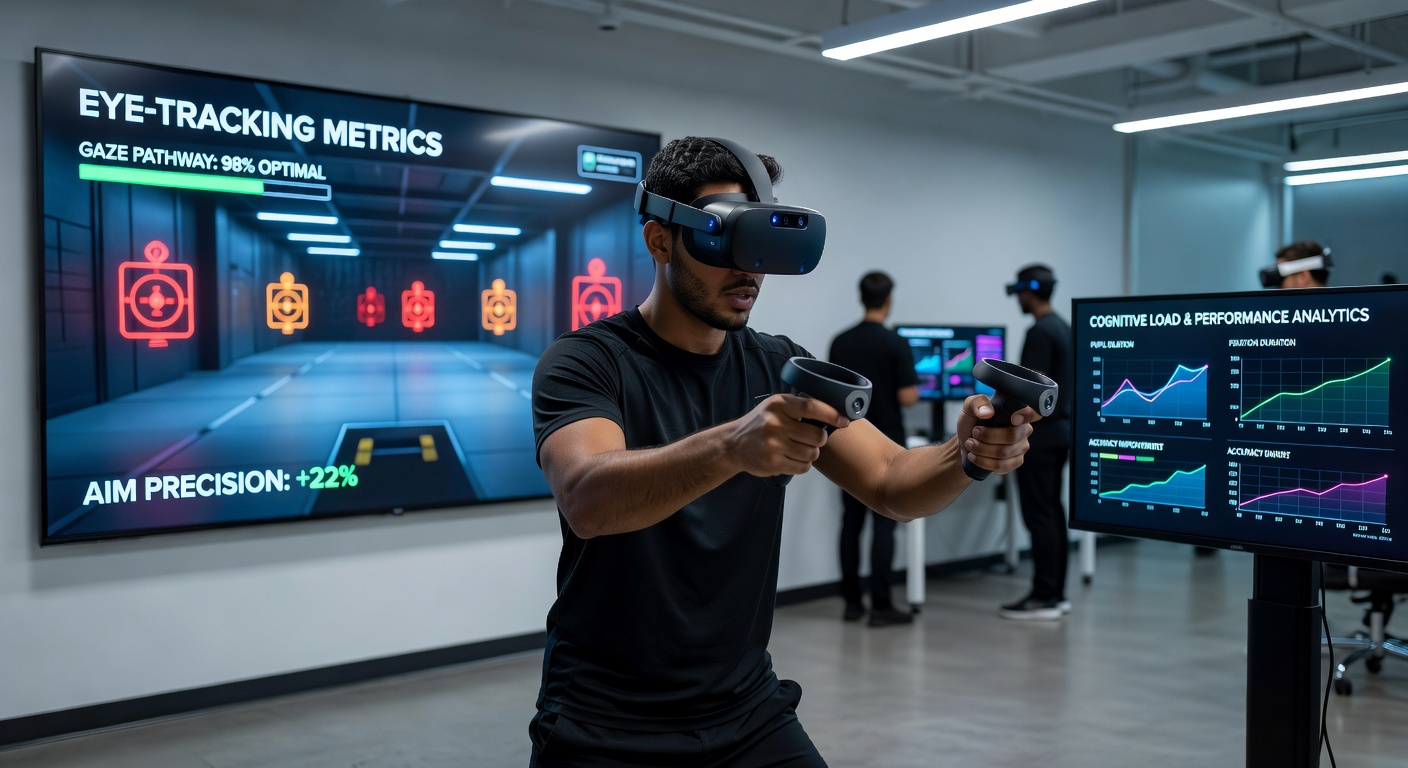
Eye tracking sensors have entered competitive VR training modules with increasing frequency since early 2025, and by May 2026 several professional esports organizations report measurable shifts in how trainees refine targeting accuracy during simulated scenarios. These sensors sit inside headsets and record where a user directs their gaze at millisecond intervals, then feed that data into software that adjusts virtual reticles or highlights target zones in real time. Developers integrate the hardware directly with motion controllers so that head orientation and eye position combine to determine final aim vectors rather than relying on controller input alone.
Technical Integration in Training Environments
Hardware manufacturers embed infrared cameras around the lens frames of VR headsets, and these cameras capture pupil movement while algorithms translate the data into screen coordinates within the virtual space. Training modules built for first-person shooters now include calibration sequences that last under ninety seconds yet establish baseline gaze patterns for each user. Once calibrated the system flags moments when a trainee's eyes drift away from the intended target before the trigger pull occurs, and it logs those instances for later review. Software platforms running these modules store session data on local servers or cloud instances so coaches can compare gaze heatmaps across multiple athletes without interrupting live drills.
Research conducted at institutions such as the Technical University of Munich indicates that combining eye data with controller telemetry reduces average target acquisition time by measurable margins in controlled tests. The same studies note that participants maintain steadier crosshair placement during sustained tracking tasks when the software provides subtle visual cues tied to gaze direction. Engineers continue to refine latency between sensor capture and on-screen response, with current systems reporting sub-10-millisecond delays in optimized setups released during the first quarter of 2026.
Application in Professional Esports Preparation
Teams preparing for major tournaments incorporate eye-tracked VR sessions into weekly schedules because the modules allow repeated practice against procedurally generated enemy patterns without physical venue constraints. One documented workflow involves athletes completing a thirty-minute VR block that records eye dwell time on moving targets, after which analysts export the session file into conventional review software. Coaches then overlay gaze paths onto recorded controller movements to identify discrepancies between where the player looked and where the weapon actually pointed. This process reveals habits such as premature target switching or delayed focus adjustments that standard video review often misses.
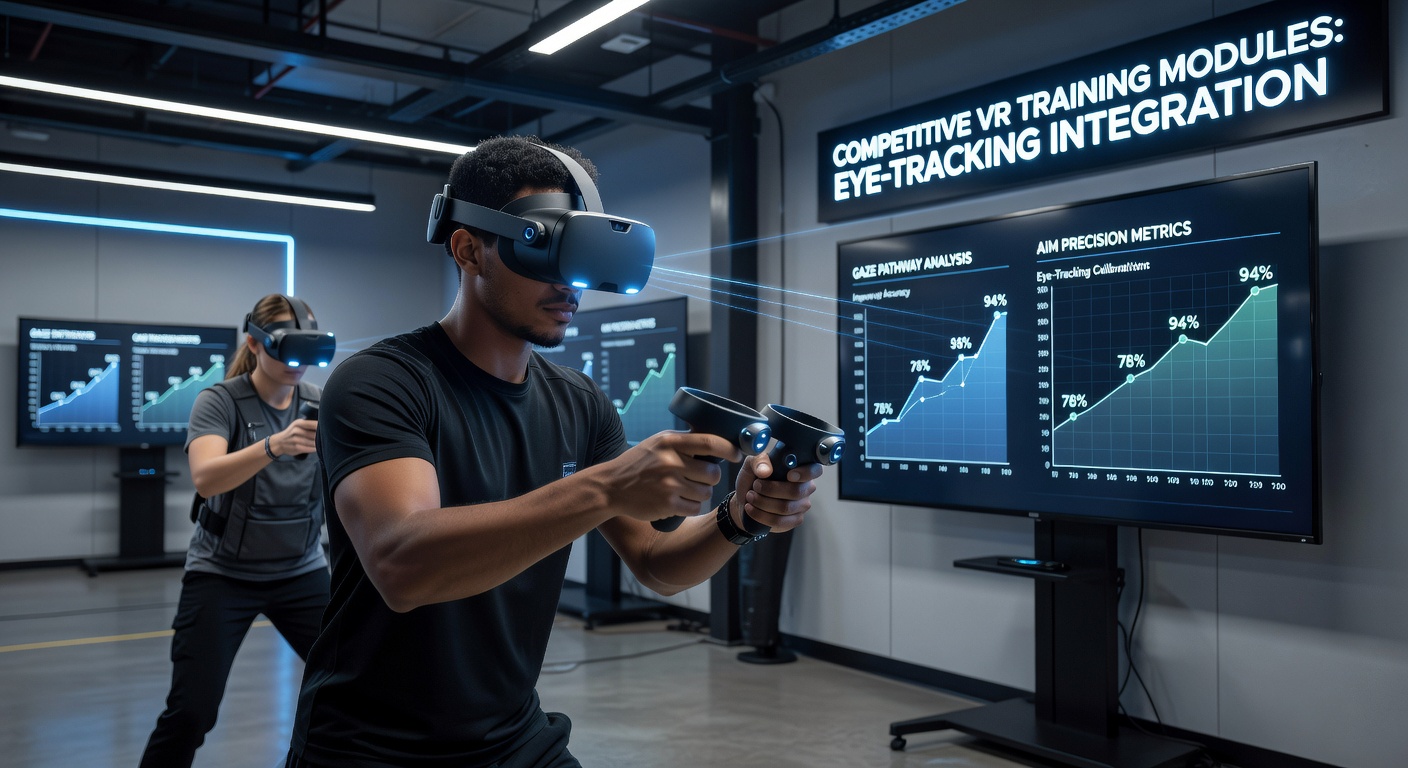
Industry reports from the Asia-Pacific VR Gaming Federation highlight adoption rates among South Korean and Australian squads that reached double digits by spring 2026. Those organizations cite compatibility with existing headset fleets as a primary driver, since many newer models ship with eye tracking included at the factory level. Trainees benefit from immediate feedback loops that adjust difficulty parameters automatically, increasing target speed or adding visual clutter only after gaze accuracy thresholds are met. The approach keeps sessions challenging yet personalized without requiring constant manual intervention from support staff.
Data Metrics and Performance Tracking
Common metrics tracked by these systems include fixation duration, saccade velocity, and smooth pursuit accuracy, each measured against benchmarks established during initial calibration. Developers present the numbers through dashboard interfaces that display trends over weeks rather than isolated sessions, allowing long-term progress monitoring. Several training platforms now export raw gaze datasets in standardized formats so third-party analytics tools can perform deeper statistical analysis. Figures from a 2025 collaborative paper hosted by the University of Sydney's Human Performance Lab show correlations between improved fixation stability and higher in-game kill-to-death ratios among amateur competitors who trained consistently with the technology.
Security considerations have prompted some developers to implement on-device processing for gaze data, limiting transmission to anonymized summary statistics when sessions occur over public networks. This architecture satisfies requirements outlined in emerging European digital sports guidelines released in late 2025, and it reduces concerns about biometric information storage. Athletes retain control over whether individual session logs remain private or contribute to aggregated team performance databases.
Future Developments and Hardware Refinements
Component suppliers continue to shrink sensor footprints while increasing camera resolution, and prototypes demonstrated at industry events in May 2026 featured integrated units smaller than previous generations yet capable of higher sampling rates. Software updates released alongside new headsets add predictive aiming assists that anticipate target movement based on historical gaze behavior collected from thousands of prior sessions. These features remain optional within competitive modules so organizations can disable them during official qualification events. Ongoing work at research centers focuses on reducing calibration drift caused by headset slippage during intense movement, with early firmware patches showing promise in maintaining accuracy across hour-long sessions.
Conclusion
Eye tracking sensors have become a standard component within many competitive VR training modules by mid-2026, delivering granular data that complements traditional controller input and video analysis. Organizations that integrate the technology report structured improvements in aim-related metrics while maintaining compliance with data handling standards across regions. Continued hardware miniaturization and software refinement suggest the approach will expand into additional game genres and training contexts as more headsets ship with the capability built in from the start.