Firmware Optimizations Balance Power Draw in Multi-Display Mobile Gaming Configurations
Yara Jung · Aug 20, 2026
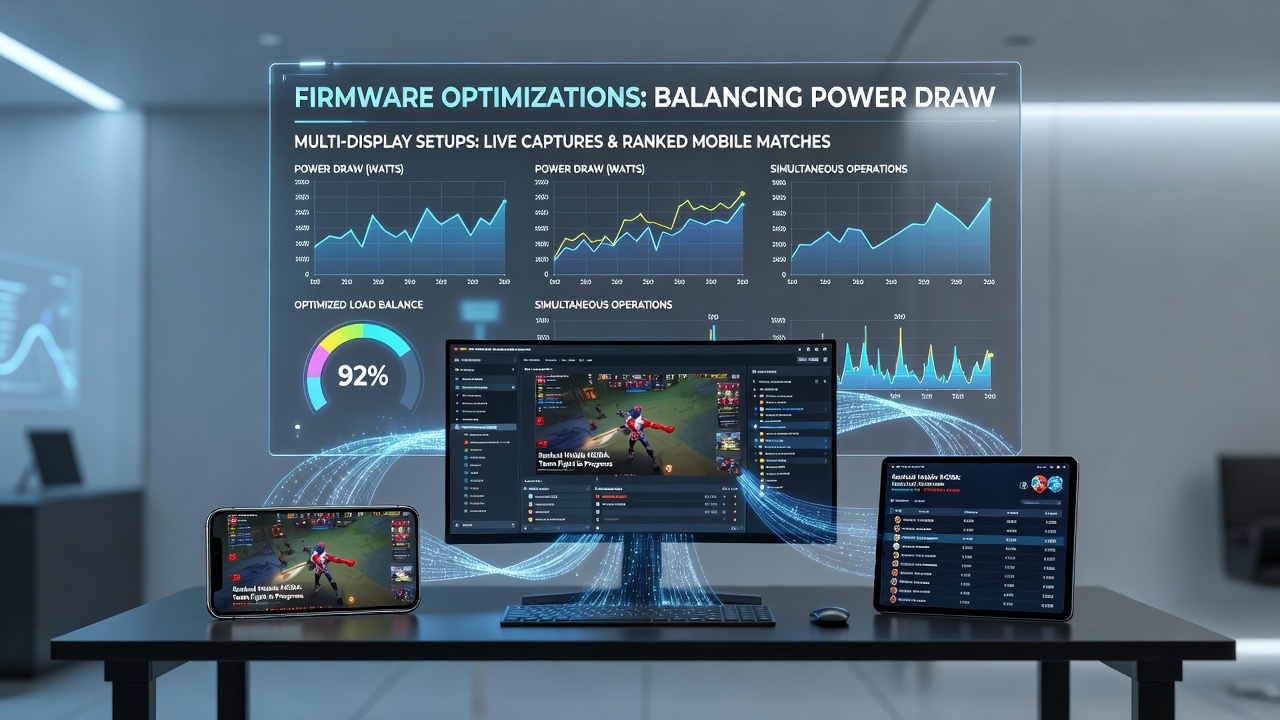
Firmware Optimizations Balance Power Draw in Multi-Display Mobile Gaming Configurations
Multi-display configurations now support simultaneous live captures alongside ranked mobile matches through targeted firmware adjustments that regulate voltage scaling and refresh rate synchronization across connected panels. These optimizations address the combined load from external monitors, internal screens, and wireless transmission modules while maintaining stable frame delivery during competitive play. Manufacturers release incremental updates that refine power gating sequences, allowing devices to allocate resources dynamically as capture software activates alongside game clients.
Core Mechanisms in Firmware Power Management
Firmware layers coordinate between display controllers and system-on-chip power domains by monitoring real-time current draw from each output port. Algorithms adjust pixel clock frequencies and backlight intensities in response to concurrent demands from screen recording pipelines and network-intensive match sessions. Research indicates that coordinated scaling reduces peak consumption by sequencing display wake cycles rather than sustaining constant high-power states across all attached monitors.
Engineers implement predictive load balancing that anticipates spikes when a mobile device switches between capture encoding and ranked matchmaking protocols. Data collected from sensor arrays embedded in recent hardware revisions shows consistent patterns where firmware interventions prevent thermal throttling during extended sessions that combine video output, encoding, and wireless uplink. Observers note that such firmware routines operate below the operating system level, enabling faster response times compared to software-based governors alone.
Integration With Live Capture and Ranked Match Workflows
Live capture workflows require sustained bandwidth for encoding while ranked mobile matches demand low-latency input processing and network stability. Firmware optimizations isolate power domains so that capture hardware accelerators draw from dedicated rails separate from display output circuits. This separation allows continued operation even when multiple panels remain active, as demonstrated in configurations that pair a primary gaming display with secondary monitoring screens for stream overlays.
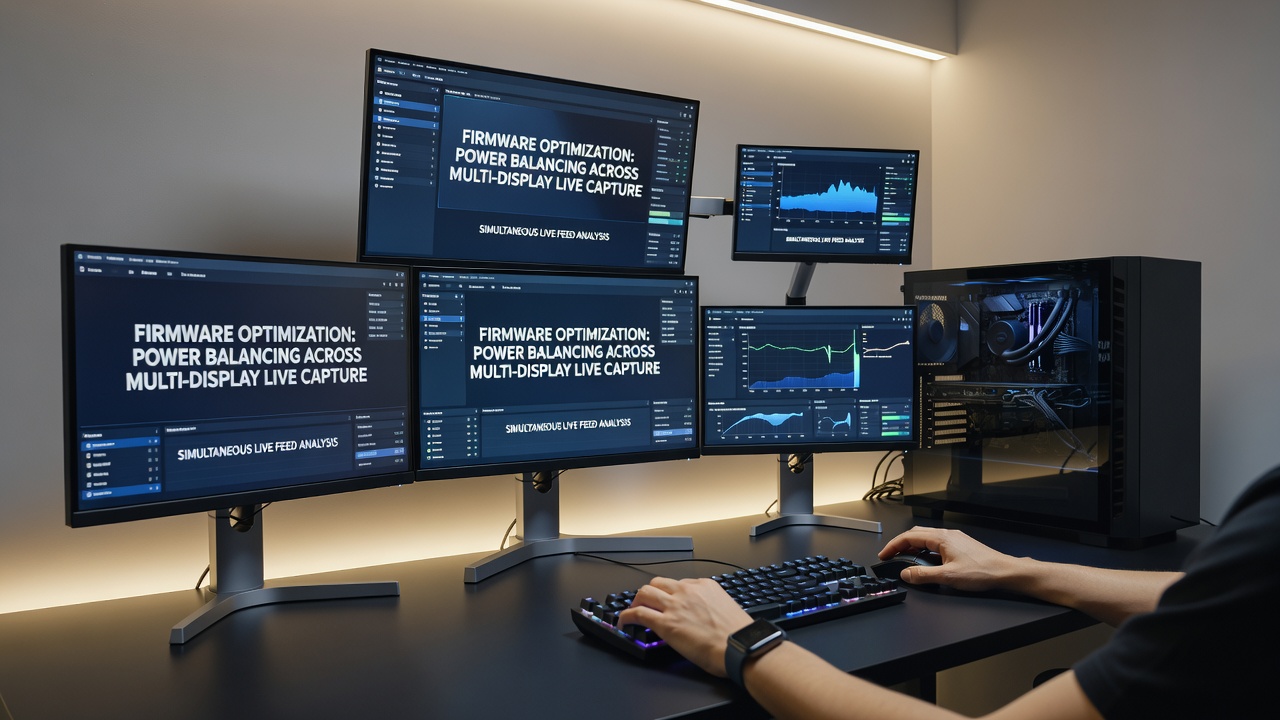
Ranked match environments introduce variable network loads that firmware counters through adaptive duty cycling of wireless radios coordinated with display refresh commands. Studies from institutions including the University of Tokyo have documented measurable efficiency gains when firmware enforces strict timing between frame buffer updates and capture buffer transfers. Those measurements, gathered across multiple device generations, confirm that balanced power allocation extends operational duration without compromising visual fidelity or input responsiveness.
Performance Data and Implementation Trends
Figures released by industry monitoring groups in August 2026 reveal adoption rates for these firmware features across flagship mobile chipsets and attached display ecosystems. Aggregated telemetry indicates average reductions in total system power during combined capture and match scenarios, with particular improvements observed when devices manage three or more simultaneous video outputs. Engineers achieve these results through refined firmware tables that map display topology to available power budgets, updating dynamically as users connect or disconnect external panels.
Trade associations such as the Consumer Technology Association have compiled comparative datasets showing how different firmware revisions handle edge cases like sudden match queue pops during active capture. The datasets highlight that successful implementations maintain consistent power draw curves rather than exhibiting sharp spikes, a direct outcome of preemptive voltage adjustments embedded in the firmware logic.
Future Firmware Directions
Developers continue refining these optimizations by incorporating additional sensor inputs from attached peripherals and environmental monitors. Future revisions are expected to extend the same principles to heterogeneous display mixtures that combine high-refresh internal panels with lower-power secondary monitors. Regulatory bodies including the Australian Department of Industry, Science and Resources have begun referencing such power management approaches in efficiency guidelines for portable electronics, encouraging broader standardization across manufacturers.
Conclusion
Firmware optimizations that balance power draw across multi-display setups now form a foundational element of mobile gaming hardware supporting simultaneous live captures and ranked matches. Continued refinement of these low-level controls sustains performance while managing energy consumption across increasingly complex display arrangements.