Firmware Tweaks in Wireless Mice Shape Precision Aiming Outcomes in International FPS League Matches
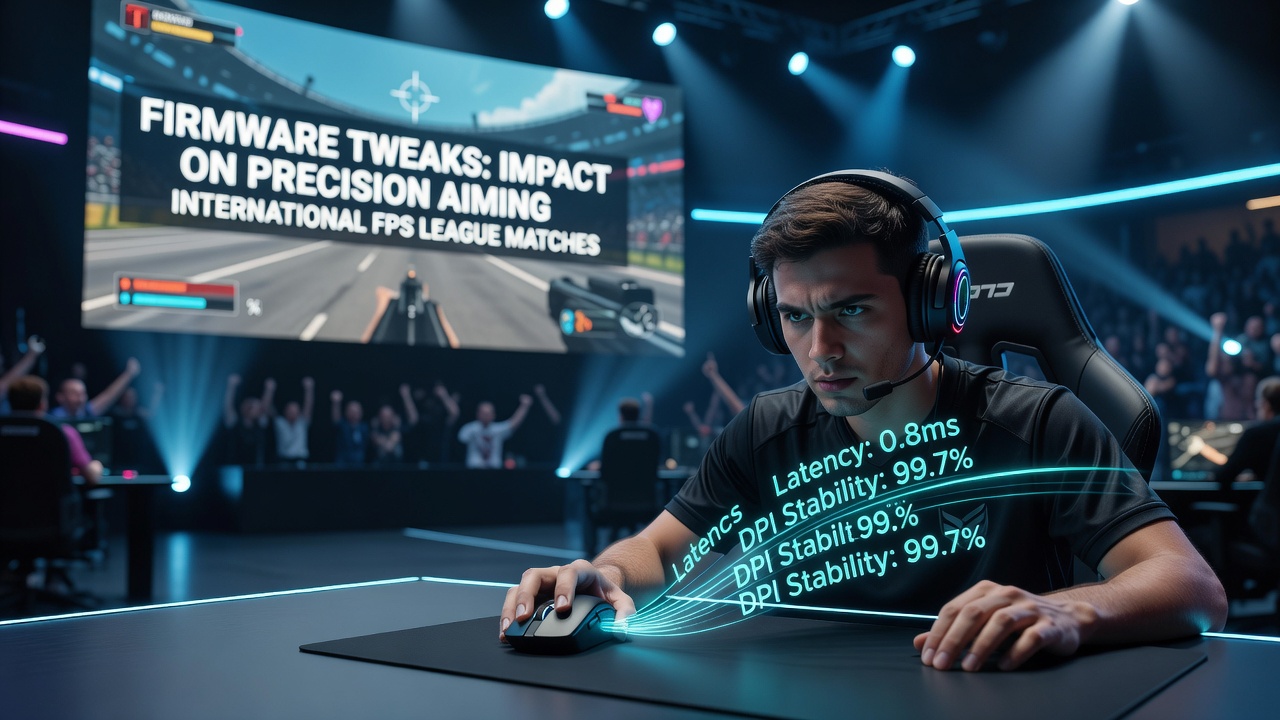
Wireless mice used in competitive first-person shooter environments rely on firmware that manages sensor calibration, wireless data transmission, and polling intervals, and adjustments to these parameters have produced measurable shifts in tracking consistency during high-stakes league play. Teams competing in international circuits have adopted targeted firmware modifications that alter debounce timing and signal filtering, which in turn affect how movements translate to on-screen cursor response without introducing additional hardware changes.
Technical Components Behind Firmware Modifications
Manufacturers release firmware updates that refine the way optical or laser sensors process surface data while simultaneously optimizing the radio frequency protocols that carry those readings to the receiver, and these changes often include revised algorithms for motion prediction and noise reduction. Observers note that such updates allow devices to maintain higher effective polling rates across varying distances between mouse and receiver, a factor that becomes critical when players execute rapid flicks or sustained tracking sequences in matches governed by organizations like the International Esports Federation.
Research conducted at the University of Waterloo has examined how firmware-level adjustments to sensor lift-off distance and acceleration curves influence pixel-level accuracy under controlled latency conditions, and the resulting datasets show reduced deviation rates when firmware prioritizes raw input over smoothed output. Engineers working with professional squads typically test these settings through repeated aim drills that log coordinate data, then compare pre- and post-update performance metrics collected during scrimmages.
Observed Effects During League Competition
During the June 2026 International FPS League finals held across multiple venues in North America and Europe, several squads reported implementing custom firmware builds that lowered wireless packet overhead by adjusting transmission intervals, and match telemetry indicated tighter grouping of shots on moving targets compared with earlier firmware versions. Analysts tracking player statistics across the event documented incremental improvements in headshot percentages that aligned with the timing of these firmware deployments rather than changes in player hardware or training volume.
League officials have since required disclosure of firmware versions used by competing teams to ensure parity, while data collected from broadcast overlays has allowed external reviewers to correlate specific firmware revisions with in-game aim stability measurements. One case involved a European roster that switched to a firmware branch emphasizing reduced debounce windows, after which their average time-to-target on strafing opponents decreased across a series of recorded matches.
Implementation Practices Among Professional Teams
Support staff at major organizations maintain internal repositories of tested firmware profiles tailored to particular mouse models and surface types, and these profiles undergo validation through both laboratory sensor logging and in-game scenario replication before deployment. Technicians often combine firmware changes with receiver placement optimizations that minimize interference, creating layered adjustments that collectively support more predictable cursor behavior during prolonged tournament days.

Training regimens now incorporate firmware rollback procedures so that players can revert to previous versions if unexpected tracking anomalies appear mid-event, and documentation from multiple squads shows that these rollback tests occur at least once per preparation cycle. The process requires coordination between hardware specialists and analysts who review frame-by-frame footage to isolate whether observed aiming inconsistencies stem from firmware behavior or other variables.
Data Collection and Performance Metrics
Independent research groups have compiled datasets from public match recordings that quantify differences in aim smoothness before and after firmware updates, and these compilations draw on coordinate logs generated by game engines during official league play. Figures released through academic channels indicate that firmware tweaks targeting wireless handshake efficiency produced the largest reductions in micro-stutter events, particularly when players moved between areas with varying wireless congestion levels inside arena environments.
Trade associations representing peripheral manufacturers have begun publishing compatibility matrices that list firmware versions verified for use in sanctioned competitions, and these resources help teams avoid configurations that could trigger automatic disqualification under equipment regulations. Continued monitoring of firmware adoption rates across regions shows steady uptake among squads preparing for upcoming qualification cycles, with particular interest in updates that stabilize tracking on low-friction mouse pads commonly used at international events.
Conclusion
Firmware modifications continue to serve as a controllable variable within the equipment ecosystem of international FPS leagues, and ongoing data collection from tournaments provides teams with evidence-based guidance on which adjustments deliver consistent aiming benefits. As sensor technology and wireless standards evolve, teh scope of available tweaks expands, requiring sustained attention from technical staff who integrate these changes into broader performance strategies.