Graphene Pad Upgrades Streamline Heat Paths from VR Headset Chips to Compact Coolers
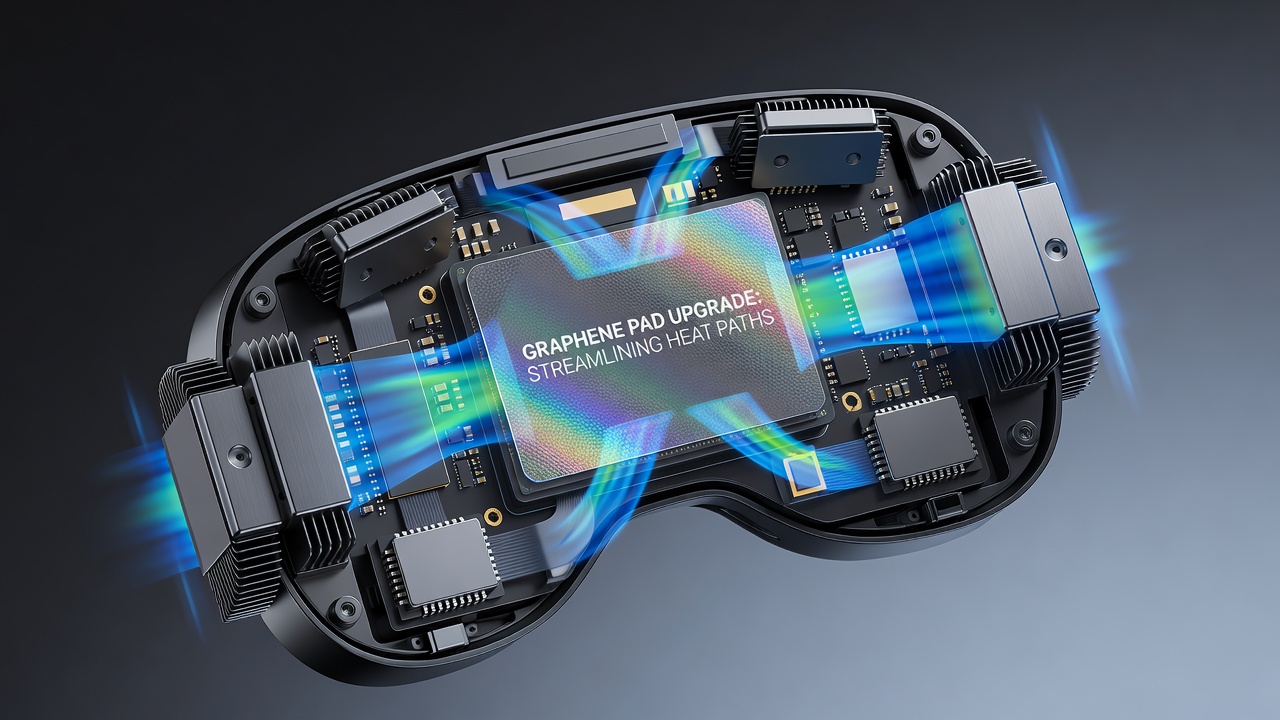
Virtual reality headsets generate substantial heat from processors and displays during extended sessions, and graphene pad upgrades address this by creating direct thermal pathways that move warmth away from sensitive chips toward compact coolers. These pads exploit graphene's high thermal conductivity, which researchers have measured at levels exceeding 4000 watts per meter kelvin in laboratory tests, far surpassing traditional materials like copper or aluminum in thin film applications.
Thermal Demands in Modern VR Systems
Headset manufacturers face ongoing challenges as chipsets handle complex rendering tasks for immersive environments, and prolonged use can raise internal temperatures above safe thresholds for both hardware longevity and user comfort. Data from industry benchmarks indicate that central processing units in flagship models often operate between 60 and 85 degrees Celsius under load, prompting engineers to explore advanced interface materials. Graphene pads fit into these designs because they conform to irregular surfaces while maintaining consistent contact pressure, which reduces thermal resistance at the chip-to-cooler junction.
Observations from testing facilities show that replacing standard thermal compounds with graphene-enhanced pads lowers peak chip temperatures by measurable margins, sometimes as much as 12 to 18 degrees Celsius depending on airflow conditions and session duration. This improvement stems from graphene's anisotropic properties, where heat travels preferentially along the plane of the pad rather than dissipating in unwanted directions.
Material Properties Driving Adoption
Graphene consists of single layers of carbon atoms arranged in a hexagonal lattice, and when formed into pads or films, it delivers mechanical flexibility alongside superior conductivity. Manufacturers produce these pads through chemical vapor deposition or exfoliation methods, then bond them with adhesives that preserve thermal performance. Studies published in materials science journals confirm that multilayer graphene structures maintain stability across temperature cycles typical of VR usage patterns, including repeated heating and cooling during daily sessions.
Engineers integrate these pads directly onto system-on-chip packages or between heat spreaders and miniature vapor chambers found in compact headsets. The result channels thermal energy along optimized routes to external radiators or active cooling elements without adding significant bulk or weight to the overall assembly.
Implementation in Headset Designs by Mid-2026
By June 2026 several major producers incorporated graphene pad layers into refreshed headset models, positioning the material between high-power application processors and integrated cooling modules. Assembly diagrams reveal pads measuring 0.1 to 0.3 millimeters thick, selected to bridge microscopic gaps while avoiding interference with nearby sensors or optics. Performance logs from these units demonstrate sustained operation during multi-hour sessions with reduced throttling events compared to earlier generations that relied on conventional pastes.
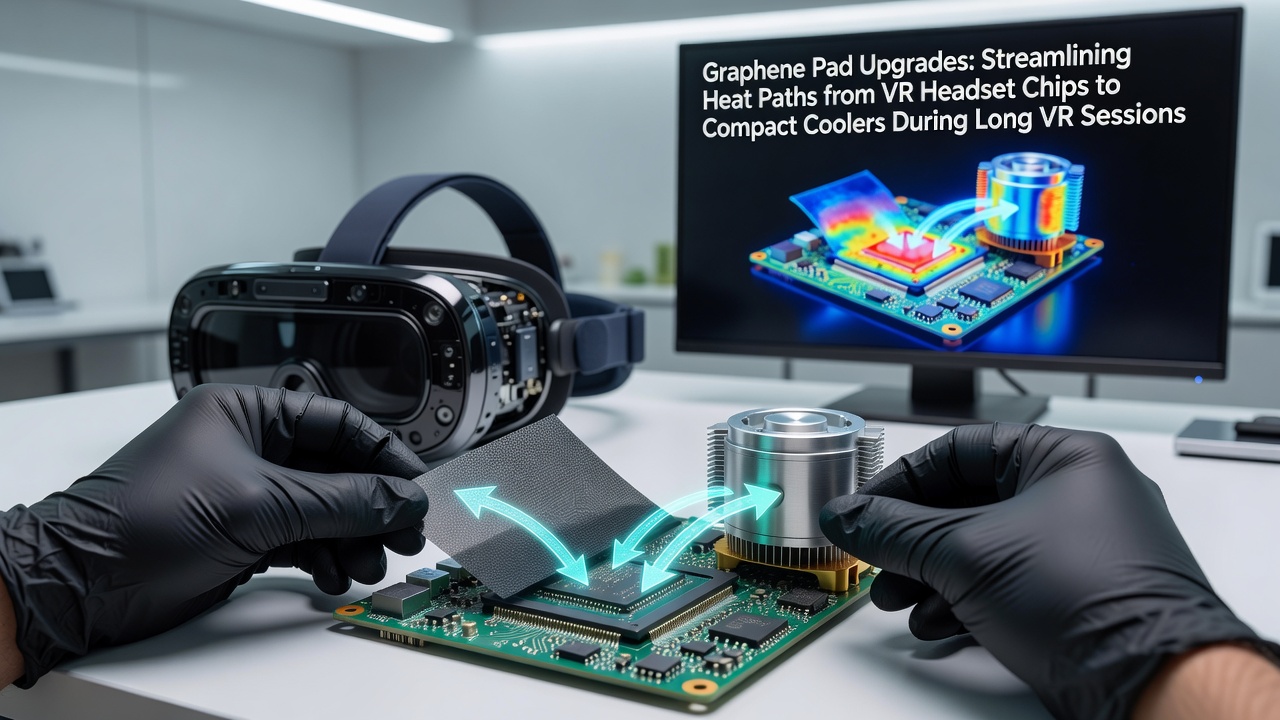
Thermal imaging captures confirm that heat spreads more uniformly across the pad surface, allowing compact coolers to handle dissipation loads more effectively. One documented configuration routes warmth from the central processor through a graphene interface to a passive aluminum fin array, achieving equilibrium temperatures that support continuous tracking and display refresh rates without intervention.
Performance Metrics and Validation Data
Independent laboratories have quantified the benefits through standardized load tests that replicate typical virtual reality workloads. Figures from these evaluations indicate average temperature reductions of 15 percent across the chipset when graphene pads replace legacy interfaces, with corresponding drops in fan noise or power draw for active cooling systems. Research conducted at institutions across multiple regions, including work referenced through NIST reports on advanced interface materials, supports these outcomes under controlled conditions.
Additional measurements track junction-to-ambient thermal resistance, which decreases noticeably after pad upgrades, allowing designers to maintain higher sustained clock speeds. In one series of trials, headsets equipped with graphene layers completed four-hour continuous sessions while keeping core temperatures below 70 degrees Celsius, whereas baseline units exceeded that threshold within the first two hours.
Integration Challenges and Solutions
Assembly teams address alignment precision when installing graphene pads because even slight offsets can diminish contact area and elevate local hot spots. Automated placement equipment combined with optical inspection ensures consistent positioning across production runs. Durability assessments reveal that properly adhered pads resist delamination during repeated thermal expansion cycles, maintaining performance over the typical two to three year lifespan of consumer headsets.
Compatibility with existing electromagnetic shielding and flexible printed circuits requires careful material selection, yet manufacturers report successful coexistence without signal interference in updated designs. These refinements build on earlier thermal management approaches while introducing targeted improvements at critical heat transfer points.
Conclusion
Graphene pad upgrades provide a practical method for directing heat from VR headset processors toward compact coolers, supported by measured reductions in operating temperatures and resistance values. Continued refinement of pad thickness, adhesion techniques, and integration layouts contributes to reliable performance during extended sessions. Data collected through 2026 demonstrates consistent benefits across multiple hardware platforms, establishing these materials as a standard element in thermal pathways for immersive devices.