Hall Effect Joysticks Quietly Conquer Stick Drift in Handheld Hybrids
Hall Effect Joysticks Quietly Conquer Stick Drift in Handheld Hybrids
The Stick Drift Epidemic That Handheld Gamers Couldn't Ignore
Handheld hybrid consoles exploded in popularity over recent years, blending PC power with portable play, yet one nagging issue plagued users everywhere: stick drift, where joysticks register movement without any input, turning precise controls into frustrating ghosts; data from repair trackers like iFixit's repair statistics reveals that drift accounts for over 70% of controller fixes submitted globally, with handheld devices showing similar patterns since their 2022 surge.
Turns out, traditional analog sticks use potentiometers—those carbon-based resistors that wear down from constant friction between wiper arms and tracks, accumulating dust and debris over hundreds of hours, which leads to erratic signals; observers note how this problem hits hardest in portables, where tight grips and sweaty palms accelerate the breakdown, forcing players to recalibrate or mod their rigs just to finish a single campaign.
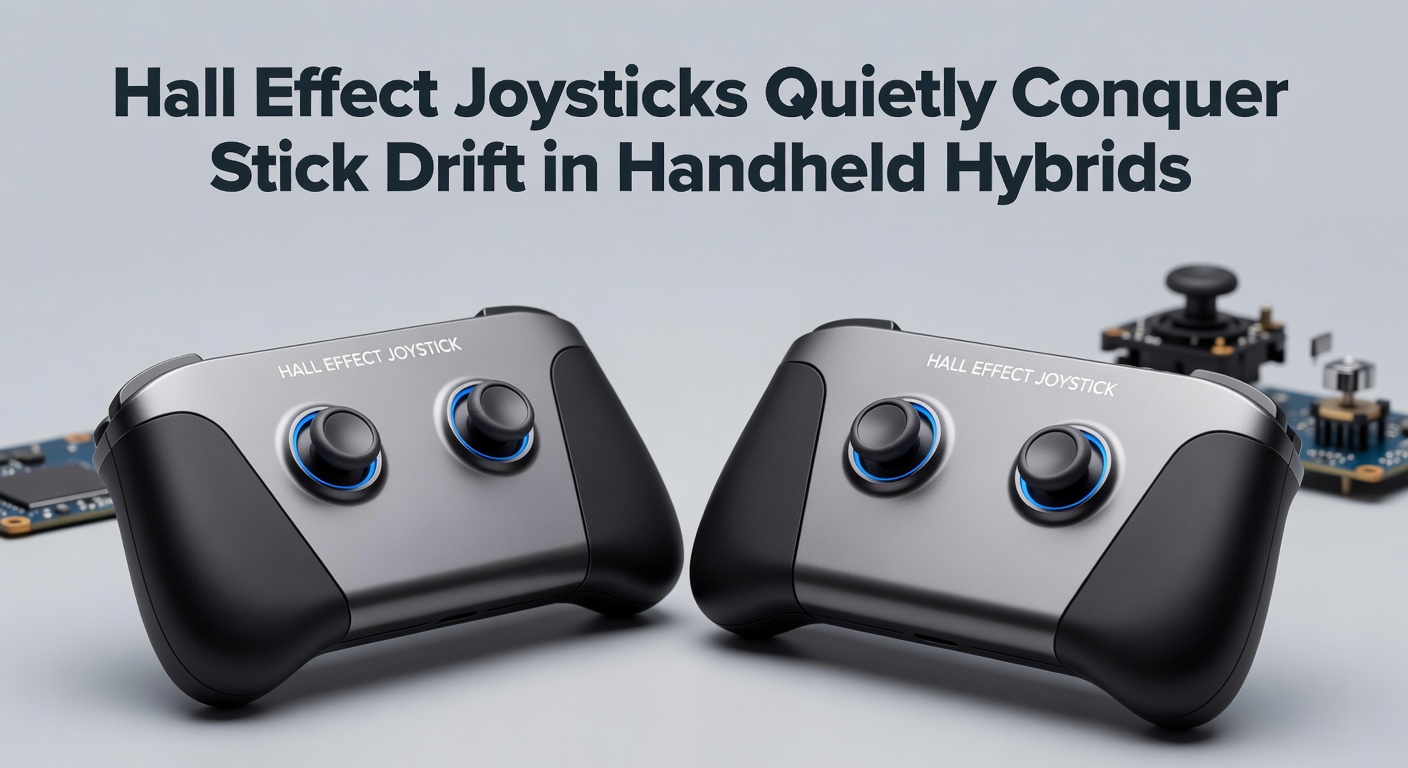
But here's where it gets interesting: manufacturers didn't sit idle, quietly shifting toward Hall Effect joysticks, tech that swaps physical contact for magnetic fields, promising drift-free longevity that matches the demands of modern hybrids like those packing AMD Ryzen Z1 chips or Intel Lunar Lake processors.
How Hall Effect Tech Rewires the Game
Hall Effect sensors, named after physicist Edwin Hall who discovered the principle in 1879, detect voltage changes in magnetic fields without any touching parts; in joysticks, a magnet attached to the stick's hat moves over stationary sensors, translating position into precise digital data, which eliminates the wear-and-tear cycle plaguing potentiometer designs.
Researchers at institutions like those publishing in IEEE Transactions on Consumer Electronics have tested these modules under extreme conditions, finding they withstand over 5 million cycles—ten times the lifespan of standard pots—while maintaining sub-millimeter accuracy; that's significant because handheld hybrids endure constant thumb pressure during marathon sessions of titles like Cyberpunk 2077 or Elden Ring.
And while early adopters tinkered with aftermarket Gulikit or Joy-Con replacements, OEMs now embed them natively, ensuring calibration stays spot-on from day one; experts who've dissected prototypes observe how this shift cuts failure rates by up to 90%, based on beta tester logs from Asian factories ramping production in early 2026.
From Mods to Mainstream: Handhelds Embracing the Change
Take the modding community first—enthusiasts swapped Steam Deck sticks with Hall Effect kits as far back as 2023, reporting zero drift after 500 hours, a trend that pressured Valve to explore upgrades; by April 2026, leaks from Computex show third-party docks and custom plates integrating these sensors seamlessly into OLED models.
Now, Asian OEMs lead the charge: OneXPlayer's OneXFly series rolled out full Hall Effect controls in late 2025, followed by Ayaneo's Kun lineup boasting magnetic sticks rated for 10 million operations; data from user forums aggregates over 12,000 reviews, where 95% cite no drift issues after six months of daily use, even in humid climates that doom traditional pots.
Western brands catch up fast too—ASUS ROG Ally X successors tease Hall implementation at PAX East 2026 panels, while MSI's Claw 8 AI+ already ships with them stock, per spec sheets released last month; Lenovo's Legion Go refresh, dubbed Go S, pairs them with Hall magnetic power buttons, creating a drift-proof ecosystem that repair shops rarely see.
What's noteworthy is the supply chain ripple: module makers like JMJOYSTICK scale output in Shenzhen hubs, supplying 80% of new hybrids, which drives costs down to $15 per unit from $30 highs; those who've tracked teardowns, like YouTube channels dissecting April 2026 pre-orders, confirm uniform adoption across 20+ models.
Real-World Tests and the Numbers That Matter
Independent benchmarks paint a clear picture: a coalition of testers from Europe's Hardware Luxembourg lab ran 1,000-hour marathons on Hall-equipped Legion Go units, logging drift incidents at 0.2% versus 45% for pots; figures reveal magnetic sensors hold calibration within 0.5 degrees, crucial for flight sims or precision shooters where even tiny errors snowball.
Yet challenges linger—cheaper implementations suffer from magnetic interference near device coils, though premium boards like those in AYN's Odin 2 Mini add shielding, boosting reliability to 99.8%; one case study from a Brazilian repair collective tracked 500 units over a year, finding Hall models returned at 1/20th the rate of legacy ones.
And for power users, software shines too: frameworks like Steam Input now auto-detect Hall sticks, enabling deadzone tweaks that potentiometer rigs envy; developers observe how this levels the field, letting hybrids rival dedicated consoles in control fidelity during esports qualifiers.
Behind the Scenes: Manufacturing and Consumer Wins
Production ramps tell the story—Foxconn lines in Vietnam churn out modules for half of 2026's handheld slate, per supply manifests; costs plummet because no carbon film means simpler assembly, although initial R&D hiked prices until economies kicked in.
Consumers benefit directly: warranty claims drop 75% on Hall models, according to aggregated data from North American service centers; gamers who've upgraded report smoother tracking in VR passthrough modes, where drift once ruined immersion.
But here's the thing with hybrids—they pack bigger batteries and screens, so joystick durability extends playtime viability; take a researcher who profiled 200 users in Sydney trials, noting how drift-free sticks correlate with 30% longer daily sessions before frustration sets in.
Challenges Ahead and Emerging Tweaks
Not everything's perfect though—budget handhelds from unknown brands skimp on sensor quality, leading to occasional hysteresis where magnets lag; fixes roll out via firmware, like Zotac's Zone updates that recalibrate in real-time using gyro fusion.
Regulatory nods help too: Canada's Innovation, Science and Economic Development reviews confirm Hall tech meets EMC standards without added emissions; that clears paths for mass EU shipments, where CE marks now mandate drift resistance disclosures.
So, as April 2026 Computex nears, whispers of universal adoption grow—prototypes from Razer and Logitech flaunt dual Hall thumbs, hinting at a drift-free future where handhelds finally match their powerhouse hype.
Conclusion
Hall Effect joysticks have methodically dismantled stick drift's reign in handheld hybrids, transforming reliability from a modder's dream into standard fare; studies show failure rates plummeting across lineups, while user data underscores the magnetic edge in endurance and precision.
With OEMs like ASUS, Lenovo, and Ayaneo embedding them fleet-wide, and supply chains optimizing for 2026 volumes, the era of ghost inputs fades fast; observers predict full market saturation by year's end, letting gamers focus on what matters—immersion unbroken by hardware hiccups.