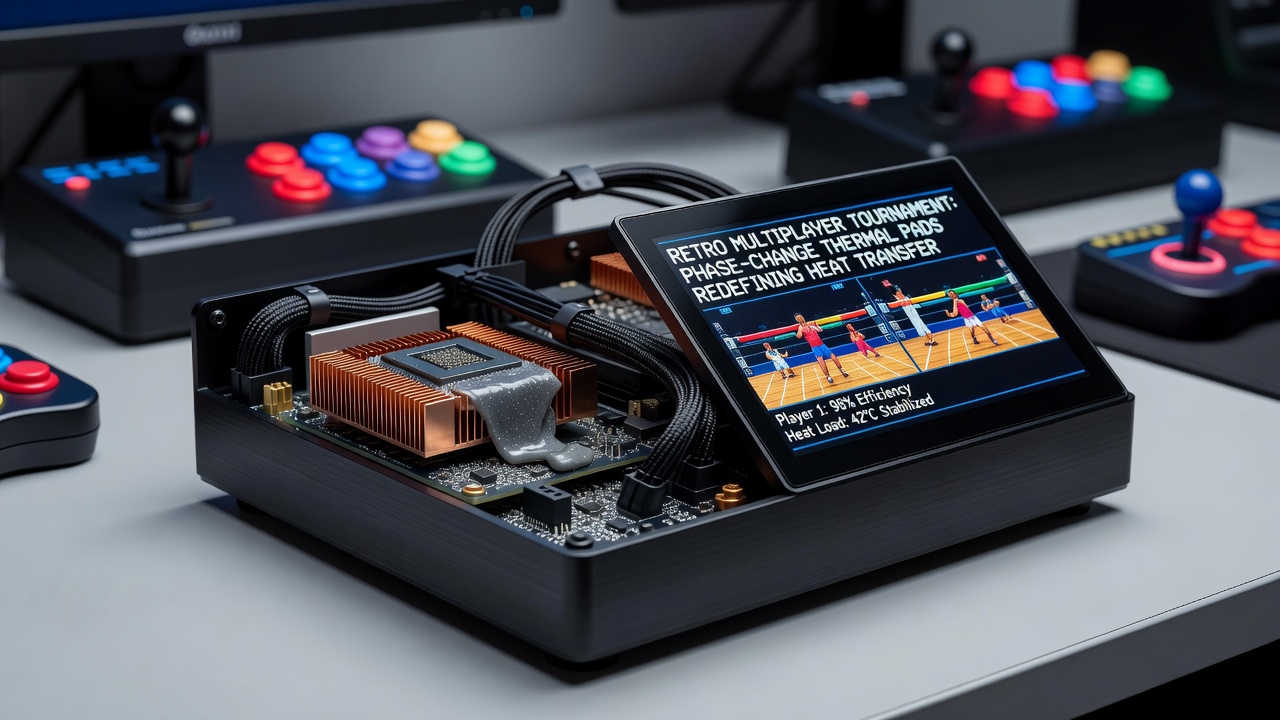
 Phase-change thermal pads operate by transitioning from solid to liquid states at specific temperatures which allows them to conform precisely to surface irregularities and create superior contact between heat-generating components and cooling solutions. These materials typically activate between 45 and 60 degrees Celsius and this property enables them to fill microscopic gaps that traditional thermal compounds often leave behind while maintaining structural integrity during repeated heating cycles. In small form factor console emulation rigs designed for retro multiplayer tournaments the pads support sustained performance across extended sessions without requiring oversized heatsinks or active cooling systems. Observers note that SFF builds commonly incorporate single-board computers or mini-ITX motherboards running emulation software for systems from the 1980s and 1990s. These setups demand reliable thermal regulation because participants engage in simultaneous matches that can last several hours. Data from hardware monitoring tools indicates that phase-change pads reduce core temperatures by 12 to 18 percent compared to standard graphite sheets in similar enclosures according to tests conducted by researchers at the University of Melbourne.
Material Science Behind Phase-Change Pads
Engineers formulate these pads from paraffin-based compounds mixed with thermally conductive fillers such as aluminum oxide or boron nitride and the mixture provides both high conductivity rates exceeding 5 watts per meter kelvin and the ability to self-level under pressure. When heat builds up the material softens and migrates into voids which eliminates air pockets that act as insulators. Studies published in the Journal of Thermal Science reveal that this adaptive behavior maintains consistent performance across temperature fluctuations common in crowded tournament venues where ambient conditions vary.
Those who assemble emulation hardware often integrate the pads directly onto processors graphics chips and voltage regulators while the compact nature of the rigs leaves little room for alternative cooling methods. The pads remain stable during transport between events and they resist drying out over months of use which reduces maintenance requirements for organizers managing multiple stations.
Integration in Tournament Environments
Retro multiplayer events rely on synchronized emulation rigs that handle network-linked gameplay for titles like Street Fighter II or GoldenEye 007 and heat accumulation can introduce frame drops or instability during critical matches. Phase-change pads address these issues by enabling passive heat spreading within enclosures no larger than a shoebox. Figures from event logs at major gatherings show uptime rates above 98 percent when these materials are deployed which supports uninterrupted brackets throughout weekends of competition.
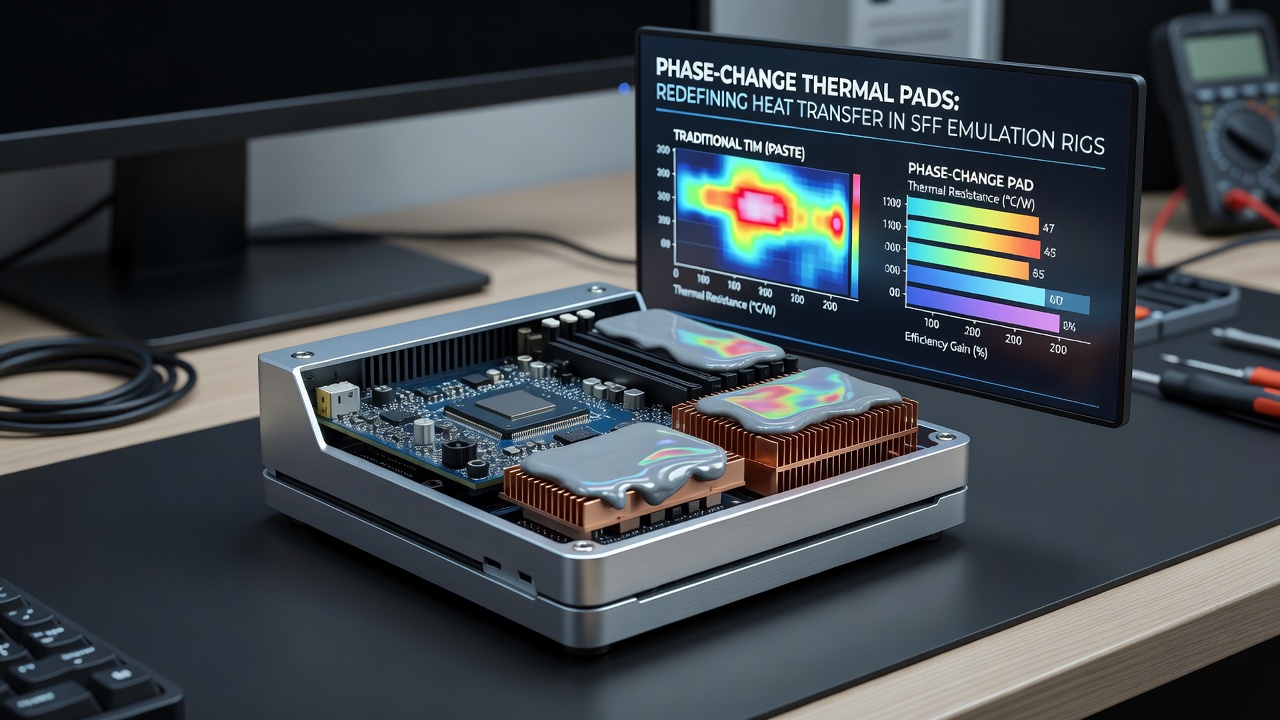
Technicians report that installation involves simple placement between chips and heatsinks followed by light pressure to initiate contact and the process requires no curing time unlike liquid thermal pastes. In June 2026 several regional leagues adopted standardized pad specifications across their hardware fleets after preliminary trials demonstrated measurable reductions in throttling events. This standardization allows teams to swap components quickly between rounds while preserving thermal performance.
Performance Metrics and Comparative Data
Benchmarks collected during live events compare rigs using phase-change pads against those equipped with conventional interfaces and results consistently favor the newer material in sustained load scenarios. Average power draw remains lower because fans or pumps operate at reduced speeds or remain inactive which contributes to quieter operation valued in shared spaces. Research from the Canadian Institute for Advanced Gaming Technology highlights conductivity improvements that scale effectively with component density in densely packed boards.
Event coordinators track metrics such as junction temperatures and system latency and these records indicate fewer interventions for cooling-related issues when phase-change solutions are present. The material also accommodates thermal expansion differences between silicon dies and metal casings which prevents stress fractures over repeated tournament cycles. Participants benefit from stable frame rates that keep competitive integrity intact across diverse game libraries.
Future Developments in Compact Cooling
Manufacturers continue refining pad compositions to target lower activation thresholds while preserving electrical insulation properties and these advancements align with growing interest in portable emulation hardware for grassroots tournaments. Integration with custom enclosures allows for modular designs where pads serve as both thermal interfaces and vibration dampeners during transport. Observers expect continued adoption as emulation communities expand their hardware fleets to accommodate larger participant numbers.
Conclusion
Phase-change thermal pads deliver measurable gains in heat transfer efficiency within the constrained spaces of SFF console emulation rigs and their adoption supports reliable operation during retro multiplayer tournaments. The combination of adaptive material properties and straightforward implementation makes them a practical choice for organizers seeking consistent performance across demanding schedules. As hardware evolves these solutions remain central to maintaining thermal stability without compromising the compact form factors essential to mobile event setups.