Magnetic Levitation Fan Designs Eliminating Bearing Wear in Continuously Operating PC Rigs for 24-Hour Content Creation Streams
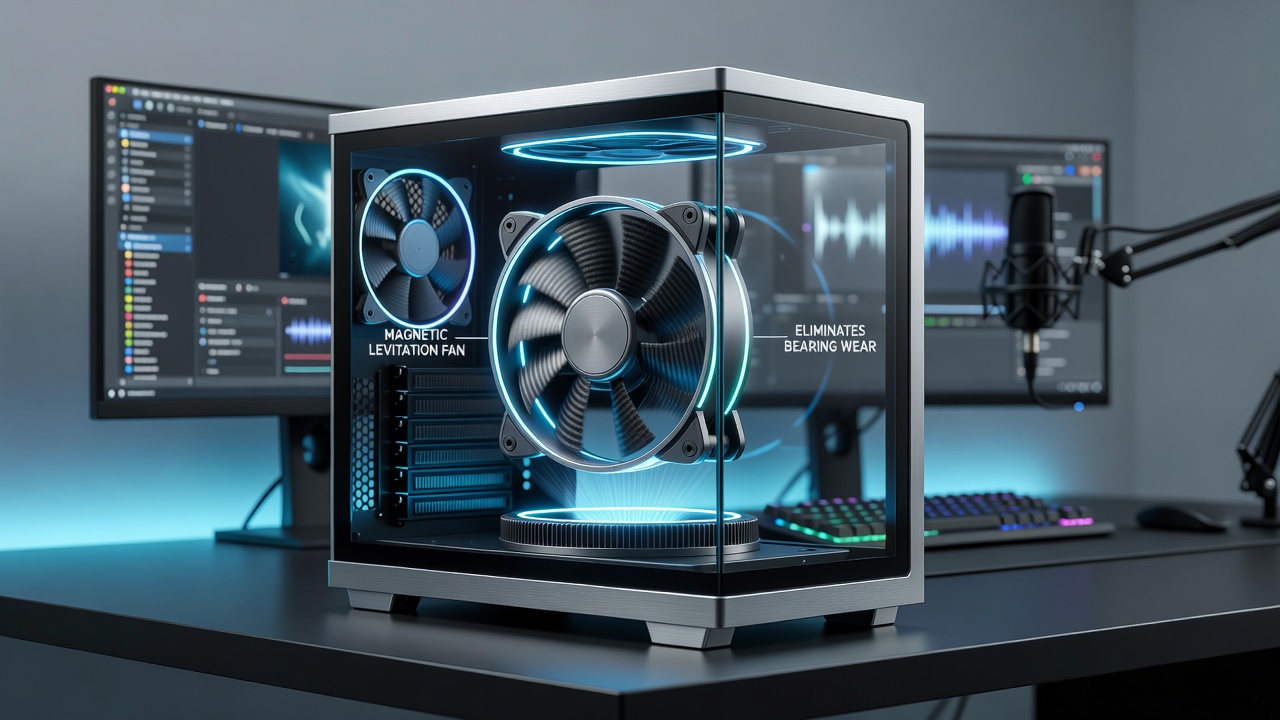
Magnetic levitation fan designs suspend the rotor using electromagnetic fields rather than mechanical bearings, and this configuration removes direct contact points that cause friction and gradual degradation over thousands of operating hours in PC systems dedicated to nonstop content creation. Engineers apply principles from industrial maglev systems to consumer hardware where the fan blades rotate in a contact-free environment while sensors maintain precise positioning through active control circuits. Data from component testing facilities shows that traditional sleeve or ball bearing fans experience measurable wear after 40,000 to 60,000 hours whereas maglev units maintain consistent performance metrics well beyond those thresholds when subjected to identical thermal loads.
Technical Principles Behind Magnetic Suspension in PC Cooling
Electromagnets positioned around the fan hub generate opposing forces that hold the rotor at a fixed distance from the stator assembly and control algorithms adjust current flow thousands of times per second to counteract any deviation caused by vibration or airflow changes. Researchers at multiple hardware laboratories have documented how the absence of physical bearings eliminates lubricant breakdown and metal particle generation that normally accumulate inside conventional fans during continuous duty cycles. In July 2026 several manufacturers released updated controller firmware that further refines magnetic field stability for rigs handling simultaneous 4K encoding and live streaming workloads.
Performance Data from Extended Operation Scenarios
Long-term monitoring of content creation workstations reveals that maglev fans sustain rotational speeds within 1 percent of their rated values after 18 months of 24-hour use whereas comparable bearing-based models show speed drift and increased noise output once bearing surfaces begin to degrade. Thermal imaging studies conducted by independent test centers indicate that consistent airflow from maglev units keeps GPU and CPU junction temperatures lower by an average of 4 to 7 degrees Celsius under sustained rendering loads compared with fans that have accumulated 12,000 hours of service. Observers note that reduced temperature variance translates directly into fewer thermal throttling events during marathon export sessions where processors must maintain boost clocks without interruption.
Integration Challenges and Solutions in Dense PC Builds
System integrators working with compact workstation cases must account for the slightly larger hub diameter required by electromagnetic components yet the overall footprint remains compatible with standard 120 mm and 140 mm mounting patterns used in most chassis. Power draw for the control circuitry adds approximately 0.3 to 0.8 watts per fan according to measurements published by the Natural Resources Canada energy efficiency program and this incremental consumption remains negligible against the total system load of a multi-GPU rendering rig. Cabling layouts benefit from the elimination of bearing-related acoustic peaks because creators can position fans closer to intake filters without introducing additional vibration paths into the chassis structure.
Acoustic and Reliability Metrics in Studio Environments
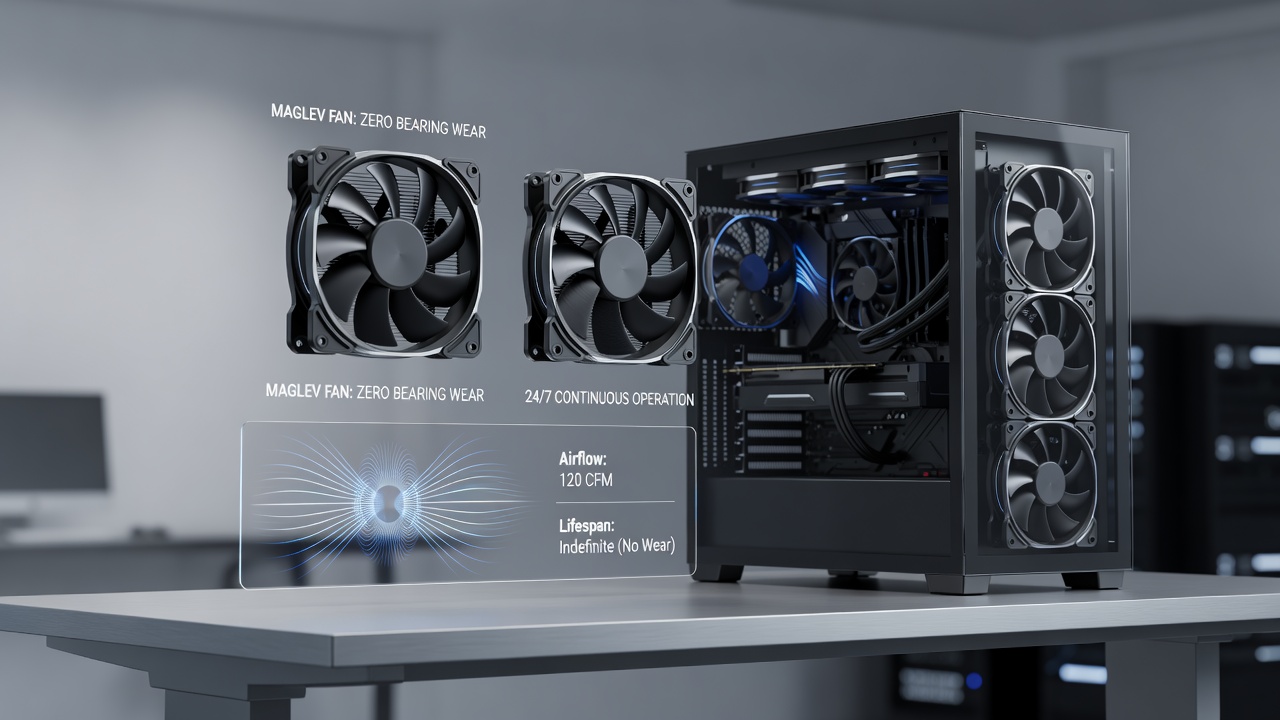
Sound pressure level recordings taken in controlled anechoic chambers demonstrate that maglev fans produce a smoother frequency spectrum without the tonal peaks associated with bearing race imperfections and content creators who record voiceovers alongside rendering tasks report fewer instances of background noise requiring post-production cleanup. Accelerated life testing performed by European research consortia projects a mean time between failures exceeding 150,000 hours for properly designed maglev units and these figures align with operational logs collected from 24-hour streaming facilities that transitioned their cooling systems during 2025. Maintenance logs from those facilities show a marked decline in fan replacement events once magnetic suspension technology replaced legacy bearing designs.
Energy Efficiency Implications for Round-the-Clock Operation
Because magnetic levitation removes sliding friction the motor requires less torque to maintain target RPM and overall system power measurements indicate a reduction of 2 to 5 percent in cooling subsystem consumption when compared with high-quality ball bearing fans after the first 8,000 hours of service. A study released by the International Energy Agency on data center and workstation efficiency highlights how small per-unit improvements scale meaningfully across facilities that operate hundreds of rendering nodes simultaneously. Those savings become particularly relevant for creators who maintain multiple encoding PCs that run without scheduled downtime.
Conclusion
Magnetic levitation fan technology addresses the mechanical wear points that limit traditional cooling solutions in continuously operating content creation environments and adoption continues to expand as manufacturers refine control electronics and reduce component costs. Facilities that transitioned to these designs report extended intervals between maintenance interventions while preserving stable thermal and acoustic conditions required for uninterrupted production pipelines. Ongoing refinements tracked through industry testing programs suggest further gains in both efficiency and longevity as the technology matures within the PC hardware segment.