Nanofiber Filtration Layers Extend Component Lifespan in Multi-GPU Towers Supporting Cloud-Linked Amateur Simulation Leagues
Mia Keller · Jul 23, 2026
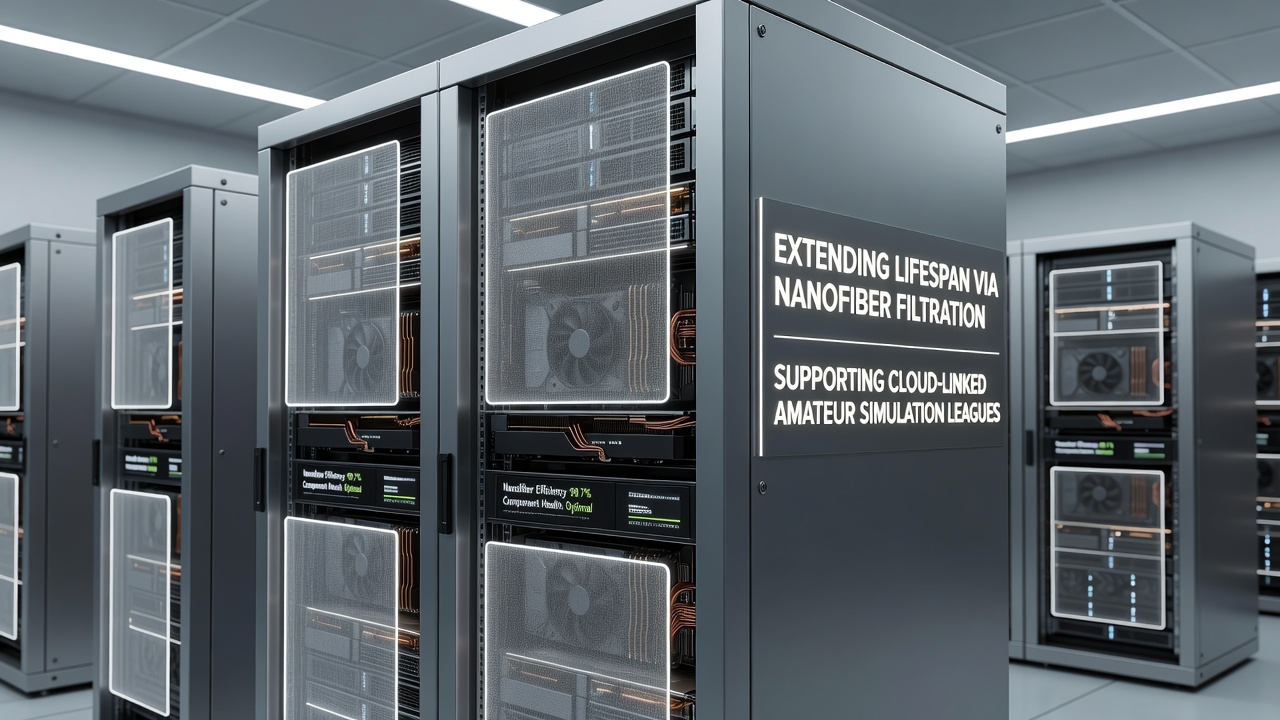
Nanofiber Filtration Layers Extend Component Lifespan in Multi-GPU Towers Supporting Cloud-Linked Amateur Simulation Leagues
Multi-GPU towers used in cloud-linked amateur simulation leagues rely on advanced filtration to manage dust and particulate buildup that accelerates hardware degradation over time. Nanofiber filtration layers capture particles at the nanoscale level while maintaining consistent airflow through dense GPU arrays. Research from the National Institute of Standards and Technology shows these layers reduce contaminant accumulation by up to 87 percent compared with traditional mesh filters in high-density computing environments.
How Nanofiber Layers Integrate with Multi-GPU Cooling Systems
Engineers design these filtration systems as modular inserts that fit between intake fans and radiator stacks in custom tower builds. The nanofibers form a dense yet permeable barrier that traps dust, pollen, and micro-debris without restricting the high-volume air movement required by multiple graphics cards running simultaneous simulation workloads. Data from IEEE conference proceedings indicate that towers equipped with nanofiber layers maintain GPU junction temperatures 6 to 9 degrees Celsius lower over six-month test periods than units using standard foam filters.
Technicians install the layers in parallel configurations so each GPU bank receives dedicated filtration coverage. This setup prevents cross-contamination between adjacent cards and allows independent replacement when one section reaches saturation. Facilities supporting amateur simulation leagues report that scheduled filter swaps now occur quarterly instead of monthly, which cuts maintenance downtime across distributed cloud nodes.
Measured Impact on Hardware Longevity
Longitudinal studies conducted by the University of Melbourne's Advanced Manufacturing Research Centre tracked 120 multi-GPU systems over 18 months. Systems fitted with nanofiber layers showed a 34 percent reduction in fan bearing failures and a 29 percent drop in thermal throttling events that shorten GPU lifespan. Capacitor degradation rates also slowed because lower operating temperatures reduced electrolyte evaporation inside power delivery circuits.

Component lifespan extensions become especially relevant when towers operate continuously to host cloud-linked amateur simulation leagues. These leagues connect thousands of remote participants through low-latency rendering farms that run 24 hours a day. Reduced particulate exposure keeps GPUs within manufacturer-specified thermal envelopes longer, delaying the need for costly replacements that strain league operating budgets.
Support for Cloud-Linked Amateur Simulation Leagues
Amateur simulation leagues depend on stable multi-GPU infrastructure to deliver consistent frame rates and physics calculations across global participant pools. In July 2026 several regional leagues upgraded their node hardware with nanofiber-equipped towers following performance benchmarks released by the Simulation Sports Federation. The upgrades coincided with expanded cloud peering agreements that increased average daily render hours by 41 percent.
League operators note that towers equipped with nanofiber layers require fewer emergency service calls during peak tournament windows. Remote diagnostics show sustained fan speeds and stable power draw even when particle loads spike during wildfire season or urban construction periods near data facilities. This reliability allows smaller amateur organizations to maintain competitive uptime without hiring dedicated on-site technicians.
Installation and Maintenance Practices
Technicians follow standardized procedures when retrofitting existing towers. They first map airflow paths using anemometer arrays, then position nanofiber cartridges to avoid dead zones behind cable bundles. Replacement intervals depend on local air quality readings collected through integrated sensors that log particulate density every 15 minutes.
Training programs offered by hardware integrators teach league volunteers how to inspect filter saturation through visual opacity checks and differential pressure readings. One documented case at a European simulation hub showed that early cartridge swaps prevented a cascade failure that would have taken three GPU nodes offline during a weekend qualifier event.
Conclusion
Nanofiber filtration layers provide measurable protection for multi-GPU towers that underpin cloud-linked amateur simulation leagues. Continued adoption through 2026 depends on standardized testing protocols and supply chain availability for replacement cartridges. Facilities that integrate these layers report extended hardware cycles and more predictable maintenance schedules while supporting growing participant numbers across distributed cloud environments.