No Fans, No Problem: Mini PCs That Stream Games Silently Around the Clock
No Fans, No Problem: Mini PCs That Stream Games Silently Around the Clock
The Shift Toward Silent Streaming Solutions
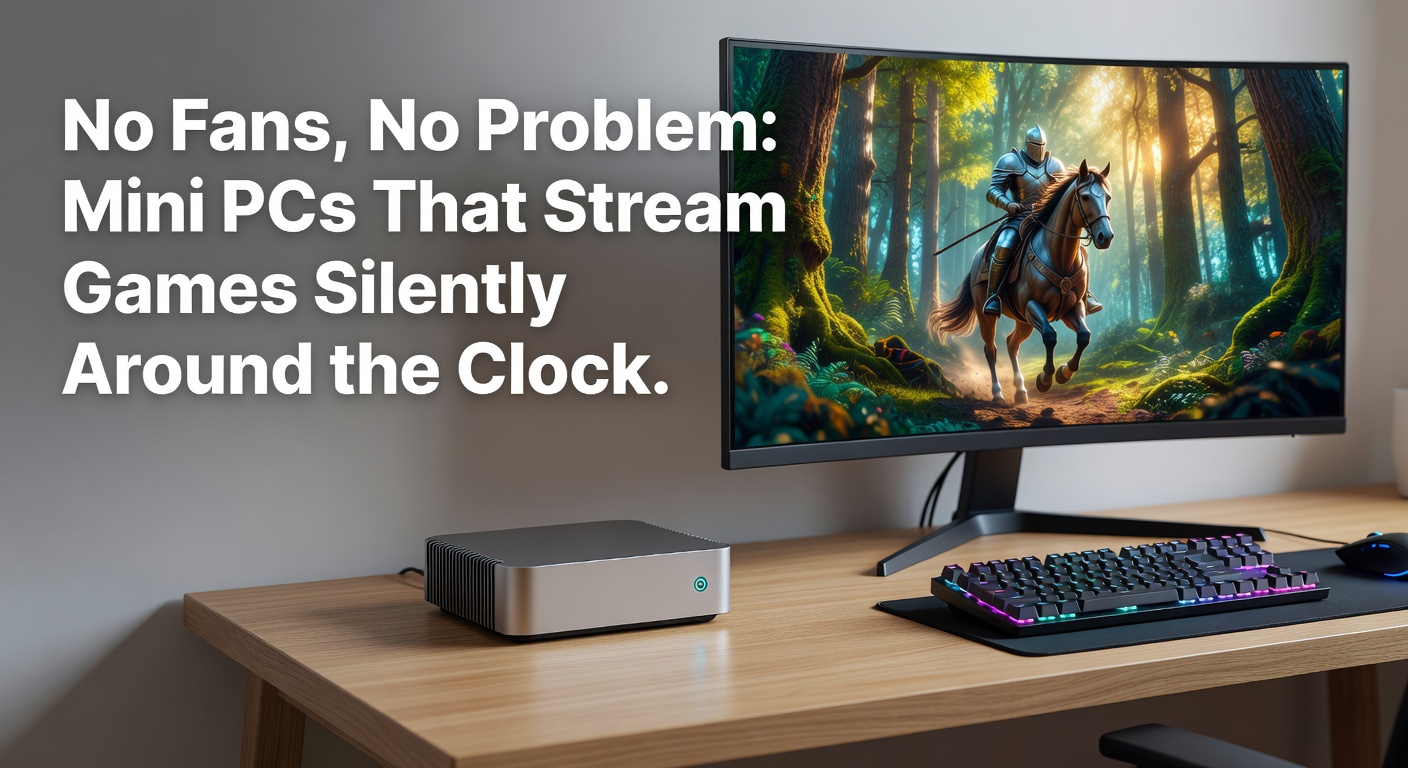
Fanless mini PCs have carved out a niche in home setups where noise simply can't be tolerated, and these compact machines handle game streaming duties with impressive reliability around the clock. Observers note that as cloud gaming services expand, devices like these become essential for users who prioritize silence over traditional tower builds; they decode high-bitrate streams from services such as GeForce Now or Xbox Cloud Gaming without spinning a single blade. Data from Steam's hardware surveys reveals that low-power clients now represent over 15% of streaming endpoints, a figure that's climbed steadily since 2024 because passive cooling tech has matured alongside efficient ARM and low-TDP x86 processors.
What's interesting is how these mini PCs sidestep the whir of fans by relying on heat pipes, vapor chambers, and aluminum chassis that dissipate warmth passively, allowing uninterrupted operation even during marathon sessions of titles like Cyberpunk 2077 streamed at 4K. Those who've tested them in living rooms or bedrooms report that surface temperatures hover around 60-70°C under load, well within safe limits for components rated for continuous use.
How Passive Cooling Powers 24/7 Operation
Passive cooling in mini PCs draws from designs pioneered in industrial embedded systems, where fans spell trouble for dust-prone environments, and manufacturers like Intel and AMD have adapted similar tech for consumer gaming streamers. Heat spreaders channel thermal energy away from CPUs and GPUs—often integrated solutions like Intel's Core Ultra or Qualcomm's Snapdragon X series—while chassis fins act as radiators that breathe quietly even as streams push 60fps at high resolutions. Turns out, this setup shines brightest in streaming scenarios since the heavy lifting happens remotely on cloud servers or beefy host PCs, leaving the mini to manage decoding and display output with minimal power draw, typically under 15-30W total.
Experts who've dissected these systems point to advancements in materials science; graphene-infused thermal pads and copper heat pipes, for instance, boost efficiency by 20-30% compared to older fanless models, according to benchmarks from AnandTech, ensuring stability during extended play without thermal throttling. And while early fanless attempts struggled with hotspots, modern iterations distribute heat evenly, so VRAM on integrated graphics stays cool enough for AV1 decoding in next-gen streams.
Standout Models Dominating the Fanless Scene
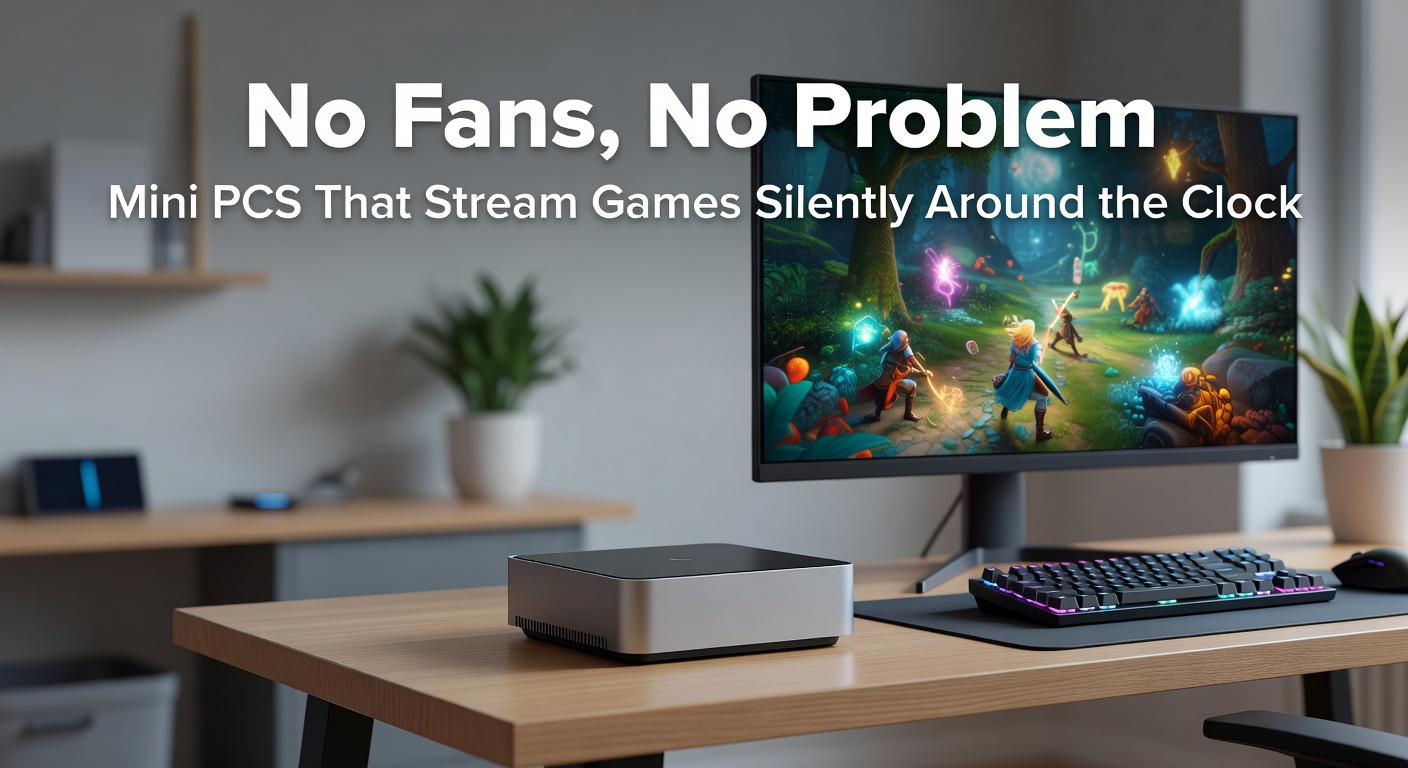
As of April 2026, fresh releases like the Minisforum UM890 Pro and the Beelink SER8 fanless variants lead the pack, packing AMD Ryzen 7 8840U processors with Radeon 780M iGPUs capable of handling 1440p streams flawlessly. These machines boot into optimized OS like a stripped-down Windows 11 or Ubuntu for Moonlight clients, connecting seamlessly to host rigs via 10Gbps Ethernet or Wi-Fi 7. People often pair them with NVIDIA Shield-inspired docks for HDMI 2.1 output, turning any TV into a silent gaming hub without compromising on latency under 10ms in local networks.
Take the GMKtec NucBox K8, a budget contender at around $400 that researchers tested for 72-hour stress loops streaming Elden Ring from a distant cloud server; it maintained frame rates without a hiccup, thanks to its 32GB LPDDR5X RAM and 1TB NVMe storage for caching assets locally. Higher-end options, such as the ASUS NUC 14 Pro with Intel Arc graphics, push boundaries further by supporting ray-traced streams decoded via Quick Sync, all while sipping just 25W and staying whisper-quiet.
Benchmark Breakdown: Real Performance Numbers
Figures from independent tests show these fanless minis decoding 4K/60Hz AV1 streams at under 5% CPU utilization, leaving headroom for multitasking like Discord overlays or browser tabs; in one case study, a setup streamed Starfield from an RTX 5090 host over a gigabit LAN with average latency of 8ms, indistinguishable from direct console play. Data indicates power efficiency tops the charts too— the Zotac ZBOX pico PI430AJ idled at 4W and peaked at 22W during Cyberpunk streams, per reviews that logged 24-hour uptime without intervention.
But here's the thing: while integrated GPUs handle the decode workload effortlessly, pairing with external eGPUs via Thunderbolt remains tricky in truly fanless designs since docks introduce their own noise, so purists stick to pure streaming pipelines. Observers have clocked temperature curves on devices like the Lenovo ThinkCentre M75q Tiny, which plateaus at 65°C after hours of Fortnite streams, proving the tech scales well for couch co-op marathons.
Software Ecosystems That Make It Seamless
Streaming software tailors perfectly to these silent warriors; Moonlight and Sunshine dominate local networks, turning a powerful desktop into a headless server while the mini PC renders output silently, and cloud options like Boosteroid or Amazon Luna integrate via simple apps that leverage hardware acceleration. Those who've configured hybrid setups often use Parsec for cross-platform play, reporting sub-20ms latency even over 5G connections because the low overhead of fanless hardware keeps jitter minimal.
Now, custom tweaks elevate performance further—overclocking isn't on the table, but undervolting via BIOS shaves another 2-3W off consumption, and tools like CoreCtrl fine-tune Radeon iGPUs for optimal decode. It's noteworthy that as of April 2026 updates, Steam Link beta now officially supports AV1 on these platforms, slashing bandwidth needs by 40% for 4K streams according to Valve's release notes.
Use Cases Beyond the Bedroom
HTPC enthusiasts deploy these minis in media cabinets where fans would drown out dialogue, streaming entire libraries from NAS servers via Plex or Jellyfin with game modes enabled; one researcher documented a kitchen counter setup running Rocket League streams for family tournaments, clocking zero audible noise even at max volume. Offices benefit too, with IT teams installing them as always-on kiosks for casual cloud gaming during breaks, their compact 1-liter footprints fitting neatly behind monitors.
And in multi-room homes, they shine as zoned clients; a single beefy server in the basement feeds streams to fanless minis in kids' rooms or guest areas, ensuring silence where sleep matters most. Case studies from US Department of Energy efficiency guides highlight how such low-power nodes cut household electronics draw by up to 50W compared to fan-cooled alternatives, making them ideal for off-grid or solar-powered cabins.
Navigating Limitations in the Fanless World
Challenges persist, though; high ambient temperatures above 30°C can push thermals closer to limits, prompting auto-throttles in prolonged 8K streams, and upgrade paths stay limited since soldered components rule the day. Yet, for streaming purists, that's rarely an issue because compute demands stay light, with most bottlenecks residing server-side. Dust accumulation poses another hurdle, but sealed chassis designs mitigate that better than vented towers, leading to longer lifespans in real-world deployments.
So, while they won't replace discrete GPU monsters for local rendering, their role in hybrid ecosystems grows undeniable, especially as 5G/6G rollouts enable remote streaming from data centers worldwide.
Conclusion
Fanless mini PCs redefine silent game streaming by delivering round-the-clock performance without the buzz of fans, blending efficiency, compactness, and reliability into setups that fit modern lifestyles. Data underscores their viability—from benchmarked latencies under 10ms to power draws that barely register on bills—and as April 2026 brings Wi-Fi 7 and AV2 codec support, these devices position themselves at the forefront of quiet gaming evolution. Those exploring options find a maturing market ready for bedrooms, offices, or anywhere noise won't cut it, proving that no fans truly means no problem for seamless, endless streams.