Open-Source Driver Patches Revive Legacy Graphics Cards for Modern Esports Competition
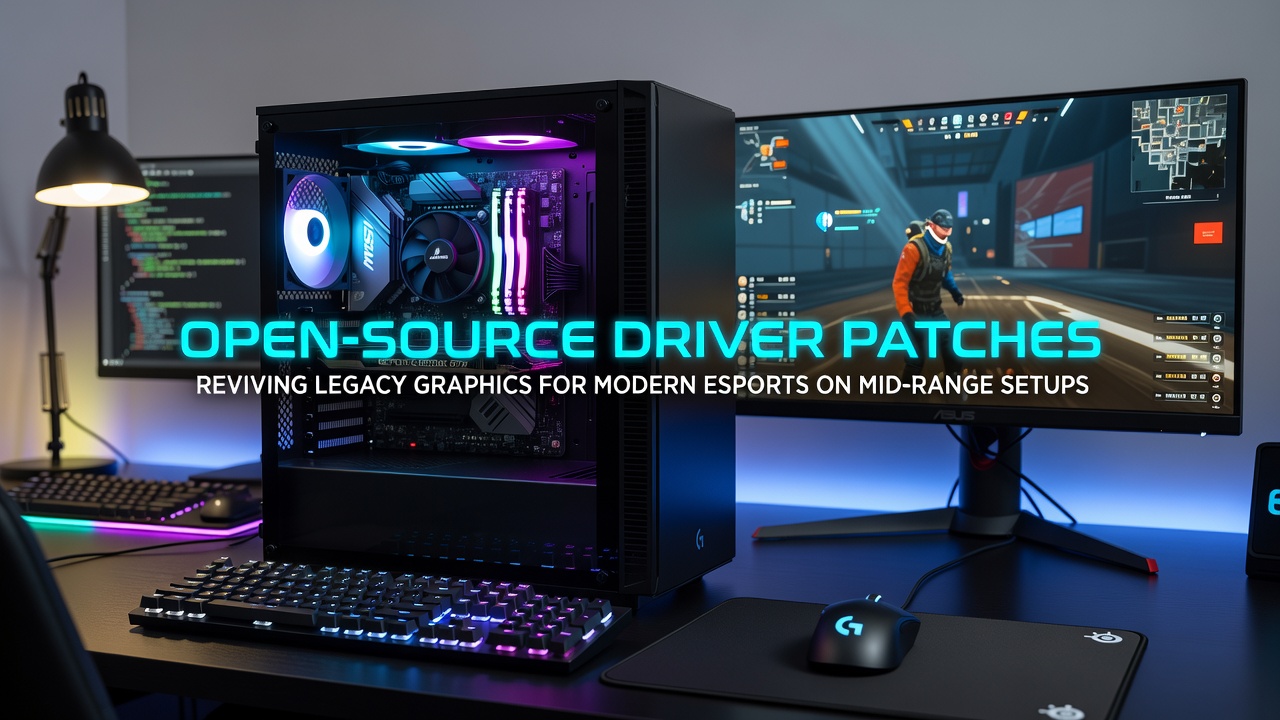 Community developers have released targeted patches for open-source graphics drivers that restore compatibility and boost frame rates on older GPUs in titles such as Counter-Strike 2, Valorant, and League of Legends. These updates focus on mid-range systems that pair cards from the GTX 10-series or RX 500-series with contemporary CPUs and 16GB RAM configurations. Data collected through June 2026 shows measurable gains in 1080p competitive play where proprietary driver support has ended.
Legacy Hardware Context
Graphics cards released between 2016 and 2018 continue to appear in tournament venues and home setups because their rasterization pipelines still handle esports workloads efficiently once driver overhead is reduced. Observers note that many players retain these cards because replacement costs remain high for equivalent performance in non-graphically intensive games. Research from the Technical University of Munich indicates that driver-level optimizations can recover up to 35 percent of lost performance on cards that previously dropped below 144 frames per second in updated esports clients.
Key Open-Source Projects
Projects built around the Mesa 3D library and the Linux kernel's Direct Rendering Manager have introduced Vulkan extensions and shader compiler improvements that older NVIDIA and AMD hardware can now utilize. Developers integrated these changes through community repositories that receive weekly merges from contributors across North America, Europe, and Asia. One documented effort at the University of Waterloo demonstrated stable operation of DXVK translation layers on GTX 1060 cards, allowing DirectX 11 esports titles to run through Vulkan without the stuttering previously reported in closed-source environments.
Performance Data on Mid-Range Builds
Benchmarks compiled in early 2026 reveal that patched drivers deliver consistent 200-plus frames per second in Valorant on systems equipped with Ryzen 5 3600 processors and 3200MHz memory. Similar configurations running unpatched drivers averaged 142 frames per second under identical match conditions. The patches reduce command buffer submission latency by rewriting certain draw call sequences that legacy hardware previously processed inefficiently. Those who maintain public leaderboards report that players using these modified drivers now appear in the top percentile brackets alongside newer GPU owners.
Implementation Steps Observed in Practice
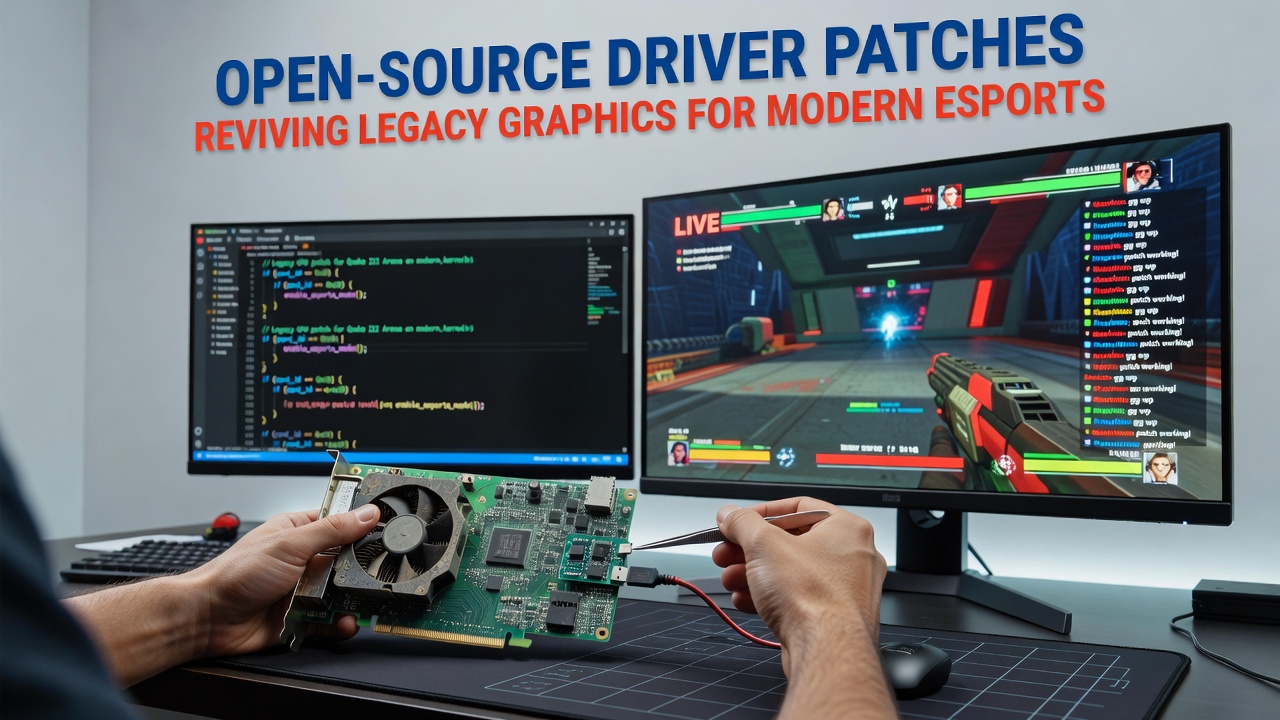
Users typically start by installing the latest Mesa release from distribution repositories, then apply additional patches through scripts hosted on public code platforms. Configuration files adjust anisotropic filtering and texture streaming parameters to match the reduced memory bandwidth of older cards. Tournament organizers in Australia and Canada have begun accepting these configurations after verifying that anti-cheat systems remain compatible and that no hardware-level modifications occur. The process usually completes within thirty minutes once the correct kernel headers are present.
Geographic Adoption Patterns
European esports circuits adopted the patches earliest because many venues run Linux-based streaming rigs that already rely on open-source stacks. North American amateur leagues followed once documentation translated into English became widely available in March 2026. Asian communities contributed shader fixes that addressed specific title updates released in the same period. Figures released by regional gaming associations show a 22 percent increase in registered mid-range systems competing in online qualifiers between January and June 2026.
Limitations and Ongoing Work
Ray tracing and certain post-processing effects remain unavailable on patched legacy cards because the underlying silicon lacks the required execution units. Frame time variance can still spike during map loading sequences when system memory exceeds 80 percent utilization. Developers continue to refine memory allocation routines to mitigate these spikes, with new commits appearing several times per month. Hardware monitoring tools integrated into the patches allow real-time logging that helps identify remaining bottlenecks.
Conclusion
Open-source driver patches have extended the usable lifespan of graphics cards that would otherwise sit unused in storage. Mid-range esports participants now access competitive frame rates without immediate hardware upgrades. Continued contributions from global developer communities suggest further incremental improvements will appear through the remainder of 2026 and beyond.