Optical Sensor Calibrations in Trackball Peripherals Improve Precision Metrics for Real-Time Strategy Esports Competitors in Extended Qualifier Matches
Morgan Washington · Aug 13, 2026
Optical Sensor Calibrations in Trackball Peripherals Improve Precision Metrics for Real-Time Strategy Esports Competitors in Extended Qualifier Matches
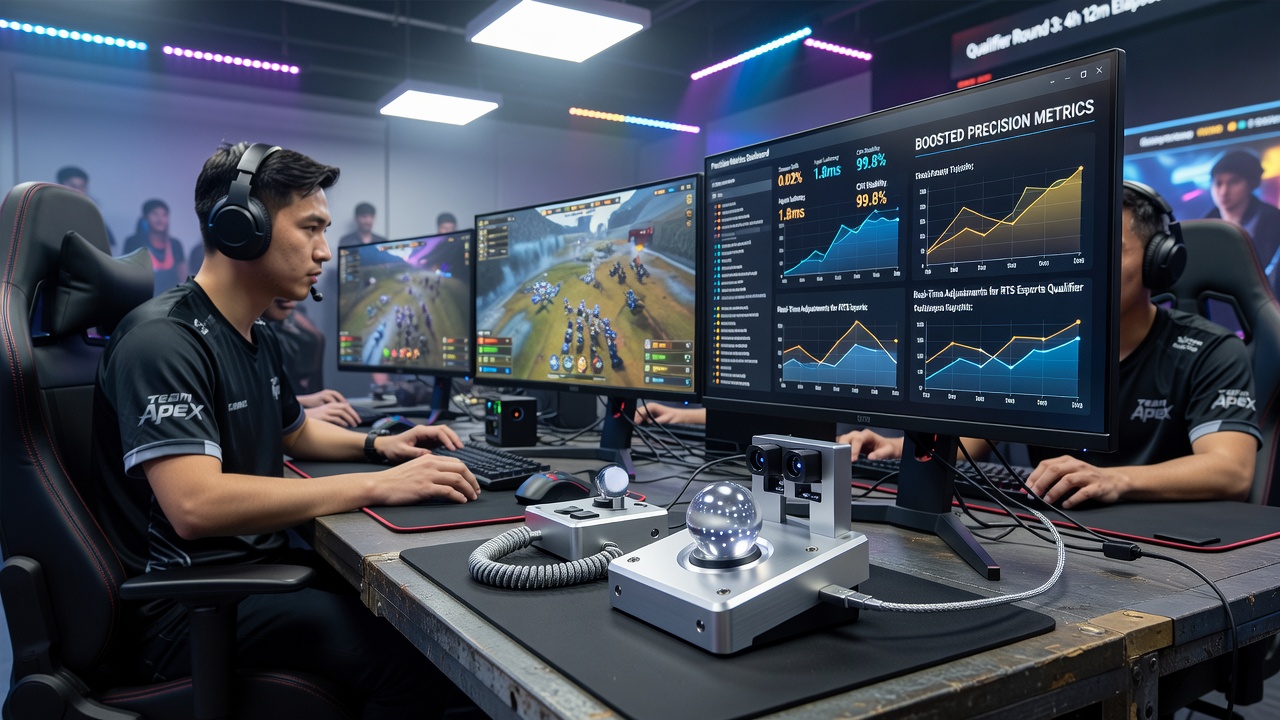
Trackball peripherals equipped with optical sensors have gained traction among real-time strategy esports competitors who participate in multi-hour qualifier matches, where consistent cursor control and minimal drift become critical factors. Calibration routines adjust sensor resolution, surface mapping, and response curves to align device output with individual player requirements, and these adjustments deliver measurable gains in precision metrics during prolonged sessions.
How Optical Sensors Function in Trackball Designs
Optical sensors in trackballs track ball movement through infrared or laser illumination that reflects off the sphere surface and registers changes via a CMOS array. Manufacturers tune these components for high polling rates that reach 8000 Hz in competitive models, while calibration software refines the raw data stream to reduce jitter and eliminate cumulative error that accumulates over hours of continuous use. Competitors in games such as StarCraft II and Age of Empires IV rely on this stability because small deviations in cursor placement directly affect unit selection accuracy and build order execution.
Calibration Procedures and Their Technical Components
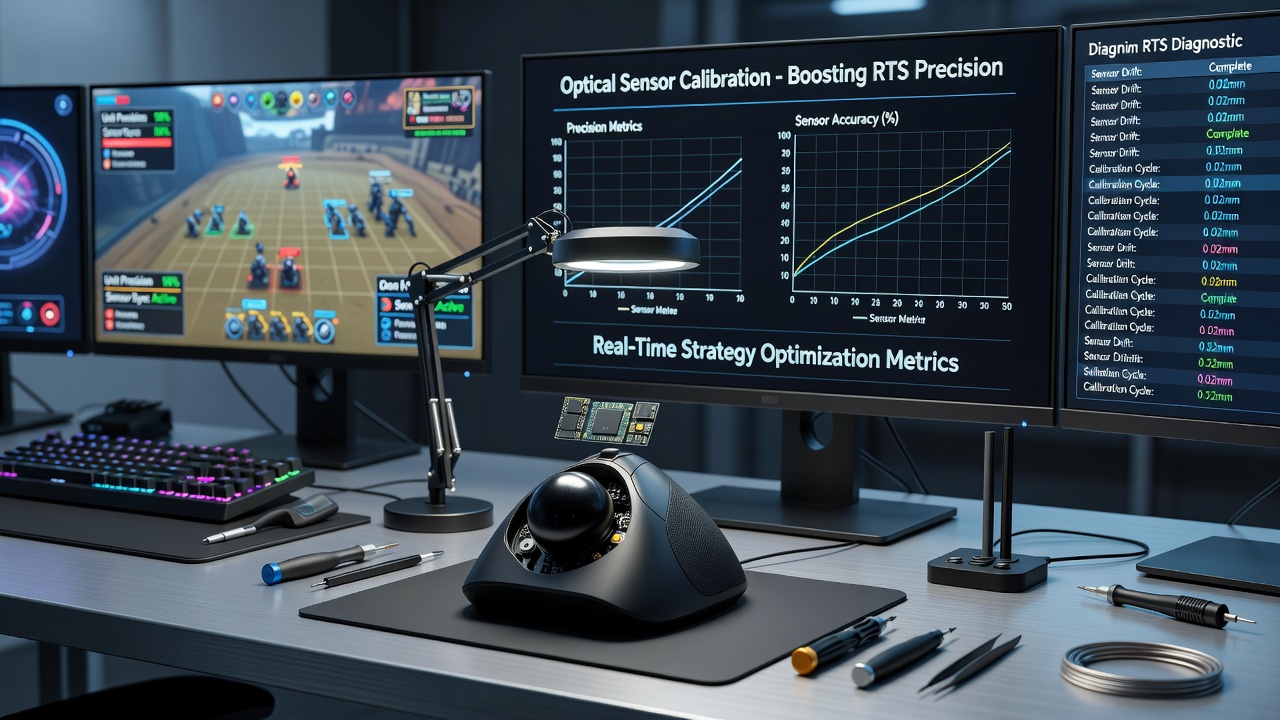
Calibration begins with firmware-level adjustments that map sensor output against standardized test patterns, followed by user-specific fine-tuning that accounts for grip style and desk surface conditions. Software tools provided by peripheral makers allow competitors to set custom DPI steps, acceleration curves, and lift-off distance thresholds, and these parameters undergo verification through repeated trials that record deviation statistics. Research from the University of Toronto indicates that structured calibration sessions lasting 30 minutes prior to matches can lower average pixel offset by up to 18 percent in simulated environments that replicate qualifier conditions.
Performance Data from 2026 Qualifier Events
During the August 2026 regional qualifiers for the Global RTS Championship, teams documented sensor calibration logs alongside in-game telemetry. Figures compiled by the Asia-Pacific Esports Federation reveal that players who completed full optical calibration protocols maintained cursor precision within 2.3 pixels of target coordinates across 90-minute game segments, whereas uncalibrated setups showed drift exceeding 7 pixels after the same duration. These differences translated into higher resource gathering efficiency and reduced misclick rates in late-game engagements where screen complexity peaks.
Calibration also addresses temperature-related sensor drift that occurs during extended play, because optical components can experience minor expansion or contraction that alters reflection patterns. Teams incorporate periodic recalibration checkpoints between matches, often using automated scripts that run diagnostic sweeps without requiring full device disconnection.
Integration with Training and Match Preparation Routines
Professional organizations now embed sensor calibration into daily training regimens, combining it with aim trainers that simulate common RTS cursor movements such as rapid camera pans and precise building placements. One documented case from a European squad showed that athletes who followed a four-week calibration consistency program improved their average actions-per-minute retention rate by 11 percent when matches extended past the two-hour mark. Observers note that the ball's smooth rotation under calibrated sensors reduces the physical force needed for micro-adjustments, which helps preserve wrist and finger endurance throughout long qualifier brackets.
Hardware variations among trackball models influence calibration outcomes, since sensor placement relative to the ball and the quality of the encoder wheel affect how environmental factors like humidity translate into data noise. Competitors therefore test multiple configurations during practice and lock in profiles that demonstrate the lowest variance across repeated measurements.
Future Developments in Sensor Calibration Technology
Industry reports project that upcoming firmware updates scheduled for late 2026 will introduce real-time adaptive calibration that monitors performance drift during active matches and suggests micro-adjustments between rounds. Academic work at ETH Zurich continues to explore machine learning models that predict optimal calibration settings based on historical match data and individual physiological markers such as hand temperature fluctuations. These advances aim to further stabilize precision metrics without adding manual steps that could interrupt competitor focus.
Conclusion
Optical sensor calibrations have become a standard component of equipment preparation for real-time strategy esports competitors who face the demands of multi-hour qualifier matches. Data collected from recent tournaments and laboratory studies demonstrates consistent improvements in cursor stability and error reduction when systematic calibration protocols are applied. As sensor technology and associated software continue to evolve, these methods will likely expand to address additional variables that affect long-session performance.