Phase Change Material Inserts Stabilize Chassis Temperatures in Revised Compact Consoles During Extended Multiplayer Sessions
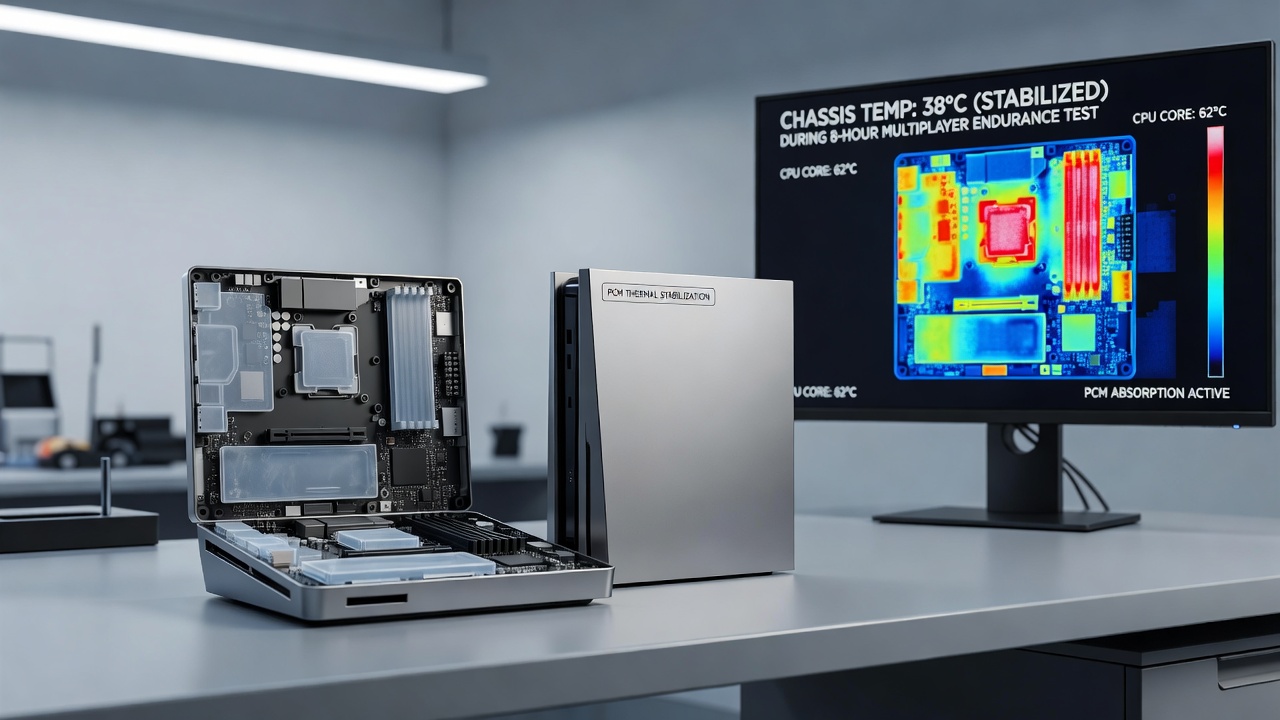
Compact console revisions now incorporate phase change material inserts that absorb excess heat through solid-to-liquid transitions at targeted temperature thresholds, and this approach maintains stable chassis conditions throughout long-duration multiplayer endurance events where traditional cooling methods often reach their limits. Manufacturers have integrated these materials into internal frames and heat spreaders since the mid-2020s, with several updated models appearing at industry showcases in June 2026.
Phase change materials function by storing thermal energy during phase shifts without corresponding temperature increases, which allows heat generated by processors and graphics components to dissipate gradually rather than building up rapidly inside tight enclosures. Engineers select specific PCM formulations based on melting points that align with safe operating ranges for silicon dies, and testing protocols measure how these inserts reduce peak chassis surface temperatures by several degrees compared to baseline designs.
Thermal Management Challenges in Compact Designs
Smaller console form factors concentrate heat sources in limited volumes, and airflow restrictions during stationary setups at tournament venues exacerbate temperature spikes during continuous play sessions that can last eight hours or more. Data collected from sensor arrays in prototype units show that without additional thermal buffers, internal components approach throttling thresholds faster under sustained loads from networked multiplayer titles.
Revisions released through 2025 and into 2026 addressed these constraints by embedding PCM packets along motherboard trays and near exhaust paths, and the materials activate progressively as localized heat builds. Observers note that this passive method complements existing fan systems without adding bulk or power draw, which proves advantageous in portable or semi-portable event configurations.
Implementation Across Recent Console Revisions
Design teams at major hardware firms have adapted PCM inserts for different chassis layouts, placing them in direct contact with heat pipes or vapor chambers to create hybrid cooling stacks. Laboratory evaluations conducted by independent research groups indicate consistent performance across varied ambient conditions typical of esports arenas, where room temperatures fluctuate due to crowd density and lighting equipment.
One study from the University of Melbourne's thermal engineering lab examined insert placement strategies and reported measurable reductions in chassis hot spots during simulated endurance workloads. The findings highlight how PCM volume and distribution influence overall system stability without altering external dimensions.
Performance During Prolonged Multiplayer Events
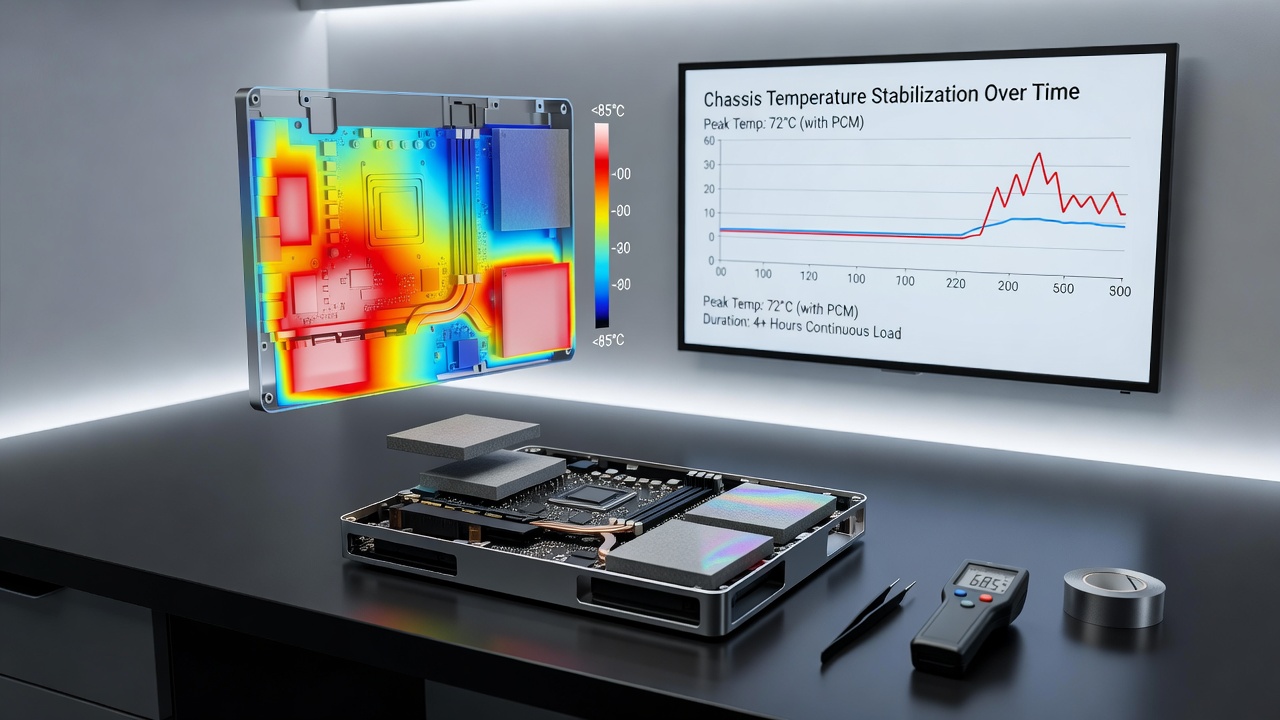
Endurance competitions require hardware to sustain consistent output over extended periods, and PCM inserts help prevent the gradual performance degradation associated with rising case temperatures. Event organizers have documented fewer mid-session pauses for cooling in venues equipped with the revised units, while participant feedback centers on unchanged ergonomics and quieter operation profiles.
Figures from the IEEE thermal management reports detail how phase change integration extends the time before fans ramp to maximum speed, and similar patterns appear in field data gathered at regional esports gatherings across Europe. These outcomes stem from the materials' ability to buffer transient heat loads rather than relying solely on convective cooling.
Material Selection and Integration Techniques
Manufacturers evaluate paraffin-based and salt hydrate PCMs for compatibility with electronics, selecting options that avoid leakage risks through microencapsulation or sealed compartments. Integration occurs during the molding or assembly stages, and quality checks verify uniform distribution to prevent localized imbalances that could affect balance or vibration characteristics in handheld variants.
Research indicates that combining PCM layers with graphite sheets enhances lateral heat spreading, and this layered approach appears in several 2026 compact revisions. Tests under cyclic loading conditions confirm durability across hundreds of charge-discharge thermal cycles without measurable degradation in absorption capacity.
Conclusion
Phase change material inserts represent a targeted solution for thermal regulation in compact gaming hardware, and their adoption in console revisions supports reliable operation during extended multiplayer endurance events. Continued refinements in material science and placement methods will likely expand their role as chassis sizes remain constrained while processing demands increase.