Power Delivery Refinements in USB-C Gaming Peripherals Streamline Cable Management for Multi-Device Tournament Setups
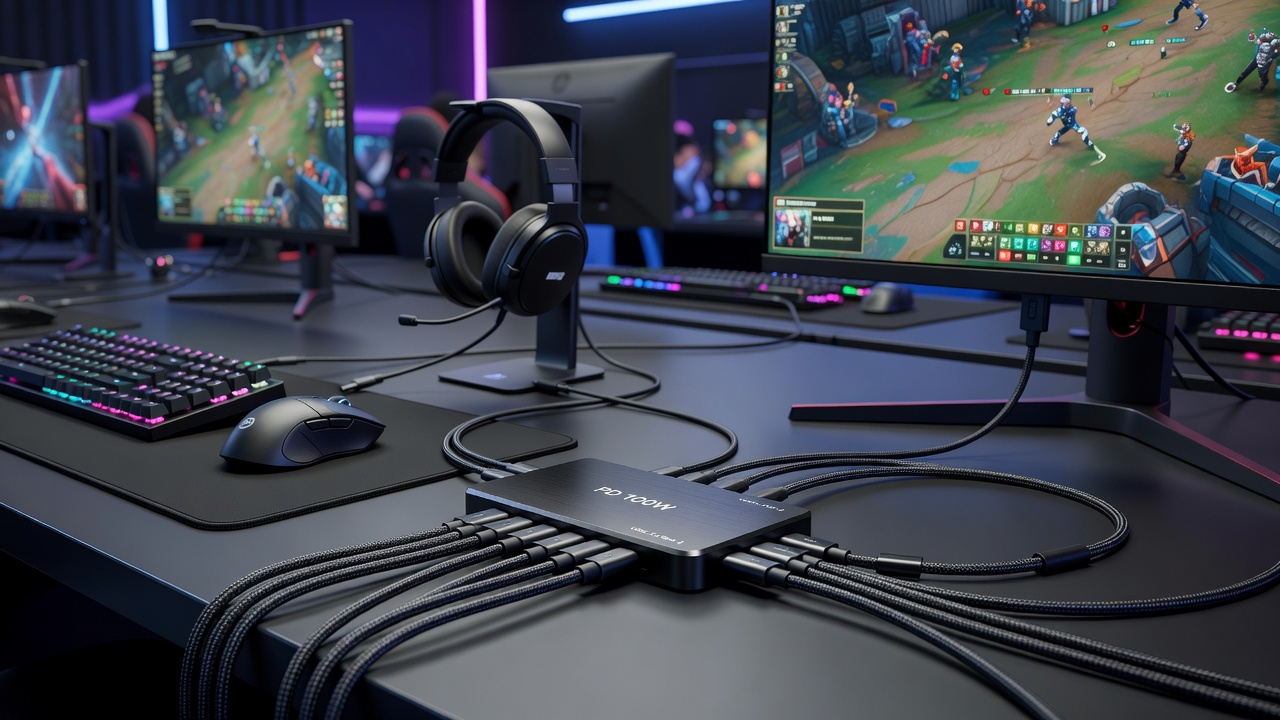
USB-C power delivery refinements have altered how gaming peripherals connect in competitive environments where multiple devices operate simultaneously and cable clutter creates operational challenges for setup crews. Tournament organizers now manage arrays of keyboards, mice, headsets, controllers, and secondary monitors through consolidated connections that combine data transfer with high-wattage power delivery in single cables.
Evolution of USB-C Power Delivery Standards
USB Power Delivery specifications progressed from earlier iterations delivering 100 watts to the 240-watt Extended Power Range introduced in PD 3.1, and these changes allow peripherals to draw sufficient current while maintaining full-speed data links. Manufacturers integrated programmable power supply modes that negotiate voltage and current levels dynamically, which reduces the need for separate power bricks and dedicated charging ports on devices used in multi-station configurations.
Industry data from the USB Implementers Forum shows adoption rates for PD 3.1 controllers in gaming hardware increased steadily through 2025, and by July 2026 several major peripheral lines incorporated these controllers as standard components. This shift occurred because higher power budgets support features such as rapid charging during short breaks between matches and simultaneous operation of RGB lighting arrays alongside high-polling-rate sensors.
Impact on Tournament Cable Management
Multi-device setups at large-scale events previously required extensive cable runs that complicated troubleshooting and extended teardown times between rounds. Refinements in USB-C power delivery enable one cable to handle both 100 Mbps or 10 Gbps data rates and up to 240 watts of power, and this consolidation cuts the total number of cables per station by roughly half in many configurations. Observers at regional esports circuits documented fewer connection errors during live events after teams transitioned to unified USB-C hubs that distribute power intelligently across connected accessories.
Researchers at technical institutes in Australia examined cable routing patterns in simulated tournament environments and found that single-cable USB-C PD implementations reduced physical interference between stations while maintaining signal integrity over longer runs. Those findings align with reports from European gaming hardware associations that tracked setup durations across multiple LAN events and noted measurable decreases in time spent managing power distribution.
Technical Refinements Enabling Streamlined Setups
Modern USB-C gaming peripherals incorporate smart negotiation chips that detect available power profiles and adjust consumption automatically, which prevents overloads when several high-draw devices share a single upstream port. Some keyboard and mouse models now support bidirectional power flow, allowing one device to supply supplemental power to another during peak usage periods without additional cabling.
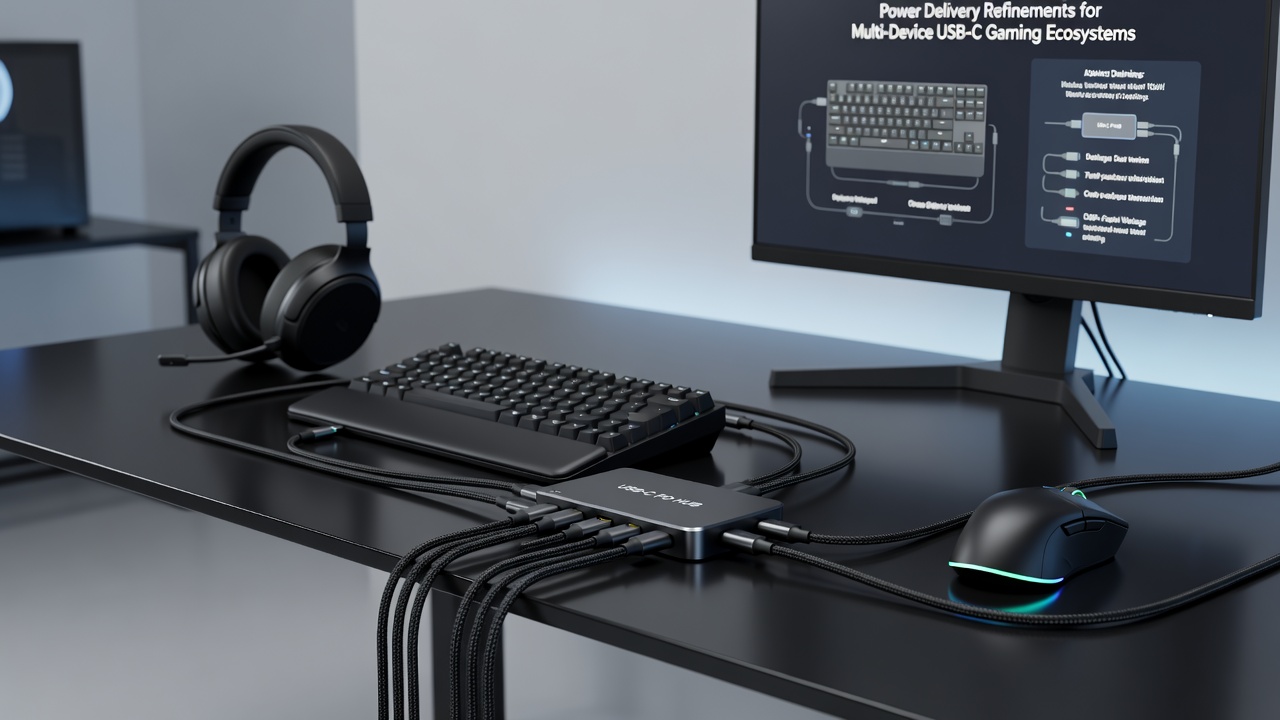
Engineers refined cable shielding and connector durability to handle repeated insertion cycles typical of tournament travel, and these mechanical improvements complement the electrical advancements in power delivery. Data from Canadian industry testing facilities indicates that updated USB-C cables certified for 240-watt operation maintain stable performance across temperature variations common in crowded venue halls.
Practical Applications in Multi-Device Environments
Teams competing in fighting game majors or MOBA tournaments often deploy custom controllers, macro pads, and streaming capture devices alongside primary input hardware, and USB-C PD refinements allow these accessories to operate from shared power sources. One documented case involved a North American esports organization that reconfigured its entire station layout around 240-watt USB-C hubs, resulting in fewer visible cables under tables and improved airflow around equipment racks.
Wireless peripherals still benefit because their charging docks now draw from the same unified power infrastructure, and this integration eliminates the separate AC adapters that previously cluttered power strips. Tournament staff report that standardized USB-C connections simplify cross-regional equipment compatibility since voltage and connector standards remain consistent regardless of local electrical grids.
Conclusion
Power delivery refinements in USB-C gaming peripherals have produced measurable improvements in cable management for multi-device tournament setups by combining high-wattage power and high-speed data within fewer physical connections. Continued standardization efforts through 2026 support broader adoption across competitive gaming circuits, and the resulting reductions in cable volume contribute directly to faster station assembly and more reliable operation during extended events.