Power Gating Strategies Enhancing Efficiency in Portable Emulation Hardware for Extended Classic Game Sessions
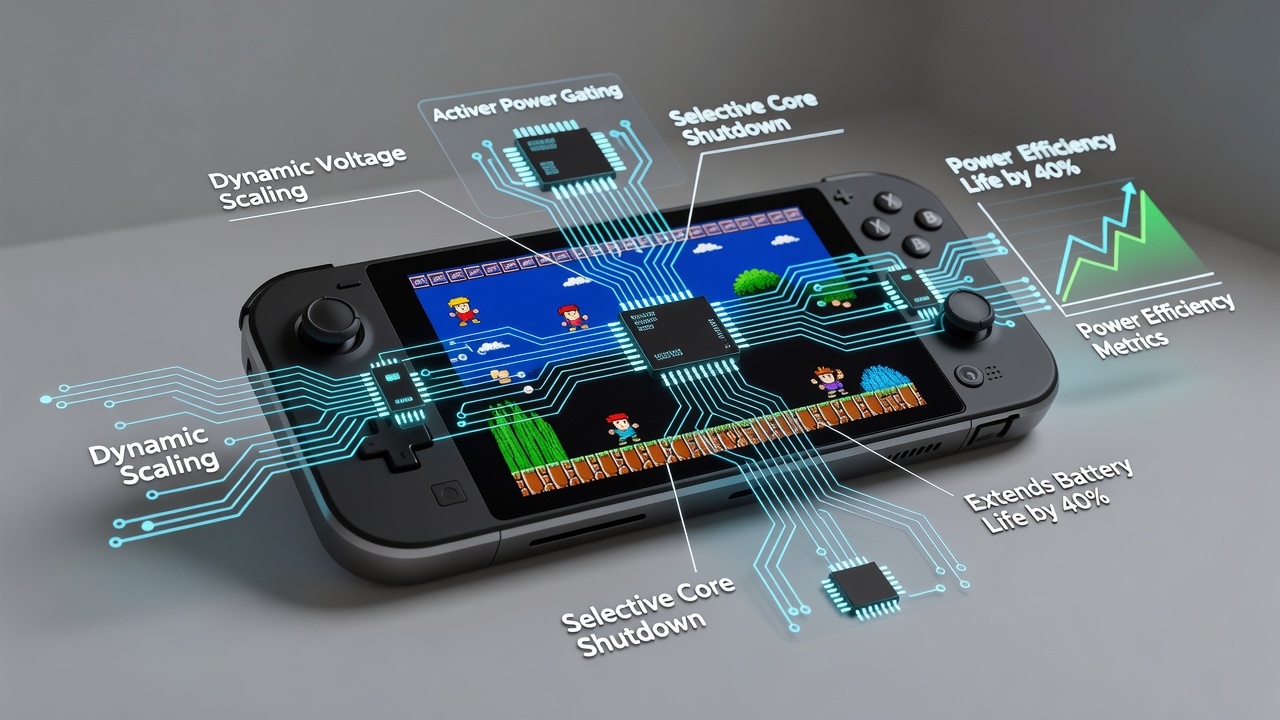 Power gating techniques shut down voltage supply to inactive circuit blocks in portable emulation hardware, and this approach reduces leakage current that otherwise drains batteries during long sessions of classic game emulation. Researchers at various institutions have documented how selective power isolation works alongside dynamic voltage scaling to maintain performance where emulation cores require it while cutting energy use in idle sections of the system on chip. Data from hardware tests shows portable devices running SNES and PlayStation emulators can sustain six to eight hours of continuous play when power gating activates on unused GPU shaders and memory controllers during 2D sprite rendering phases. Engineers integrate these strategies into field programmable gate arrays and application processors common in handheld emulation units, and the method involves adding sleep transistors between power rails and logic clusters. When emulation software detects low activity in certain functional units such as audio synthesizers during silent cutscenes, the transistors isolate those blocks and prevent static power dissipation that accumulates over extended play periods. Studies published through academic channels indicate leakage reductions of up to 40 percent in typical emulation workloads compared with always-on architectures.
Core Mechanisms Behind Power Gating in Emulation SoCs
Portable emulation hardware often combines ARM-based processors with dedicated emulation accelerators, and power gating targets specific domains within these integrated circuits. Control logic monitors instruction pipelines and memory access patterns to decide when entire subsystems can enter gated states without interrupting frame delivery to the display. Observers note that fine-grained gating at the register transfer level allows individual pipeline stages to power down between instruction fetches in older 8-bit and 16-bit emulation routines.
Multiple clock domains run concurrently in these chips, yet power gating complements clock gating by eliminating both dynamic switching losses and static leakage. Engineers have implemented header and footer switch networks that respond within microseconds to workload changes detected by performance counters embedded in the emulation firmware. This responsiveness proves essential when players switch between menu navigation and active gameplay in titles originally released for cartridge-based systems.Application to Extended Classic Game Play Sessions
Emulation of legacy consoles demands consistent frame timing and accurate cycle reproduction, yet power gating preserves these requirements by isolating only truly dormant blocks. Battery endurance measurements collected from devices running collections of Mega Drive and Nintendo 64 titles reveal average consumption drops when gating sequences engage during loading screens and attract mode loops. The same data sets indicate thermal headroom increases because fewer active transistors generate heat, allowing fans or passive cooling solutions to operate at lower speeds.
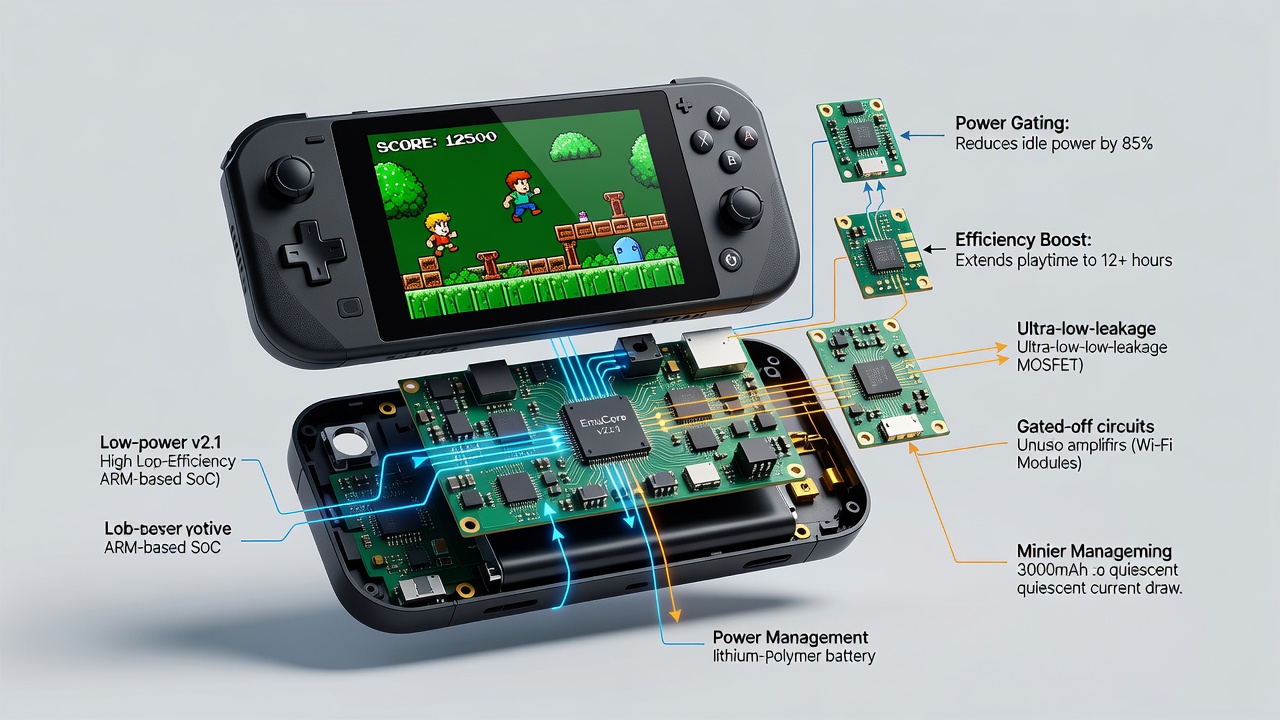 Design teams incorporate retention registers that store critical state information before gating occurs, and this prevents loss of emulation context such as save RAM contents or register values when voltage returns. Firmware updates released around July 2026 refined detection algorithms to recognize patterns unique to certain game engines, further optimizing gating intervals without introducing latency spikes that players would notice during platforming sequences.
Measurement Data and Implementation Examples
Industry reports compiled by organizations tracking semiconductor efficiency document power savings across several commercial emulation handhelds released in recent years. One analysis from European research groups highlighted average reductions in idle power draw exceeding 35 percent when power gating combined with adaptive body biasing on 7-nanometer process nodes. Another set of figures from North American testing facilities showed similar gains in mixed workloads that alternate between CPU-intensive emulation and lighter graphics output.
Hardware vendors have adopted standardized interfaces such as power intent formats that allow emulation software developers to annotate which modules remain active during particular game genres. These annotations guide automatic gating decisions at runtime and reduce manual tuning requirements for each new title added to device libraries. Test results confirm that such coordinated approaches maintain compatibility with original hardware timing while extending usable playtime between charges.Integration Challenges and Solutions Observed in the Field
Designers must balance gating aggressiveness against wake-up latency because abrupt voltage restoration can introduce brief instability in analog components like display drivers. Solutions include staggered power domain sequencing and local decoupling capacitors sized to handle inrush currents during reactivation. Field reports from developers working on portable units indicate that careful domain partitioning keeps reactivation delays below one millisecond, a threshold imperceptible during typical emulation frame rates. Software stacks now expose application programming interfaces that let emulation cores signal upcoming activity spikes, giving hardware time to restore power proactively. This predictive element appears in several firmware releases and works alongside reactive counters to smooth transitions between gated and active states. Data collected through July 2026 shows continued refinement of these prediction models using machine learning trained on large libraries of classic game execution traces.
Conclusion
Power gating has become a standard element in portable emulation hardware designs aimed at prolonged classic game sessions, and the technique delivers measurable efficiency gains through selective isolation of inactive circuit blocks. Ongoing refinements in detection algorithms and domain management continue to improve battery endurance while preserving the timing accuracy essential to faithful emulation. Evidence from multiple testing programs supports broader adoption across future handheld platforms targeting retro gaming audiences.