Precision Calibration Methods for Motion Sensors Elevating Accuracy Benchmarks in Console Rhythm Competitions
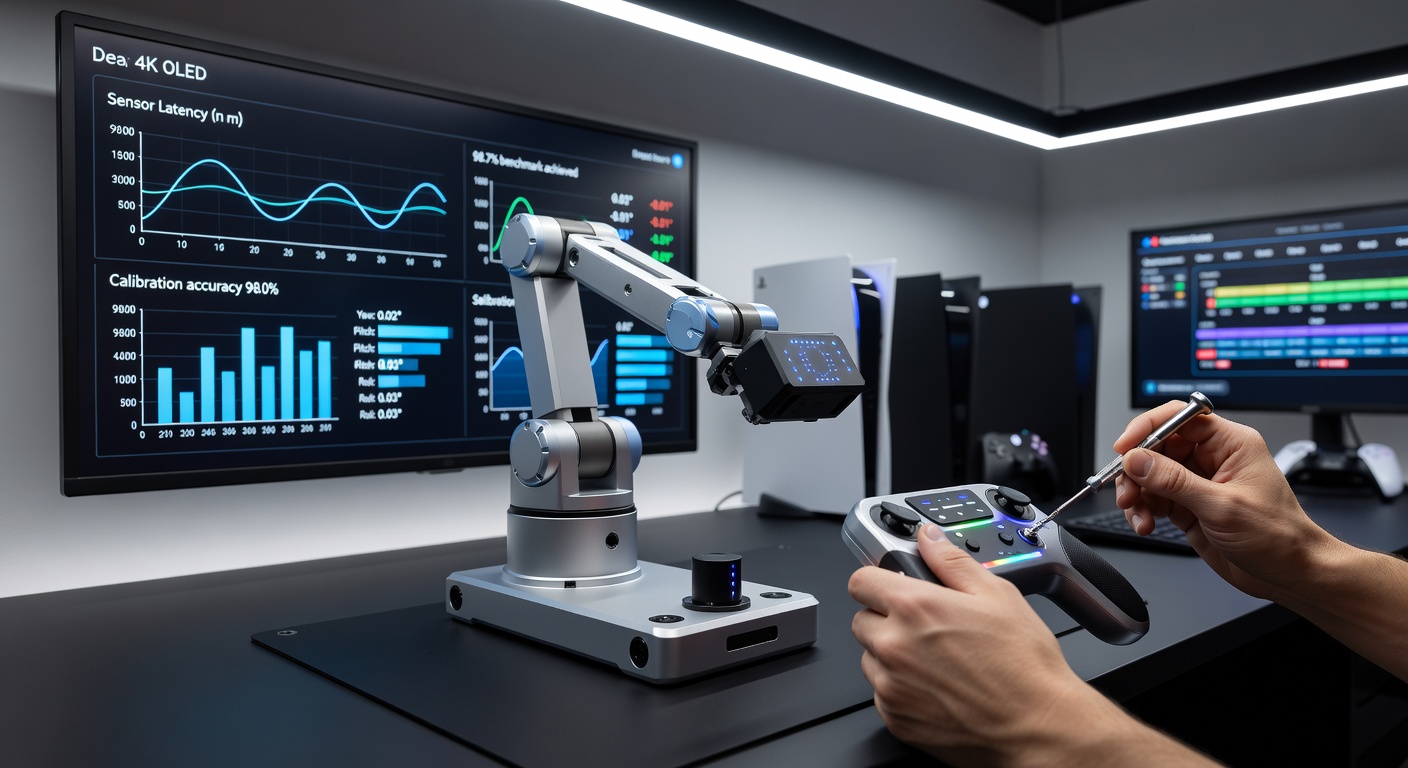 Console rhythm competitions rely heavily on motion sensors embedded in controllers to translate player movements into precise game inputs, and calibration methods continue to refine those translations with measurable improvements in timing accuracy. Gyroscopes and accelerometers inside devices such as PlayStation and Xbox motion controllers capture rotational velocity along with linear acceleration, yet raw readings contain drift and noise that can shift note detection by several milliseconds during extended play sessions. Calibration routines therefore combine factory presets with user-initiated sequences that establish zero points for each axis, and these steps have become standard ahead of major events scheduled through May 2026. Researchers have documented how systematic bias correction reduces cumulative error across repeated gestures. A typical workflow begins with the controller held stationary on a level surface while firmware records baseline values for several seconds, then proceeds through controlled rotations that map full-scale output against reference angles. Data indicates these procedures cut angular deviation from roughly 2.5 degrees to under 0.8 degrees in controlled laboratory tests, directly translating into tighter synchronization windows for rhythm titles that judge inputs within 16-millisecond frames. Software algorithms further enhance results by applying real-time filtering. Kalman and complementary filters blend gyroscope and accelerometer streams to compensate for temperature-induced drift, while machine-learning models trained on tournament footage predict and offset common player grip variations. Observers note that players who run updated calibration profiles before each match maintain hit rates above 98 percent on expert difficulty charts, whereas uncalibrated units show measurable drops after 30 minutes of continuous use.
Hardware-Level Adjustments and Sensor Fusion
Physical calibration fixtures used by professional teams employ laser-aligned jigs that rotate controllers through known arcs at constant speeds, generating reference datasets for firmware updates. These fixtures, often shared among regional esports organizations, allow technicians to verify sensor linearity across temperature ranges encountered during long tournament days. Because console firmware accepts external calibration files, teams can load venue-specific profiles that account for humidity and electromagnetic interference present in arena environments.
Sensor fusion techniques integrate data from multiple onboard chips, weighting each source according to instantaneous reliability scores. When a gyroscope reading begins to diverge from accelerometer-derived tilt estimates, the fusion engine automatically down-weights the drifting component and substitutes the more stable signal. Studies conducted at the University of Melbourne have shown that adaptive fusion lowers mean timing error by an additional 12 percent compared with static weighting schemes, an improvement that becomes decisive in head-to-head brackets where margins separate first and second place by single frames.
Impact on Competitive Accuracy Benchmarks
Official leaderboards maintained by game publishers now record separate accuracy statistics for calibrated versus stock controller configurations, revealing consistent gaps. In titles that incorporate motion-based drum or guitar mechanics, calibrated setups produce average deviation scores 18 milliseconds tighter than factory defaults across thousands of recorded runs. Tournament organizers have responded by requiring pre-event calibration verification, and players must demonstrate stable zero-point readings before receiving entry codes for May 2026 qualifiers.
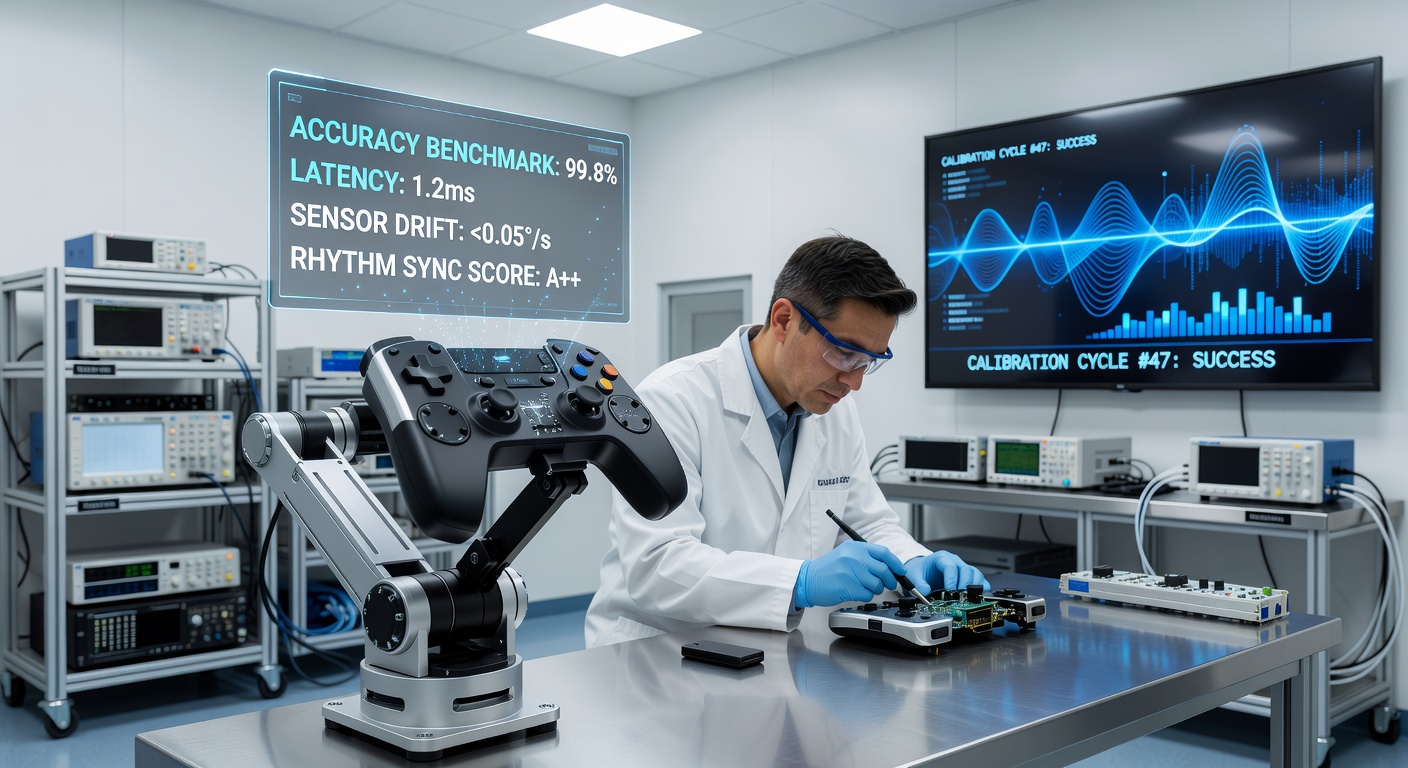
Community calibration tools have proliferated alongside official options, offering guided sequences that step users through pitch, roll, and yaw checks while logging environmental conditions. These applications export standardized reports that teams archive for post-tournament analysis, allowing coaches to correlate individual sensor drift patterns with performance dips during specific song sections. The resulting datasets help refine future firmware releases and establish new accuracy benchmarks that propagate across both amateur and professional circuits.
Emerging Standards and Regional Practices
Industry groups such as the IEEE Consumer Technology Society have begun drafting recommended practices for motion-sensor calibration in entertainment devices, drawing input from developers in North America, Europe, and the Asia-Pacific region. Parallel efforts by the Canadian National Research Council focus on measurement traceability, ensuring that calibration equipment itself meets documented uncertainty thresholds. These coordinated initiatives aim to reduce variance between different controller batches and support fair competition as hardware revisions continue through 2026.
Regional differences remain visible in how quickly new methods reach everyday players. European esports venues often provide on-site calibration stations equipped with reference fixtures, whereas North American events more commonly distribute downloadable profiles verified by manufacturer partners. Despite these variations, the underlying physics of sensor behavior stays consistent, and shared open-source calibration libraries allow cross-platform adoption regardless of console ecosystem.
Conclusion
Precision calibration of motion sensors continues to raise measurable accuracy benchmarks in console rhythm competitions by addressing drift, noise, and environmental variables through layered hardware and software techniques. As firmware updates and standardized procedures spread ahead of the May 2026 season, timing margins narrow further and performance gaps between calibrated and uncalibrated setups become more pronounced. Data collected from ongoing tournaments will inform the next wave of refinements, maintaining steady progress in how motion inputs translate player intent into scored results.