Quantum Dot Filters Advancing Color Precision in Game Asset Creation Studios
Mia Keller · Aug 18, 2026
Quantum Dot Filters Advancing Color Precision in Game Asset Creation Studios
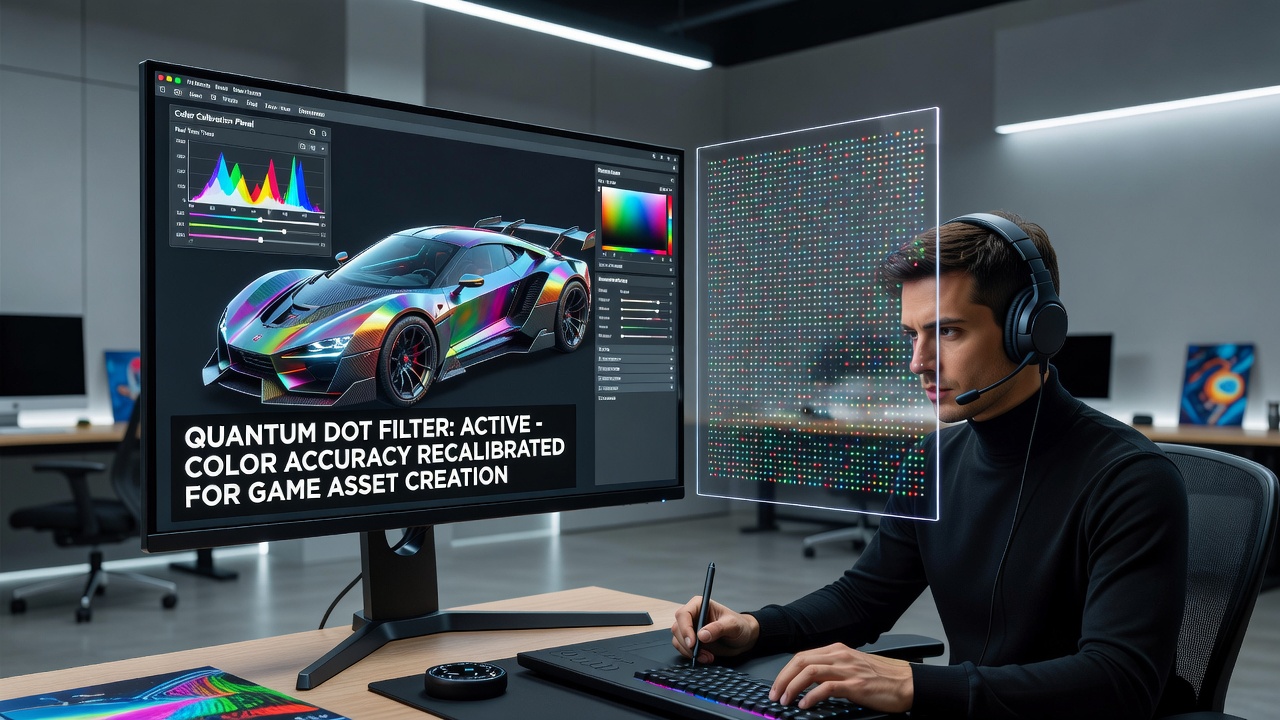
Quantum dot filters integrated into monitor panels deliver expanded color gamuts and enhanced spectral control that support accurate color reproduction during game asset development, and these systems allow studios to maintain consistency across modeling, texturing, and lighting tasks where precise hue and saturation values matter. Research from display engineering teams shows quantum dots convert backlight wavelengths into narrow emission peaks that align closely with human visual sensitivity curves, reducing metamerism errors that traditional LCD backlights often introduce during extended review sessions.
Technical Operation of Quantum Dot Layers in Professional Displays
Engineers embed quantum dot films between the backlight array and the liquid crystal layer so each subpixel receives a tailored light spectrum that expands coverage of standards such as DCI-P3 and Rec.2020, and calibration software then maps these outputs against reference color spaces using lookup tables that adjust RGB drive values in real time. Data collected from panel manufacturers indicates average Delta E values drop below 2.0 after factory calibration when quantum dot filters are paired with 10-bit or higher bit-depth pipelines, allowing asset artists to evaluate subtle gradients in material shaders without visible banding or hue shifts.
Integration With Asset Pipelines in Game Development Environments
Studios handling real-time engine assets rely on these monitors during texture painting and material authoring because the filters support simultaneous viewing of multiple color-managed windows without drift across daylight-balanced and dimmed environments, and hardware recalibration routines run weekly or after ambient light changes to keep white point and gamma aligned. Observers note that teams working on character models or environment props often connect these displays to colorimeters that measure primary chromaticity coordinates every few hours, feeding corrections back into the panel firmware so that exported assets match final render targets on target platforms.
Recalibration Workflows and Measurement Standards
Technicians apply automated sequences that combine quantum dot filter response curves with ICC profile generation, and these routines adjust luminance uniformity along with chromaticity to keep corner-to-center variance under 5 percent across the panel surface. Figures from industry measurement programs reveal that recalibration cycles completed in under fifteen minutes restore accuracy after several hundred hours of continuous operation, supporting production schedules where multiple artists review the same asset under identical conditions.
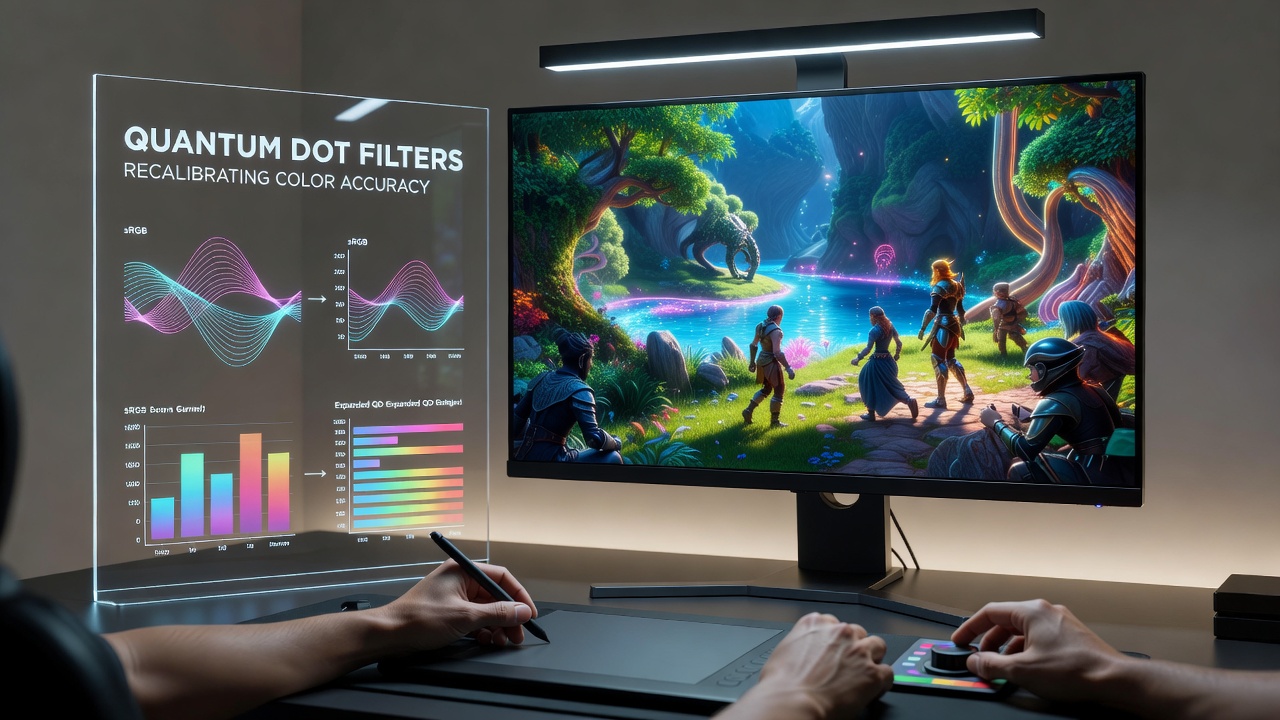
August 2026 saw several mid-sized studios adopt updated quantum dot panels that incorporate self-diagnostic sensors capable of detecting filter aging through periodic test pattern analysis, and these sensors trigger partial recalibrations without interrupting workflow. According to reports published by the National Institute of Standards and Technology, such adaptive systems reduce cumulative color drift by approximately 40 percent compared with earlier fixed-interval schedules.
Comparative Performance Against Alternative Display Technologies
Side-by-side evaluations conducted by research groups demonstrate that quantum dot equipped panels achieve wider volume coverage in CIE 1976 color space than standard WLED backlit units while maintaining faster pixel response times suitable for scrubbing animation timelines, and the narrow emission bands also lower the energy required to reach target brightness levels. Asset teams switching between multiple monitor types report fewer mismatches when reference renders are viewed on quantum dot units because the spectral match to print and projection standards improves cross-media predictability.
Implementation Examples From Production Studios
One studio specializing in open-world environments integrated quantum dot monitors into its review bays after measuring consistent improvements in texture seam visibility during lighting passes, and the recalibration protocol now includes daily spot checks on primary and secondary colors using spectrophotometer data logged into a central database. Another group focused on character assets documented reduced revision cycles after artists began using profiles generated from quantum dot displays, since the higher color volume allowed earlier detection of oversaturated specular maps that previously required fixes at final integration stages.
Future Developments and Measurement Protocols
Ongoing work at academic and industrial laboratories explores hybrid quantum dot and micro-LED combinations that further tighten emission spectra, and preliminary tests indicate potential Delta E improvements below 1.0 across the full panel area. Standards organizations continue to refine test methods that account for quantum dot filter degradation under varying temperature and humidity conditions typical of studio control rooms, ensuring that recalibration remains reliable as panel fleets age.
Conclusion
Quantum dot filters embedded in monitor panels provide measurable gains in color accuracy and gamut coverage that directly support the demands of game asset creation workflows, and systematic recalibration practices keep these advantages stable throughout production cycles. Continued refinement of sensor-driven adjustment systems promises to extend these benefits as studios scale their display infrastructure in coming years.