Smart Lighting Ecosystems Integrate with Horror Game Events for Late-Night Immersion
Sam Simon · Aug 25, 2026
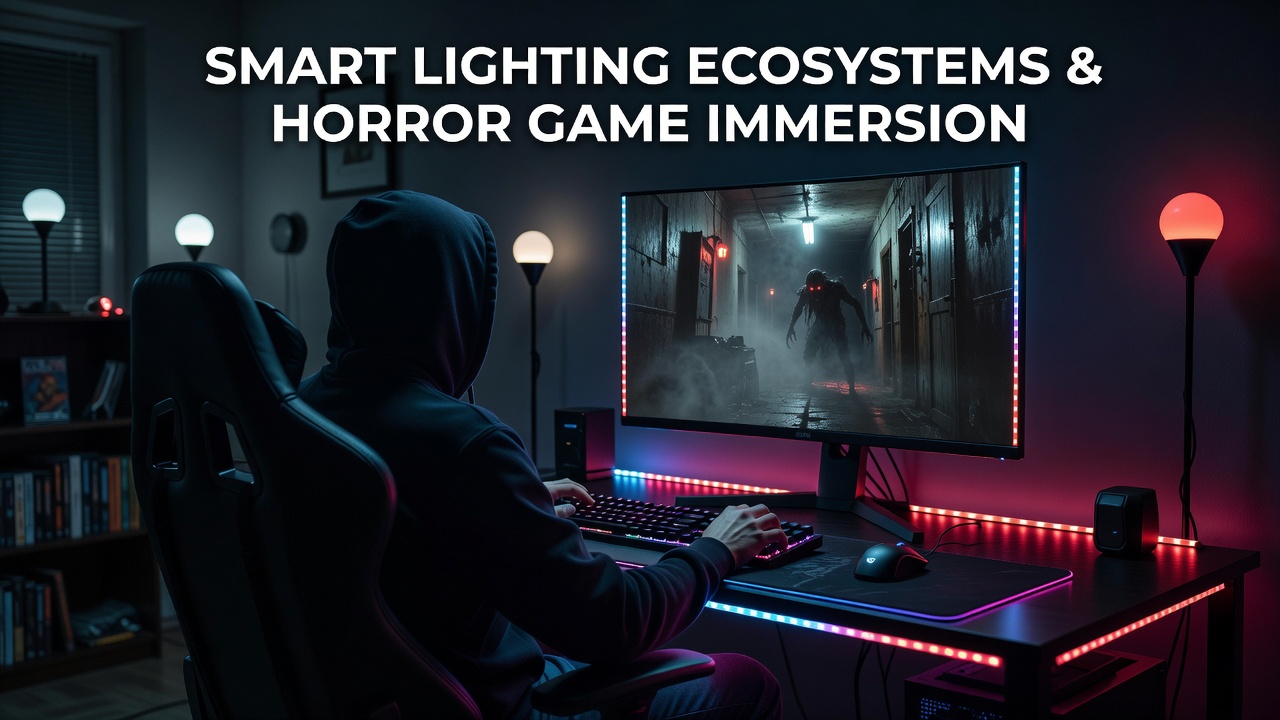
Smart Lighting Ecosystems Integrate with Horror Game Events for Late-Night Immersion
Smart lighting platforms connect directly to horror game engines through APIs and software bridges, allowing real-time color shifts, brightness adjustments, and strobe effects that align with on-screen events such as jump scares, environmental changes, and tension builds. Systems from manufacturers including Signify and LIFX use protocols like Zigbee and Wi-Fi to receive triggers from titles including Resident Evil Village and Dead Space remakes, while developers expose event data through middleware layers that translate game states into lighting commands.
Integration occurs when players install companion applications that monitor game processes and forward commands to hub devices, creating synchronized responses where a sudden darkness in a corridor triggers corresponding dimming across room fixtures. Data from industry reports shows that such setups reached over 2.4 million active households in North America by mid-2025, with adoption rates climbing as middleware compatibility expanded.
Core Components Driving Event Syncing
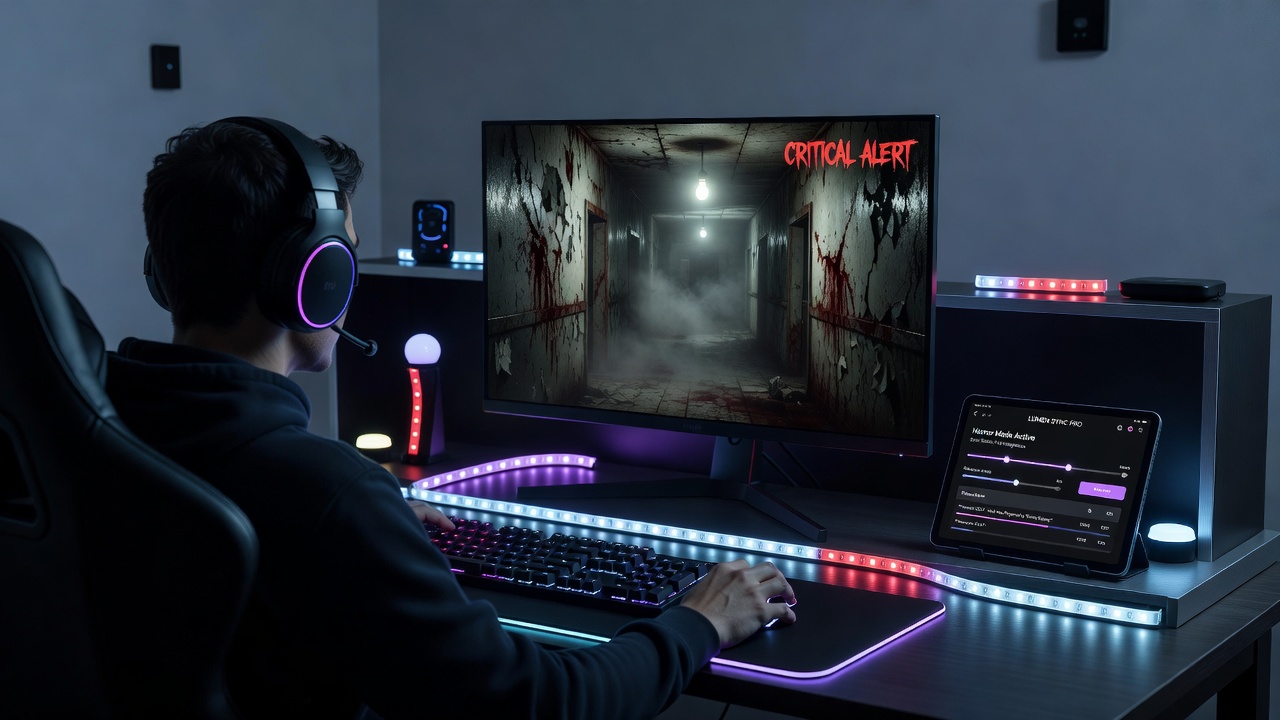
Hub controllers serve as central processors that receive game telemetry and distribute instructions to individual bulbs, strips, and panels, while sensors in some ecosystems detect ambient room light levels to calibrate output and maintain visibility during extended sessions. Software layers handle latency compensation through predictive algorithms that anticipate event timing based on audio cues and scripted sequences, reducing noticeable delays to under 50 milliseconds in optimized configurations.
Researchers at the University of Melbourne documented synchronization accuracy across multiple horror titles in a 2025 study, noting that consistent color temperature matching improved user retention metrics during sequences exceeding 30 minutes. Hardware specifications list support for up to 50 simultaneous devices per hub in current models, with firmware updates in August 2026 adding expanded RGB spectrum coverage for more precise blood-red and shadow-tone rendering.
Implementation Examples Across Popular Titles
One documented case involves players configuring setups for The Callisto Protocol, where lighting pulses intensify during combat encounters and shift to cooler tones during exploration segments, while another configuration for Alan Wake 2 maps narrative lighting beats to ceiling fixtures that fade in tandem with in-game flashlight mechanics. Middleware tools from Razer and Corsair provide preset profiles that users import and customize, linking specific key events to designated lighting zones.
Figures from the Entertainment Software Association indicate that horror genre titles accounted for 18 percent of PC game revenue in 2025, with developers increasingly publishing open lighting APIs to support ecosystem partnerships. Observers note that late-night sessions benefit particularly because reduced external light sources allow ecosystem effects to dominate visual perception, extending the perceived duration of atmospheric sequences without requiring additional hardware beyond existing smart bulbs.
Technical Considerations for Reliable Performance
Network stability remains essential because packet loss between the game client and lighting hub produces desynchronized flashes that break immersion, prompting users to employ dedicated 5 GHz bands or wired backhaul connections for hubs. Power consumption data from Energy Star certified devices shows average draw of 8 watts per bulb during active syncing, with standby modes dropping usage below 0.5 watts when no game events register.
Compatibility matrices list support for Windows, certain Steam Deck builds, and consoles through capture card intermediaries, while developers continue releasing patches that refine event granularity. A 2026 report from the European Committee for Electrotechnical Standardization outlined standardized command sets that reduce fragmentation across competing ecosystems, enabling cross-platform profiles that function identically on multiple hardware generations.
Usage Patterns in Extended Play Sessions
Players often schedule sessions after 10 PM when household lighting can remain fully automated, allowing ecosystems to handle transitions from bright exploration areas to pitch-black tension peaks without manual intervention. Telemetry collected by platform providers reveals peak usage windows between 11 PM and 2 AM in regions with high smart home penetration, correlating with horror game launch periods.
Calibration routines adjust for room size and bulb placement, with software wizards guiding users through test sequences that verify response timing before full playthroughs begin. Those who maintain multiple zones report clearer separation between foreground effects tied to character actions and background ambiance that fills peripheral vision, though exact configurations vary by individual room layouts and fixture counts.
Conclusion
Smart lighting ecosystems continue expanding their role in horror gaming by translating in-game events into physical room responses that complement late-night sessions. Current integrations rely on established APIs, middleware bridges, and firmware refinements scheduled through 2026, while adoption metrics track growth alongside broader smart home device shipments. Technical standards emerging from regional bodies support further compatibility, and usage data confirms sustained engagement during extended play windows when external lighting conditions favor ecosystem dominance.