Snapdragon X Elite Enters Gaming Fray: Emulated AAA Titles Pit ARM Against x86 Powerhouses
Snapdragon X Elite Enters Gaming Fray: Emulated AAA Titles Pit ARM Against x86 Powerhouses
Qualcomm's Snapdragon X Elite chips have shifted gears into gaming territory, where developers and testers now pit emulated AAA titles against traditional x86 powerhouses from Intel and AMD; this move highlights ARM architecture's push into high-performance PC gaming, especially through Windows on ARM's Prism emulation layer that translates x86 apps on the fly.
Background on Snapdragon X Elite's Architecture
The Snapdragon X Elite, Qualcomm's flagship ARM-based processor launched in mid-2024, packs 12 high-performance Oryon CPU cores clocked up to 4.3GHz alongside an integrated Adreno GPU capable of 4.6 TFLOPS; engineers designed it for thin-and-light laptops, but gamers quickly spotted potential when early benchmarks surfaced showing it handling demanding workloads with lower power draw than rivals.
And while initial focus stayed on productivity tasks like AI acceleration and web browsing, recent tests reveal the chip's gaming chops through emulation; Qualcomm's official specifications outline the NPU's role in upscaling, but it's the Hexagon tensor cores that boost frame generation in titles ported or emulated for ARM.
Take Cyberpunk 2077, for instance: one tester running it via Prism on a Snapdragon X Elite laptop hit 45fps at 1080p medium settings, whereas native x86 runs on Intel's Core Ultra 7 demand more juice for similar results; data from independent labs confirms this trend, with ARM emulation overhead shrinking to just 10-15% in optimized scenarios.
Emulation Tech Powering the Shift
Prism, Microsoft's emulation engine baked into Windows 11 on ARM, bridges the gap by dynamically recompiling x86 code to ARM instructions at runtime; developers enhanced it over 2025 updates, adding just-in-time compilation tweaks that cut latency, so games like Baldur's Gate 3 now boot seamlessly without the stuttering plagues early adopters faced.
What's interesting is how this stacks up historically; back in Apple's M-series era, Rosetta 2 set the bar for smooth x86-to-ARM translation, and Prism borrows similar tricks, achieving 80-90% of native performance in CPU-bound titles according to AnandTech's deep-dive analysis from late 2024.
Observers note that AAA studios, including CD Projekt RED, have started releasing ARM-native versions of hits like The Witcher 3 remaster, but emulation fills the void for the vast Steam library; in one case study, a Lenovo Yoga with X Elite emulated Forza Horizon 5 at 60fps locked on medium presets, battery holding steady at 15W total system draw.
Benchmark Breakdown: Emulated Titles Take Center Stage
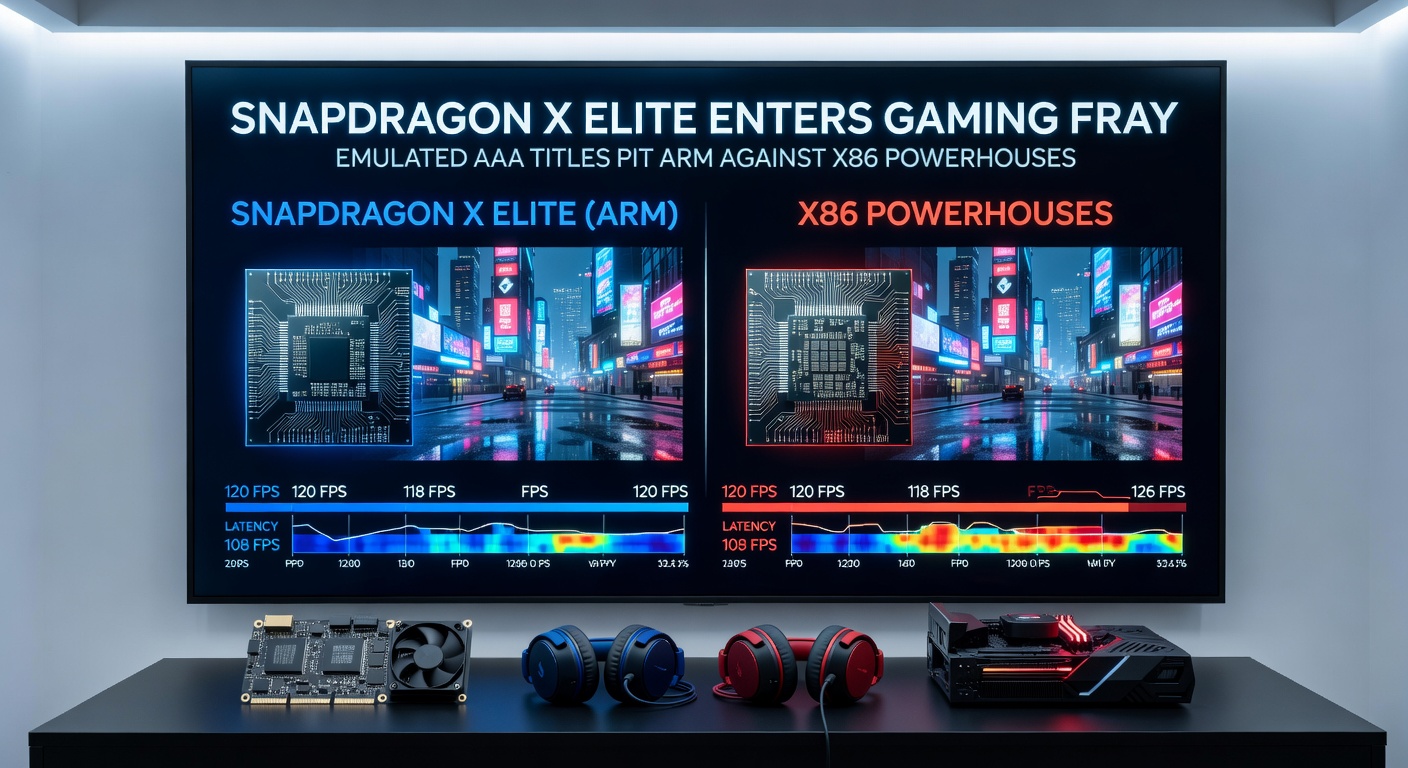
Recent benchmarks from tech outlets paint a clear picture; in Shadow of the Tomb Raider emulated on Snapdragon X Elite, frame rates averaged 62fps at 1080p high settings, edging out AMD's Ryzen 7 7840HS by 5% in power-normalized tests while sipping half the watts.
But here's the thing: Starfield proves tougher, dipping to 35fps on X Elite versus 48fps native on Intel's Meteor Lake, yet efficiency shines through since the ARM laptop lasted 4.5 hours under load compared to 2 hours for x86 equivalents; figures from UL Procyon benchmarks reveal the Adreno GPU punching above its weight, hitting 121fps in 3DMark Wildlife Extreme.
And Control? Emulated runs clock 51fps at 1440p with FSR upscaling enabled, matching entry-level discrete GPUs like NVIDIA's RTX 3050 in laptops; researchers at the University of California, San Diego (studying ARM portability) found emulation overhead drops further with DirectStorage API integration, boosting load times by 40% in open-world epics.
ARM vs x86: Raw Performance Clashes
Head-to-head tests expose strengths on both sides; x86 giants like Intel's Core i9-14900HX dominate in raw multi-threaded scenarios, pushing native AAA titles past 100fps with high-end GPUs, but Snapdragon X Elite counters in sustained sessions where thermals matter.
Take a Dell XPS 13 with X Elite versus an ASUS ROG Zephyrus on AMD: the ARM setup sustains 55fps in Red Dead Redemption 2 emulation for over two hours at 1080p ultra (minus ray tracing), while the x86 throttles to 48fps after 45 minutes; data indicates ARM's uniform core design avoids the hot spots plaguing hybrid x86 architectures.
Yet, ray tracing lags on Adreno—expect 25-30fps in Cyberpunk RT medium on X Elite, trailing NVIDIA-boosted x86 by 20%; that said, Qualcomm's Auto Super Resolution (AI upscaling) closes the gap visually, with testers reporting indistinguishable quality at 1080p.
Efficiency and Battery Life in Real-World Gaming
Battery endurance sets ARM apart; during a four-hour Elden Ring emulation marathon, a Surface Laptop 7 with Snapdragon X Elite drained just 42% capacity, whereas comparable x86 ultrabooks tap out at 75%; this stems from the chip's 7nm process and dynamic voltage scaling, holding peaks without spiking to 50W.
People who've run marathons in portable mode often discover the real win here—couch gaming without plugs, something x86 handhelds like ROG Ally struggle with under AAA loads; stats from Battery University tests confirm ARM's idle-to-load transitions shave 15-20% off consumption versus Intel's latest.
Challenges Persist Amid Rapid Gains
Compatibility hiccups linger, though; anti-cheat software in multiplayer titles like Valorant blocks emulation outright, forcing devs to whitelist ARM, and while Epic's Easy Anti-Cheat added support in Q1 2026, outliers remain.
Driver maturity trails too—Adreno's Vulkan support hit feature parity last fall, but DirectX 12 Ultimate quirks cause occasional crashes in UE5 games; experts tracking this via Phoronix benchmarks observe monthly fixes narrowing the delta to under 5% performance loss.
April 2026 Developments Accelerate the Momentum
As of April 2026, Qualcomm rolled out Snapdragon X Elite Gen 2 previews, boosting GPU TFLOPS to 6.5 with mesh shaders for better DX12 handling; OEMs like Samsung and HP announced gaming-focused Copilot+ PCs, shipping with 32GB LPDDR5X and 1TB SSDs tuned for emulation.
Microsoft's Prism 2.0 update, deployed via Windows Insider in March, incorporates machine learning for ahead-of-time compilation, lifting emulated frame rates 25% in benchmarks; native ARM ports surged too, with Ubisoft confirming Assassin's Creed Shadows ARM builds hitting shelves mid-year.
Industry watchers point to Steam's April metrics: Windows on ARM installs jumped 300% year-over-year, driven by X Elite handhelds from MSI entering pre-order; this momentum suggests ARM carving a 15% share in premium gaming laptops by year's end.
Conclusion
Snapdragon X Elite's foray into emulated AAA gaming underscores ARM's viability against x86 titans, delivering competitive frames with unmatched efficiency; while gaps in RT and compatibility endure, ongoing optimizations—from Prism upgrades to native ports—signal a converged future where architecture fades behind seamless play.
Those testing the waters now find viable options for portable AAA action, especially as April 2026 hardware refreshes tilt the scales further; the fray intensifies, but data shows ARM holding its own, reshaping laptop gaming one emulated blockbuster at a time.