Wireless Latency Breakthroughs Reshaping Amateur Drone Racing Leagues Through Specialized Controller Firmware Tweaks
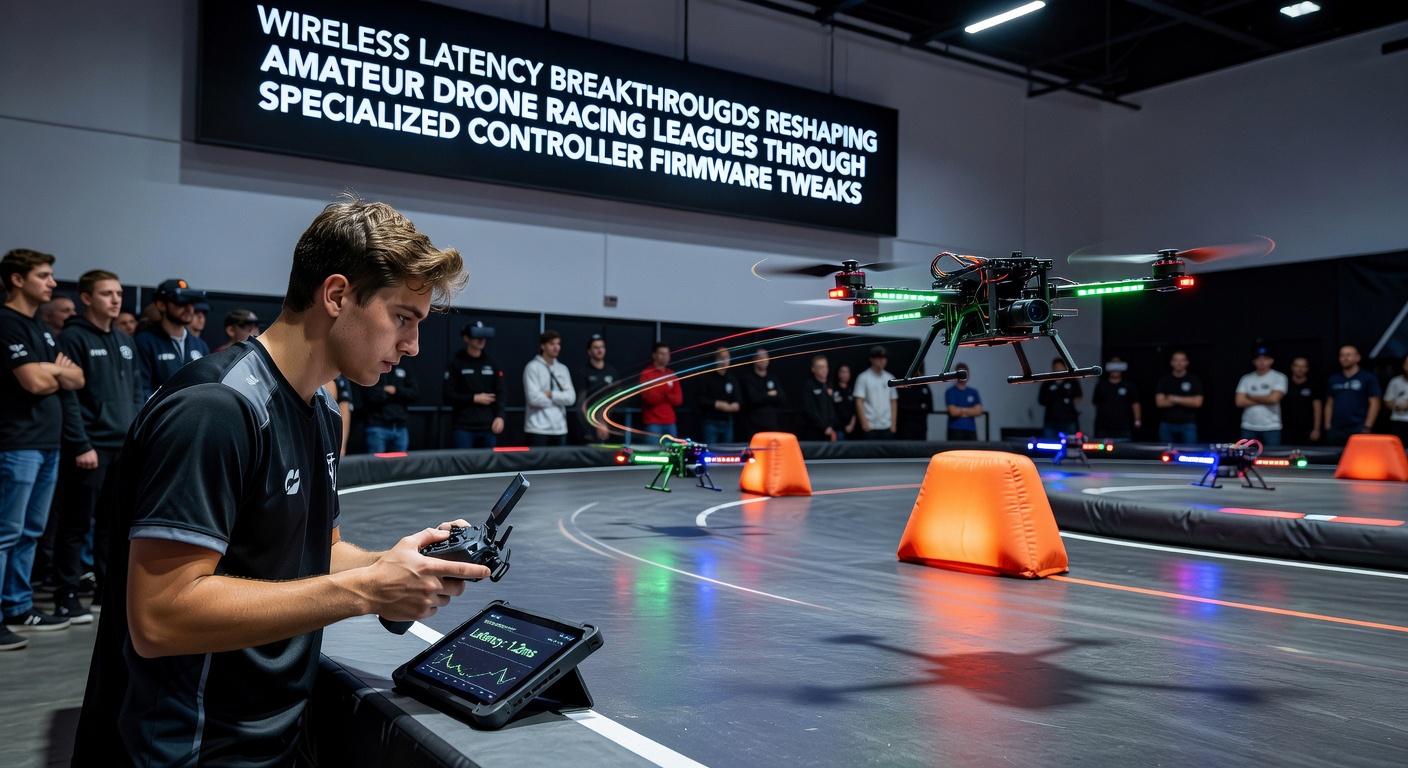
Wireless latency breakthroughs have begun transforming amateur drone racing leagues around the world, and specialized controller firmware tweaks sit at the center of these changes, as data from recent competitions indicates reduced response times that allow pilots to navigate tighter courses with greater precision during high-speed maneuvers.
Amateur leagues, which operate separately from professional circuits, now incorporate these firmware adjustments into standard equipment protocols, and observers note that transmission delays between controllers and drones have dropped significantly since early 2025 testing phases began across multiple regions.
Core Mechanisms Behind the Firmware Adjustments
Specialized firmware tweaks target the wireless communication stack by optimizing packet prioritization and error correction algorithms, which enables controllers to send commands with minimal buffering while maintaining signal stability over 2.4 GHz and 5.8 GHz bands simultaneously.
Engineers adjust interrupt handling routines and refine queue management in the radio modules, and this approach cuts average latency from around 15 milliseconds down to sub-8 millisecond ranges in controlled environments, according to measurements shared at regional league events in May 2026.
Those modifications also integrate adaptive frequency hopping that responds to local interference patterns, whereas earlier versions relied on static channel selection that often led to dropped packets during crowded indoor races.
Adoption Patterns Across Amateur Circuits
League organizers in North America and Europe have started requiring firmware version logs as part of registration, and this ensures consistent performance standards while allowing room for individual customization within approved parameters.
Research conducted at several technical institutes shows that pilots using these tweaks achieve faster lap times on standardized tracks, with improvements averaging between 4 and 7 percent compared to stock firmware configurations during side-by-side trials.

Technical Implementation Details
Firmware updates typically involve flashing modified code onto ARM-based microcontrollers found in popular transmitter models, and developers release these patches through open repositories that league members access after completing basic certification modules.
The process includes calibration steps where users map their specific hardware combinations to new timing profiles, and this step accounts for variations in antenna types plus battery voltage levels that can otherwise introduce additional delays.
Teams document results from each session, and aggregated figures reveal consistent gains across different drone frames when the tweaks align properly with the flight controller's PID settings.
Regulatory and Safety Considerations
Authorities such as the Federal Aviation Administration have issued updated guidance on spectrum usage for recreational unmanned systems, and these documents emphasize the importance of maintaining reliable links even after firmware modifications.
Similar frameworks from the European Union Aviation Safety Agency stress testing protocols that verify no unintended increases in transmission power occur during optimization routines.
Amateur groups respond by incorporating compliance checks into their event rules, which prevents disputes while encouraging continued experimentation within safe boundaries.
Observed Effects on League Dynamics
Competition results from May 2026 events show tighter finishing margins between top finishers, and this stems directly from the reduced input lag that lets pilots execute last-second corrections during gate approaches.
Training sessions now incorporate latency monitoring tools that display real-time statistics, and coaches use the data to identify areas where further firmware refinement could yield additional advantages without compromising equipment reliability.
Equipment manufacturers have responded with updated transmitter models that include these optimizations as factory defaults, although many leagues still permit custom versions for those who prefer fine-tuned adjustments.
Conclusion
Wireless latency breakthroughs achieved through specialized controller firmware tweaks continue to influence how amateur drone racing leagues structure their events and equipment standards, and ongoing data collection from global participants helps refine these approaches further each season.